Category: Food, Farming, Forestry, Fisheries

Food, Farming, Forestry and Fisheries

  • 4Fs Newsletter November 2023

    4Fs Newsletter November 2023

    Meeting at Shillingford Organics

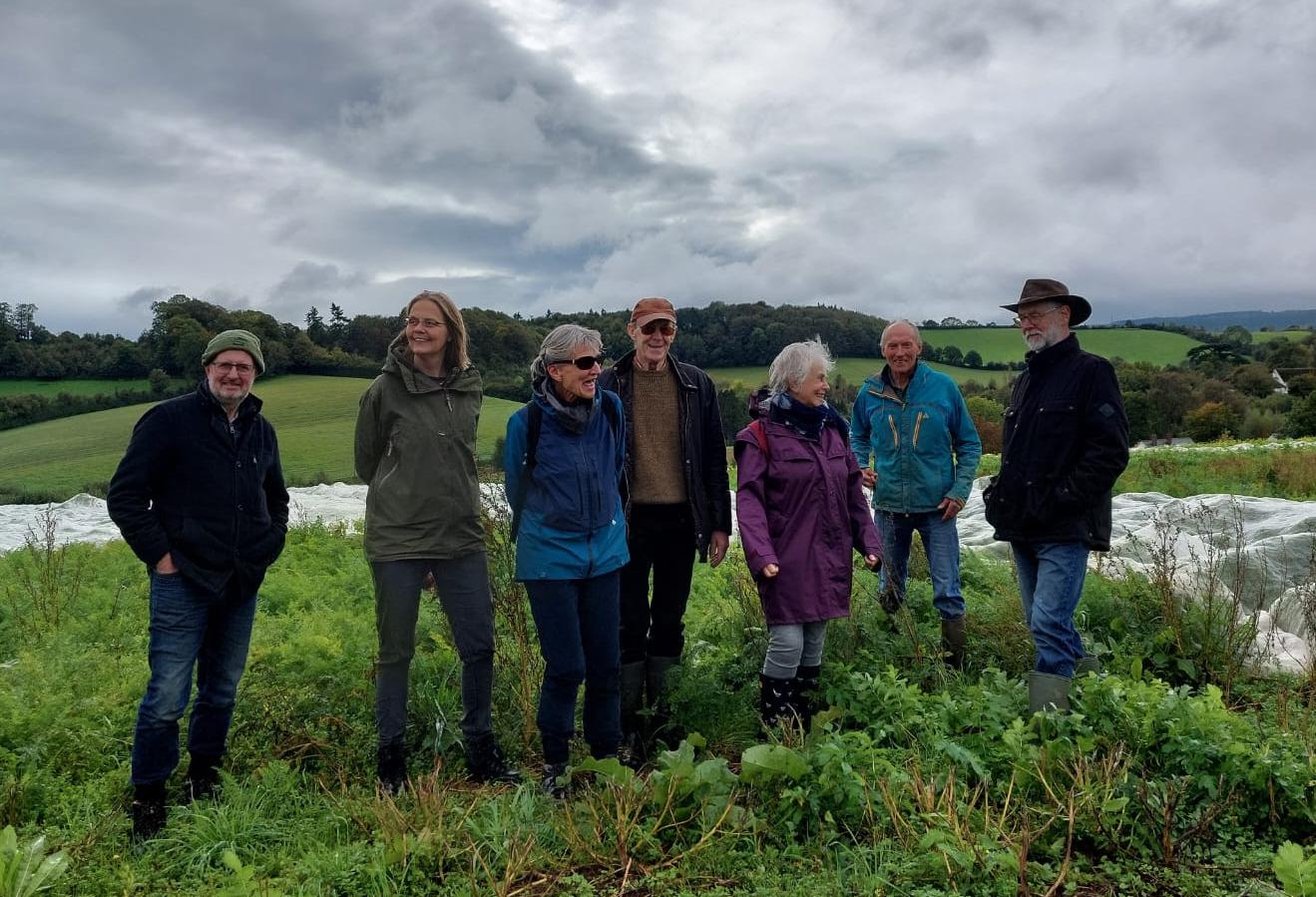
    Owner Martyn Bragg showed us around his farm near Exeter where he grows fruit and vegetables for sale via veg boxes, at farmers markets and wholesale to local businesses. We had a look at the crops growing in the polytunnels and on the fields. We learned about the business model in which different growers work on the farm and how the crops they grow complement each other. Soil fertility is maintained by green manure that is incorporated in the rotation of the crops. We mostly managed to dodge the rain and went for a tractor ride to look at the more distant fields.

    We had a discussion on ‘How to support local food production’. Martyn said young people wanting to start a business growing vegetables struggle to find available land. He also said Shillingford Organics could be selling more vegetable boxes but there is no demand. Questions arose regarding championing local councils so that they increase the amount of land allocated for local food production. Points and questions that came out of the discussion include:

    • Training on regenerative agriculture is provided by the Apricot Centre.
    • Can we individually contact schools, care homes and similar to ask if they would buy more local food? The group thought it unlikely this would work because of the budget constraints of the institutions.
    • Martyn pointed to the Devon Food Partnership which he hopes will incorporate procurement of local food for schools and businesses.
    • The government was trialling a procurement pilot in the SW, but unfortunately funding was withdrawn before it was launched.
    • The Good Food Loop is a platform that connect different growers in the SW.
    • Exeter Community Initiatives is organising The Big Exeter Feast in November with lots of events around food in the city.

    There was also a discussion about local markets and the ones that work well. Working people cannot attend the markets that are in the middle of the day during the week. Please contact the 4Fs group if you know anyone wanting to champion buying local food or open new farmers markets.

    Applying for a countryside stewardship woodland grant and possible meetings on agroforestry and woodland creation

    Steven Short shared his experience of applying for a grant to create a large area of woodland. If you have recently applied for a similar grant and would like to share it with the group please contact 4Fs. We can look into organising a meeting on woodland creation to share experiences. We are also planning a meeting on agroforestry.

    Water quality event

    A new Water Quality Group has been formed following the meeting on this topic in June to carry on the discussion and take small projects forward. The next meeting will discuss natural flood management on the Teign, pollution coming from disused mines, contacting South West Water, and water quality measurements being taken and the state of the rivers. If you want to take part in the meeting please contact the 4F’s group.
  • Event on the Water Quality in Teignbridge

    We had a successful event on Monday the 26th of June, the speakers were great and the audience asked very good questions. Our speakers were:

    • Anna Seal (West Country Rivers Trusts),
    • David Leach and Rachel Land (Peatland Restoration Project),
    • Emma Magee (Environment Agency),
    • Louise Davies (River Teign Restoration Project) wasn’t able to give her talk but she shared an overview of the project.

    Follow the links to their presentations/ information

  • How to farm sustainably

    How to farm sustainably

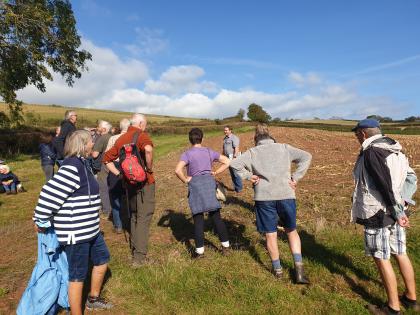
    Peter French threw open his farm to a group of nearly 40 visitors last week (12th October) to share his ideas on how local farmers can adapt to the changing conditions they face. Peter farms 280 hectares (700 acres) near Stokenteignhead and is working to reduce his farm’s carbon footprint. He is doing this by becoming more self-sufficient and by designing farm systems that work together to improve productivity, profitability and soil health.

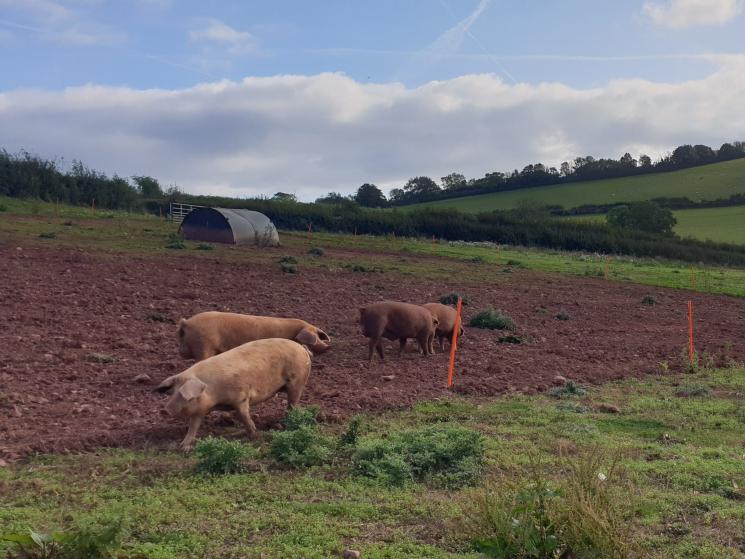
    One big change Peter has made is to switch from running a farm with few livestock to regenerative farming, whereby cattle, sheep, pigs and chickens all help to enrich the soil and raise its organic (and thus its carbon) content. He also grows wheat, barley, oats, oilseed rape, fodder beet and maize. 

    Peter is also keen to capitalise on the growing demand for locally-grown food. He rents some of his land to a local grower who sells vegetables from his small farm shop. Peter feels there could be a future for them both in a bigger, better-sited farm shop, which would serve the nearby communities in Teignmouth, Newton Abbot and Torbay. Already some of his meat and eggs are sold from the farm, as well as supplying a café in Teignmouth, which he and his wife own.

    Farmers are coming under increasing pressure to reduce their impact on the environment. Land use, including agriculture, forestry and peatland, accounts for 12% of total UK greenhouse gas emissions. Those emissions need to come down substantially if the UK is to meet its climate targets. To help achieve this, the agricultural support system is being completely overhauled. The Basic Payment Scheme, which pays a standard amount per acre of land, is being phased out. Its replacement, the Environmental Land Management Scheme (ELMS), will be rolled out from 2024. This will provide public money for public goods, such as better air and water quality, thriving wildlife, soil health, or measures to reduce flooding and tackle the effects of climate change.

    Peter French is ahead of the game here. For many years he has worked closely with the RSPB, which owns the land he rents at Labrador Bay, to obtain government grants to finance the numerous ways he helps wildlife on his farm. This year he has applied for a Countryside Stewardship grant, which will eventually be replaced by the ELMS. The government is encouraging farmers to apply for this grant, saying that by entering an agreement now, they will be well placed to benefit from the ELMS when it comes into operation.

    The RSPB land at Labrador Bay is run as a habitat for Cirl Buntings. When Peter first took over Deane Farm from his father, UK Cirl Bunting numbers were down to extinction levels at about 100 pairs, all of them in South Devon, and with the most important nucleus at Labrador Bay. Now, 28 years later, thanks to the work of farmers like Peter, there are more than 1,000 pairs,  and their geographic area is spreading.

    You can see Peter enjoys the challenge of finding new and circular ways to make his farm more sustainable. Having livestock on the farm adds fertility, which is further boosted by break crops such as herbal leys (grass plus several deep-rooted herbs that can extract usually inaccessible minerals). The herbal leys can reduce livestock worm burdens, and by doing so, reduce the use of wormers that can kill dung beetles and many other beneficial soil invertebrates.

    On some of his land, Peter grows cereals for seed corn, which command a good price premium but demand more fertilisers and herbicides. Peter worries about the effect of these treatments on long-term soil health and is always looking for ways to improve it. He is concerned about the environmental dangers of using ammonium nitrate and the nitrous oxide it releases, which accelerates climate change. However, he is wary of using sewage sludge because of the high levels of heavy metals, and equally wary of composted domestic green waste, which contains low levels of plastic. He feels famers need to be more tolerant of weeds in their crops, which aren’t a problem when rolled and fed to livestock.

    Another change of practice is to use a ‘minimum tillage’ cultivator to plant a new crop, rather than a plough. This digs less deep, causing less damage to the soil and releasing less carbon. Peter is also considering planting more hedges to reduce soil erosion from heavy rain on his sloping fields, if grant payments adequately cover the costs. Hedges can hold the soil and slow the run-off if well placed. 

    Peter is on a journey towards a more carbon-friendly way of farming and is keen to share what he has learned, even to the extent of giving up a day’s work to welcome a mixed group of farmers and wildlife enthusiasts to his farm. It was much appreciated.

    The event was funded by Devon County Council and Teignbridge District Council Councillors. It was run by the RSPB and ACTion on Climate in Teignbridge, and is one of a series being run for farmers by ACT’s Food, Farming, Forestry and Fisheries Group.