It’s gone a bit quiet after the much-heralded breakthrough of COP28. Is it the usual moving on to the next news story and our immediate post-Christmas concerns or was COP28 just another tick in the climate box?
Our government has announced that the UK needs to slow down on climate change and have rowed back on previous commitments. They, and at least one of our two MPs in Teignbridge, Mel Stride, assure us we are ahead on our Carbon Budgets.
We are told that things will be fixed by 2050 and we can carry on with life as usual. They say there is climate warming caused by our greenhouse gas (ghg) emissions, but there are technological solutions to reduce these emissions and safely capture/store the remaining gases. In any case, it’s not the UK that’s causing the damage, it’s the rest of the world that’s creating 99% of all ghg emissions.
I think it’s time to tell the truth: the government is lying! You may say that’s nothing new, but when it is being dishonest about an existential threat to life on earth, it’s important to speak bluntly. We need the message to be much more direct, science-based and honest about the necessary actions. We can no longer wait for government to do this, we need to take direct action.
This is not a call for protest and civil disobedience; there are other organisations that already do this. I believe we need to act much more locally and personally, and we need to do it this year.
Rather than making disingenuous claims about the UK’s emissions, the government may want to point to a strategy on how it will ensure that the UK remains within its legal Carbon Budgets. Better still, they should launch a public information campaign to explain the need to halve our per-capita consumption emissions from the unsustainable 10t CO2e/year.
You have more control over your greenhouse gas emissions than you think, both as an individual or part of an organisation. Use 2024 to talk to anyone and everyone you know about what effective actions to take. Before you do this, it helps to be familiar with the basics and understand how to communicate this information. ACT can help with training, methods and ongoing support. Contact our Carbon Cutter coordinator to organise a 30 minute online introduction to see what is available to you or your organisation.
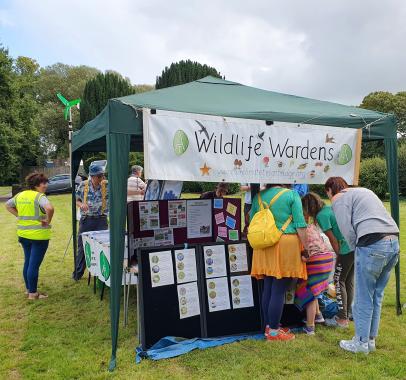
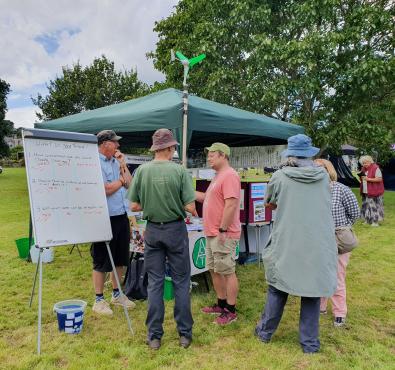
ACT took a stand at the Fayre held on Saturday 26th August, and luckily the forecast rain and thunderstorm failed to put in an appearance! The stand was a bit isolated from the main events but we had plenty of visitors despite this.
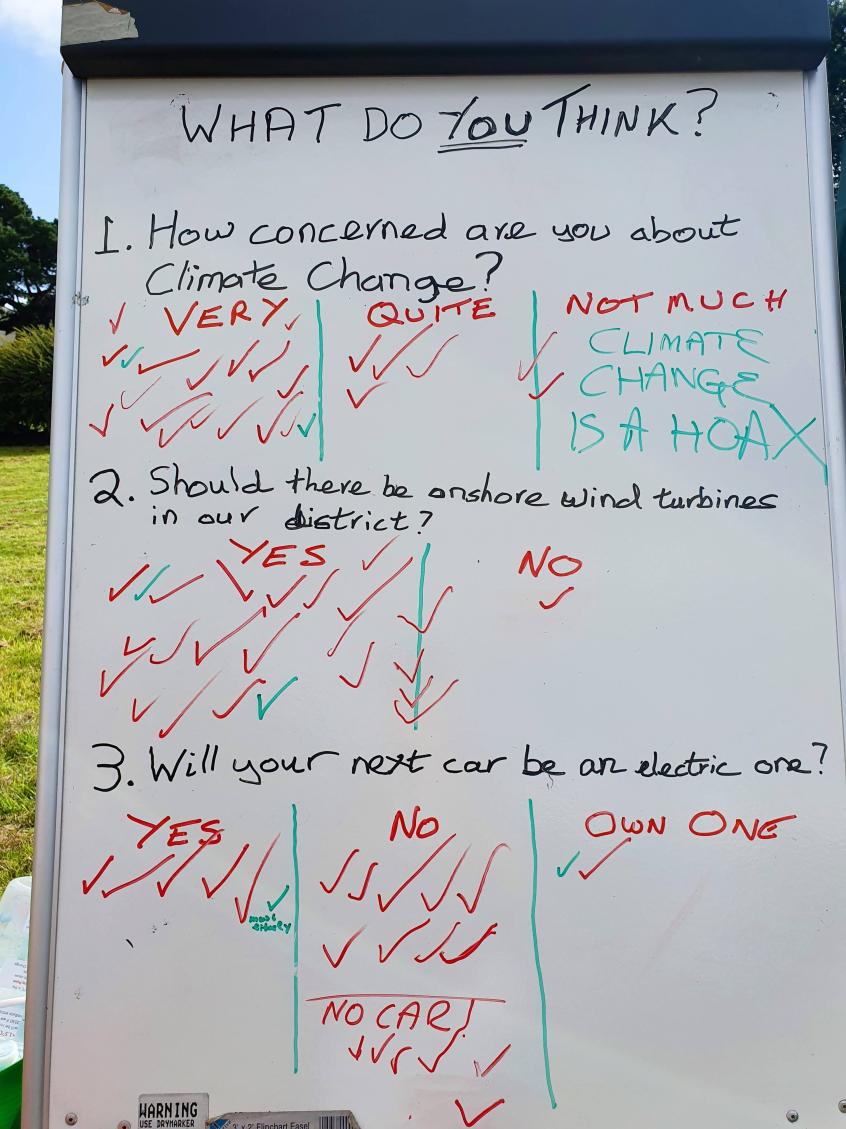
It was a combined energy / carbon cutting and wildlife warden stand. Seven of us turned up to chat to the visitors and enjoyed talking them through the various models, games, exhibits and interactive “opinionameter” (a white board and pens!).
Watch the video on our Facebook page to get a flavour of the ACT offering. The wildlife wardens were busy all day discussing animal skulls, owl pellets and other interesting objects with the younger visitors, and giving away wildflower seeds. On the carbon cutting part of the stand, we demonstrated working models and the carbon budget bucket, played the E=MC2 game, and encouraged visitors to make their opinions known on the white board.
The last visitor of the day to the white board made their opinion on climate change loud and clear: it’s a hoax they wrote!
Most other people were “very” concerned about climate change and agreed we should have onshore wind turbines in Teignbridge.
There was less agreement about electric cars. Some had no doubt their next car would be electric, while others were concerned about the cost.
We all enjoyed the day, felt it had gone well, and would definitely attend similar events in future.
The UK government has committed to a big expansion of carbon capture and storage (CCS), along with plans for more oil and gas drilling in the North Sea. Using CCS is a prerequisite of expanding fossil fuel extraction if the UK is to stick to its target of reaching net zero by 2050.
The government will spend £20bn over 20 years to support the establishment of two CCS clusters by 2025, and a further two by 2030. The aim is to capture 20-30 megatons (Mt) of carbon dioxide (CO2) a year and store it under the North Sea.
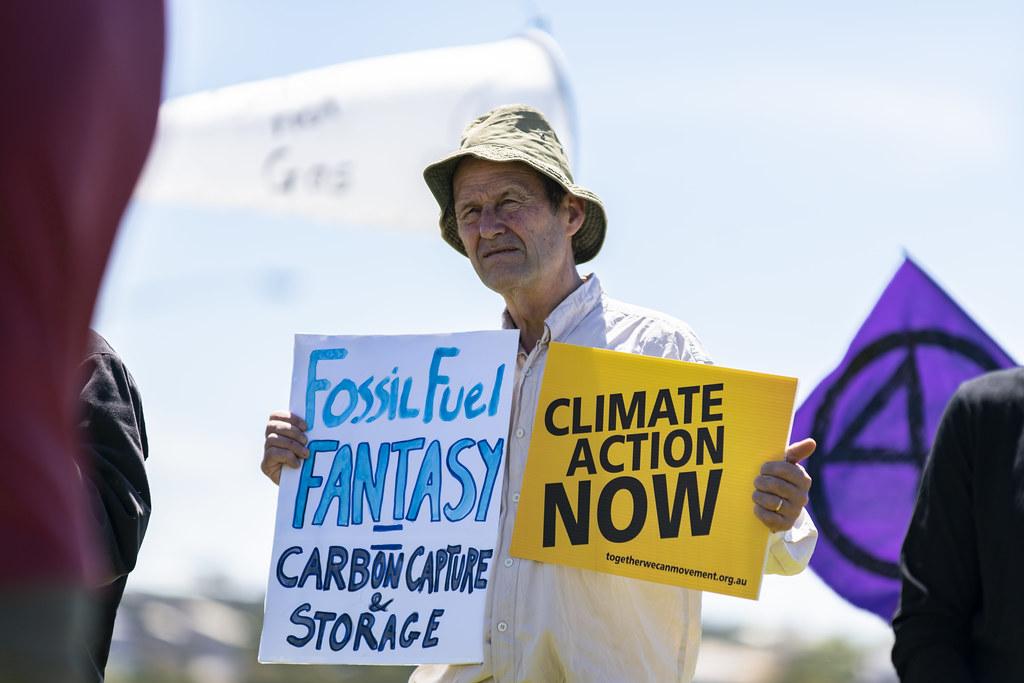
Scientists think this is a bad idea. The Guardian newspaper reported that more than 700 scientists wrote to the prime minister before the announcement asking him not to grant any new oil and gas licences and describing CCS as “yet to be proved at scale”.
CCS involves capturing the CO2 produced by power generation or industrial activity, such as steel or cement making; transporting it; and then storing it deep underground. The technology has been around since the 1970s, but has been used mainly to boost oil production. There is no evidence it can be used at scale to permanently store CO2. There are questions about the expense involved, the storage capacity, the potential for leakage, and the effectiveness of the process.
A 2021 report by the Centre for International Environment Law found that the 28 CCS facilities currently operating globally have a capacity to capture only 0.1% of fossil fuel emissions, or 37Mt of CO2 annually. Of that capacity, just one-fifth, or 7Mt, is being captured and stored for the long term. This suggests the UK plan to capture 20-30Mt a year is over ambitious, to say the least.
More recently, New Scientist covered a report by the Institute for Energy Economics and Financial Analysis (IEEFA), an Australian think tank, which found most of 13 flagship CCS schemes worldwide either failed or captured much less CO2 than expected. Two Norwegian projects were more successful, which the report said was due to the country’s business and regulatory environment.
There is a strong suspicion that investing in CCS is just a means for the fossil fuel industry to carry on “business as usual”, with little attempt being made to reduce carbon emissions. See this video for a satirical take on this.
Climate scientist Kevin Anderson said on Twitter: “The promise (though virtually no delivery) of CCS for almost 2 decades has been repeatedly used to undermine the shift away from fossil fuels. It has been a deliberate & effective delay strategy.”
As if in confirmation, the chief executive of US oil group Occidental Petroleum said earlier this year that DACS (Direct Air Capture & Storage) “is going to be the technology that helps to preserve our industry” and gives it “a licence to continue to operate for 60, 70, 80 years”.
For more on carbon capture and storage, in its various forms, see these notes.
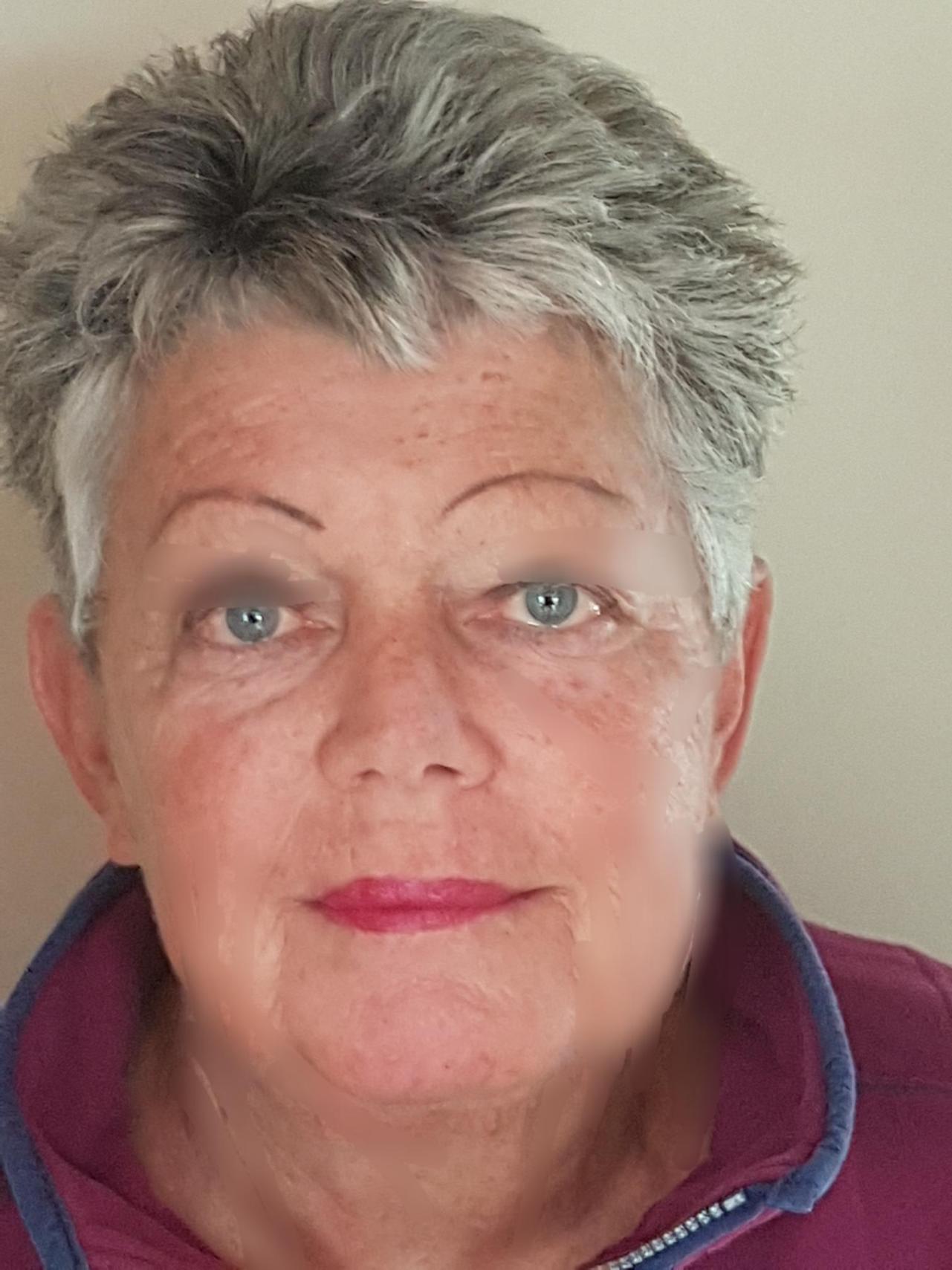
Janine joined ACT’s Carbon Cutters group to help others understand what individuals can do to cut their carbon emissions.
Janine says: “The topic is very urgent and doing the ACT training course inspired me to help spread the message. I am learning things myself on a daily basis and have spoken to friends, family, neighbours and acquaintances about reducing their carbon emissions. What I like to pass on to my parish is ‘awareness’, so every one of us is prepared to think about what our actions mean to our planet and what we can all do to try and rectify any damage caused by these actions.”
Janine has been aware of her own carbon impact for some time and limits it by cycling or taking the bus when possible, driving a second hand electric car and using coach companies for holidays. She has reduced her heating costs by insulating her home, and has installed solar panels and storage batteries.
Janine says: “The thing I feel has most cut my own carbon footprint is to try and upcycle and re-use as well as reduce my own consumption. I buy second hand, and repair appliances if possible and find out the source of goods, as much as I can, before purchase. I think about my meat and fish intake, which is now nearly at vegetarian level, and I grow fruit and some vegetables in my insect friendly garden. I also keep bees and recycle rainwater where I can.
“I would recommend to everyone to become a carbon cutter to make life more bearable for the next generation and generations to come, so they can leave a better legacy for the planet than my generation.”
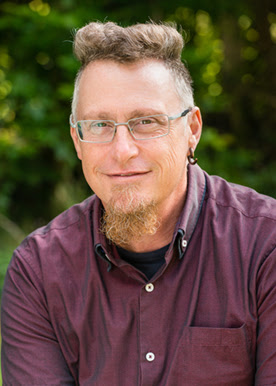
Hello fellow Carbon Cutters, I’m Scott Williams , your new coordinator, and I’m here to help.
Firstly a bit about me. I’ve been aware of the problems created by our burning of greenhouse gases for some time, since the call to ban CFCs, and have been trying to reduce my carbon and ecological impact and leave no trace. I picked up a copy of ‘This Is Not A Drill: An Extinction Rebellion Handbook’ and joined Action on Climate in Teignbridge, signing up as a Wildlife Warden. I am the founder of Turn The Tide Festival alongside Dave Hutton. In serendipity that same year ACT launched the Carbon Cutters project aiming to help communities across Teignbridge find sustainable ways to reduce their carbon footprint.
I’m also responsible for Reconnect Magazine, where we regularly provide local examples of carbon reduction, and champion reduce, repair and recycle.
Carbon Cutters can be change makers
It’s time to visualise a ‘net zero’ future, and how we might co-create that. I see Carbon Cutters as change makers, offering those seeking our help the opportunity to really imagine what life will be like, and offer possible pathways to get there.
A practical place we can start is by supporting local projects that already exist, or importing good ideas, and creating the conditions for low carbon ecosystems. We can educate and empower our young people with the knowledge and expertise they’ll need in the coming decades. We can work with local councils to provide enabling resources, and helpful policy and intentions that inspire our communities.
As your Carbon Cutter Coordinator, I’m here to help you focus on promoting the ideas and actions that offer the easiest way to reduce emissions. We can help an individual (or organisation) find for themselves the best direct action they can take, doing things within their control.
I see my role as a signpost, a community notice board, and an information centre. To signpost how to build resilience and community resource security. To find things to do, to celebrate what’s been achieved and to give everyone access to the information and advice they need to determine how best they can be empowered to cut their carbon footprint. If I can’t find the solutions to questions then our network can. Together we can share ideas, knowledge and cooperate on initiatives.
There’s a wealth of things those in our community wanting to bring about a change for the better are doing, I feel we just need to highlight them more. To do that I’d like to know about them, no matter how small or wacky. As Coordinator I hope to spread ideas and activities, and help community involvement in them. Once I’ve found my feet, I’m hoping to initialise a few new Carbon Cutters projects. In the meantime please let me know what you have done, are doing, and hope to do. I’d love to hear your ideas.
Training
Our next set of Carbon Cutters Training will take place over four sessions (the first one being an introduction) and we are set to start shortly. Please send anyone interested in getting on board my contact details: email scott@actionclimateteignbridge.org.
At the bottom of the piece there’s a link to the Net Zero Vision book, edited by David Sergeant and Emma Whittaker. This is a collection of essays by transition experts on key sectors of the Devon Carbon Plan’ in which Jay Tompt’s article first appeared.
Happenings
Dawlish will be celebrating the King’s Big Help Out as part of the coronation on 8th May with their Refreshers Fair which offers a chance for attendees to find out about volunteering locally and has over 20 organisations attending, including ours.
This year’s Big Green Week will be happening from 10th-18th June. I’m not aware of any specific things happening in Teignbridge – if you know of something please let me know.
A storytelling event has been organised by ACT for 26th June, 6-9pm at the Courtenay Centre (home to Newton Abbot’s first community fridge). The event is a pilot. The idea is that storytelling is an important way humans communicate. The actions we need to take and the understandings we have need to be personal, practical and perceptible. People from ACT will talk about how it felt for them to engage in climate action and the audience will share their stories, and have a reflective conversation about the stories they’ve heard.
Thank you to our sponsors
Lastly I would like to thank our sponsors Teign Energy Communities TECs for their support.
Teignbridge District Council’s draft Local Planis open for comment until noon on Monday March 13th. The plan details ‘how’ and ‘where’ proposed new housing and employment related development will take place in the district until 2040. It includes site allocations for housing, employment and wind turbines. The sites included are additional to those already allocated under the existing Local Plan.
This is the final version of the plan after several previous consultations. After the consultation closes there will be a public examination hearing held by an independent planning inspector.
If you wish to respond to the consultation it is advisable to watch the explanatory video. To read the whole plan, click on the Proposed Submission. For a shorter read, go to the Need To Know Guide. Note that when you are ready to respond, you have to scroll down to the bottom of the page to find the Start button.
You can comment on specific aspects of the plan, the whole plan, other consultation documents or supporting evidence. There are sections on climate change and the environment that lay out the proposed policies on these issues.
In brief
The plan allows for 4,560 new homes.
This is additional to the 7,969 already committed toin the existing Local Plan.
About 65 hectares are allocated for employment sites.
There are 10 sites for wind turbine development, which the plan says could generate 15% of the district’s electricity supply.
Quite a lot of land has been identified as potentially suitable for installing ground-mounted solar photovoltaic panels.
Most of the homes will be built in or around Newton Abbot and Kingsteignton (37%) or on the edge of Exeter (46%).
Of the new employment sites 55% are allocated to Newton Abbot and 31% to Exeter.
The bill payer running around the house screaming at teenagers to ‘turn that light out’ was a sit com staple in the 1980’s, but with electricity bills going through the roof it is no longer a subject for cheap jokes. Before you start looking at turning off everything in your house, though, it might be worth taking a closer look at where your electricity is going. x
It helps to understand how electricity usage is measured and priced. You pay for each kilowatt hour (kWh) you use, currently at a rate of around 34p if you pay by direct debit. A kWh is the power, or number of watts, a device uses multiplied by the time for which it is using power. So a washing machine, say, that uses 500 watts for two hours will use 1kWh (a kilowatt is 1,000 watts).
If you have a smart meter and a device that shows how much energy you are using it is easy to see the difference turning on a kettle or hairdryer makes. But there is another important element to your consumption that is harder to see, which is the base load. This is the power your house uses even when you are asleep or on holiday.
When we first got a smart meter, we found that even when we thought nothing was going on, the house was drawing a not inconsiderable 541 watts all the time. So, every day our base load was 541 x 24 or nearly 13kWh, costing £4.42 a day at the current capped unit price.
We decided to find out what was drawing all this power. We happened to have a remote-controlled plug we use to switch our Christmas lights on and off which measures the power used by the device connected to it. You can buy similar plugs quite cheaply.
Moving this plug around the various sockets in the house enabled us to figure out where we were ‘leaking’ power.
We started in the kitchen. When we moved into our house the kitchen had just a tiny ‘beer’ type fridge. We carried on using it but added a larger larder style one too. Turns out this tiny fridge, being old and inefficient, was using nearly 70 watts every hour, every day. Turning it off saved 613 kWh or £208 a year.
The bigger fridge was also old and expensive to run, using 92 watts an hour. It was in need of a new thermostat too, so rather than replace the part we decided to replace it altogether with a more energy efficient model which draws just 26 watts. That saves us a further £196 a year at current prices.
Our next find came with our back-up system, dating back to the days before online backup. Despite now only being used to stream an occasional film it was still on 24/7, using up 102 watts and costing over £300 a year. That’s more than a Netflix and Spotify subscription combined! Safe to say, we pulled its plug.
The fridge and back-up system were the big easy wins, but by measuring every circuit we found others to add to our energy cost savings. One important one was anything left on standby when not in use.
This included the TV, which is friends with various other electrical boxes, and just on standby they were eating 30 watts an hour. We saved £74 a year by buying a voice controlled smart plug that links to the TV remote and disconnects the TV and associated electronics from the mains when we turn off the TV.
We fitted smart plugs to anything else that was drawing significant power while in standby so they are turned off when not needed.
If you’re not sure which devices to check, computers and audio and video equipment are good places to look, or just measure anything that has a glowing red light even when you aren’t using it.
Overall, we were able to reduce our base load from 541 to 233 watts, a saving of around £900 a year. Admittedly we had to buy a new fridge and five smart plugs, but you can see that rather than rushing to buy solar panels, heat pumps and battery storage, you can make savings on your energy spending by looking at the little things. Or, to paraphrase a well known saying, if you look after the watts then the kilowatts will look after themselves!
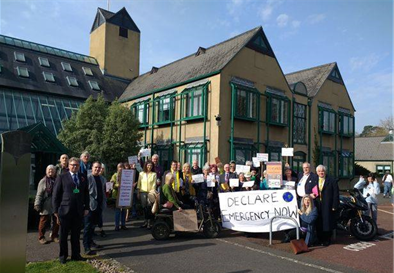
On April 18th 2019, Audrey Compton was standing outside Forde House, the home of Teignbridge District Council (TDC), with a group of people holding banners. They were there to lobby the council to pass the climate emergency declaration proposal put forward by Councillor Jackie Hook.
“We really didn’t think it would pass, but it did, unanimously, and with an amended carbon neutral target date of 2025, which was quite a surprise,” says Audrey, a Teign Valley farmer and environmental campaigner.
That target date was the most ambitious in the country, says Fuad Al-Tawil who was also at Forde House that day. “We thought it would be tough for the council to meet that target so suggested setting up a support group.”
The suggestion was welcomed, and Action on Climate in Teignbridge (ACT) was formed in the summer of 2019 following a public meeting in July at Coombeshead Academy in Newton Abbot attended by about 200 people.
Fuad says: “The idea was to support TDC to deliver on its climate emergency declaration and to work with community organisations in Teignbridge, including parish and town councils, as a bridge between them and TDC.”
New ways of working
A voluntary organisation working with a district council was a novel idea – unique even. Fast forward three years and how has that worked out? Well, the monthly meetings still happen and ACT has given freely of its expertise and opinions, which appear to be valued. It has at times offered a critical voice, and remains completely independent of the council. “We have built a good and pretty unusual relationship with the council,” says Fuad.
Kate Benham, ACT chairperson, says it has been a learning curve for both parties. “The council moves slowly, which can be frustrating, but it’s a case of understanding what it can and can’t do.”
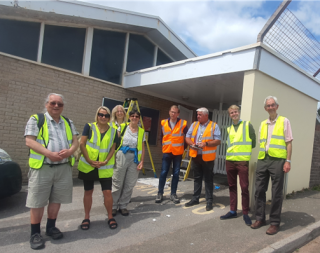
ACT members join Councillor Jackie Hook and council officer Will Easton to view work on renewable energy projects at the Teignmouth Lido in July 2022
Andrew Shadrake, a founding member of ACT, believes ACT has kept the pressure on the council: “Things have happened that wouldn’t have happened without us. We offer a resource, particularly on technical knowledge, that TDC relies on.”
However, the reality remains that carbon emissions have barely budged. Says Fuad: “ACT has succeeded in doing what we set out to do, in terms of supporting the district council and engaging the community. But in delivering on what matters, carbon reduction, we haven’t succeeded.”
Action on nature and carbon
ACT has had success on the ecological front, in particular with its Wildlife Wardens scheme, launched in the autumn of 2020. There are now 100 volunteer wardens spread across Teignbridge who have received training and do what they can to help wildlife in their parish.
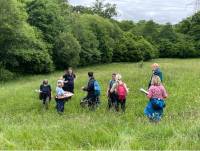
Wildlife Wardens being trained to complete surveys by the Devon Biodiversity Records Centre
“It’s been twice as successful as I ever hoped,” says Audrey, who set up the scheme and runs it with Flavio Winkler-Ford, a part-time paid coordinator.
“The great thing is wardens follow their own interests rather than ACT telling them what to do,” she adds.
Spurred by the success of wildlife wardens, in early 2022 ACT launched the Carbon Cutters initiative in a renewed effort to move the dial on carbon emissions. Trying to achieve this through engaging with local councils has proved tough. ACT will continue to work with councils, but will concentrate on engaging with community groups for the Carbon Cutters scheme.
“We are working with around 13 groups so far,” says Kate. “They are hugely enthusiastic and really want to help.” The scheme is run by part-time paid coordinator Peta Howell, with the help of a group of ACT members.
Still going strong
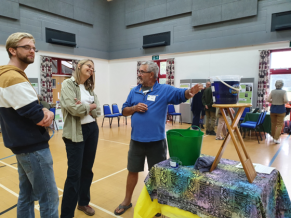
Demonstrating the global carbon budget at the Energy Roadshow in September 2022
Three years since launch, ACT still has a core group of enthusiastic, ambitious and committed people, and a wider membership of close to 450. That’s an achievement in itself, says Andrew.
Moreover, with Wildlife Wardens, and now Carbon Cutters, “we have tested and succeeded in developing a model for people to take action. We have also demonstrated a way of moving a district along, and raised the profile of climate change in the community.”
Flexibility is a key strength. “We are an evolving organisation that is learning all the time,” says Kate. “It’s good that we’re not afraid to change direction if we need to and try new things.” Mandy Cole, a psychologist who volunteers with ACT says it’s also important that “we don’t tell people what to do. We listen and learn more about what would help them to do more about climate change.”
There is also the personal reward for ACT members that comes with taking positive action, working with like-minded people and just having fun. For Audrey, “the last three years with ACT have been the most productive of 20 years of campaigning on climate change”.
I have just completed a summer placement with ACT and my experience has filled me with hope, writes Finlay Heppell. It was a great learning opportunity for me and I met many knowledgeable and passionate people who all share the same goal of tackling the climate crisis in Teignbridge.
Finlay at ACT’s Energy Roadshow at the end of his placement
I contacted ACT after finding the website while searching for placement opportunities that would be relevant to my studies as a geography student at Bournemouth University. I got involved with both the Carbon Cutters and Wildlife Warden schemes ACT runs, as well as learning about how energy is used in Teignbridge and the psychology behind influencing/attracting people.
I attended several Carbon Cutter training sessions where I realised there is still a lot I do not know about carbon emissions and the climate emergency. One of the new things I learnt was the idea of reducing carbon emissions in an intelligent manner. A great tool that ACT has is a carbon footprint tracker that allows you to accurately work out your carbon footprint and explains how you can reduce it in a smart way. Using numbers is such a great way of helping people understand how to reduce their carbon emissions as numbers are often treated as fact.
Overall, I enjoyed my experience with the Carbon Cutter scheme as I learnt so much new information and it allowed me to get a bigger picture of what people/groups in Teignbridge district are doing to try and reduce carbon. As a young person myself it is really encouraging to know that lots is already happening in my local area
Carbon Cutters was set up to help address the climate emergency. The other scheme I participated in, Wildlife Wardens, focuses on the ecological emergency through helping nature. I learnt many practical skills, such as identifying types of plants and the impact that our carbon emissions are having on the environment in Teignbridge. My first experience of this was at a Wildlife Warden training session on Orley Common with the Devon Biodiversity Record Centre (DBRC). This session consisted of teaching Wildlife Wardens how to fill out a County Wildlife Site survey. This was a great introduction to how site surveying is done as I was around people who were very knowledgeable with regards to identifying plants.
On top of this training session, I attended an actual survey of a meadow in Trusham. This visit allowed me to assess how much of what I learnt had stuck, but more importantly, reinforced what I had learnt. I have learnt so many new things from these two sessions.
Planting wildflowers
The other side of my experience with the Wildlife Warden scheme was focused more on working directly with wardens and helping out with their projects. This included researching information for an article on the health of the river Teign, clearing a flowerbed and planting wildflowers in Newton Abbot, and assisting with a nature trail project in Kingsteignton.
Another aspect of ACT which taught me a lot was learning about the psychology involved in working with the public. The Public Engagement group within ACT particularly considers this. It was an area I was interested in because I don’t have much of a psychology background, so a lot of the information was completely new.
The focus of this subject was to listen, understand, engage, and take action. The complexity of this topic was interesting as many things have to be considered when approaching people. The key takeaway for me was that evoking emotions in people is an essential part of enabling them to make changes, perhaps by overturning their cognitive biases. In this instance it would be changes related to cutting carbon.
The last part of my learning with ACT was the IT aspect, which included the gathering of data and creation of maps for the ACT website. This area was interesting as it tied in with a module that I had just finished at university. The module was about using Geographic Information Software (GIS) to gather data and create maps from it. Being involved with this side of ACT allowed me to see the real-world applications of what I had been learning at university.
As a young person it fills me with hope knowing that the district I live in has such a large and organised group tackling the climate crisis. The schemes cover a wide variety of problems, from ecological issues with the Wildlife Wardens, to how much carbon is being used through the Carbon Cutters scheme. On top of this, each scheme has further projects within it. This allows ACT to try and address multiple and diverse issues surrounding the climate crisis.
ACT is independent of Teignbridge District Council while still working closely with them and providing advice. The independence is important as it allows for much more freedom, and makes it easier to collaborate with many other smaller groups in the area.
In conclusion, my time with ACT was valuable both for what I learned and the people I met. I return to university feeling more hopeful about what we can all do to take action on the climate and ecological emergencies, especially if the ACT model is replicated throughout the country.
On Wednesday 20th July our water stopped running: after providing our farm with running water for 36 years our well was dry. For us this was serious and scary. We were already being careful with our water use as it has been dry since the New Year. But then, suddenly, the only source of water for our home, our garden, our livestock buildings and half of our fields has run out.
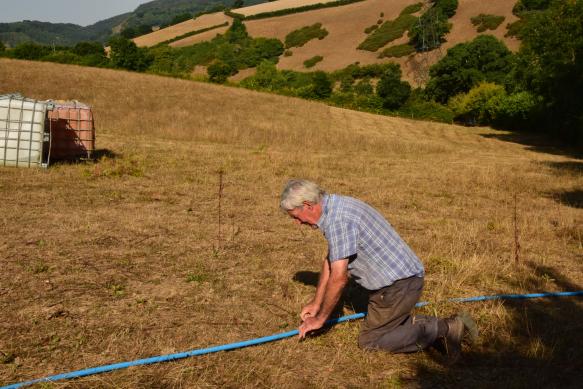
John Whetman, Audrey’s husband, setting up an emergency water supply.
We farm on the drier, eastern edge of Dartmoor, not far from the beautiful River Teign. We keep around 30 cattle and 20 sheep who graze our flower-rich pastures, making sure they are full of insects, spiders and birds. We have a garden full of vegetables and fruit that feed us right through the year. We farm with nature, not against it; we don’t use fossil-fuel based fertilisers or sprays and we heat our house using wood cut from our hedges when we ‘lay’ them. We are trying hard to minimise our effect on the planet – but our well is dry.
For many years we have known that our climate is changing and becoming more erratic, so six years ago we spent £2,000 on reserve water tanks, which we fill up with winter and springtime water. But we only have 10,000 litres, so we had to act fast!
The first thing we had to do was to move our cattle to the far side of the farm, where they can drink from the brook, or to our furthest fields, where there are mains water troughs. The cattle have now eaten the remaining dried-up grass in our far fields and we are feeding them our winter hay. It is going to be a long hot start to the winter! Thank goodness we have small fields and big bushy hedges that give our animals some shade throughout the day!
In the garden, anything that isn’t essential has been left to its own devices. In the house we minimise water use, but every evening we soak our tired bodies in a few inches of (shared) hot water. When we have finished, I add some eco-detergent and the dirty washing for a bit of a scrub and a good soak. In the morning we drain the laundry on a clothes horse propped across the bath before putting it out on the washing line to drip-dry. The rest of the bath water is used to flush the loo or water plants. Across the world millions of people live with very limited water, but many people in the UK turn on the tap and don’t even think about how it got there.
Why has our well dried up? We’ve only had 22cms of rain this year (less than 1 inches). In July we had less than 0.5cm. We’ve also had higher temperatures than we have ever experienced before. So climate change is definitely a big factor, but it is more complex than that. People use more water each day than they used to, and there are more people too! To satisfy the demand, water companies are extracting extra water from rivers and reservoirs. As a result, our natural underground water levels are falling, and in the summer the water is below well-level.
So, what next? It will probably be months before our well runs again, and we are fortunate that our neighbours have invited us to plumb into their supply until the situation improves. We have bought 250 metres of pipe to bring the water down to the farm and now we can start to be just a little less miserly with our water. So, we will get through, but this scorching summer has given us a lot of gruelling, extra work!