Here is our last Newsletter of 2021 covering the following topics:
COP26.
Teignbridge District Council’s consultation on renewable energy.
Beach Labyrinth.
Don’t Look Up – the Netflix movie.
ACT Wildlife Wardens.
House of commons – Wellbeing Economy debate.
Teignbridge Newsletters.
With much fear, anxiety and frustration about it’s important to remember that staying in contact, sharing and supporting each other, is so important.
This is particularly relevant in the Climate & Nature Emergency where our “leaders”, the media and so called influencers are reluctant to address and participate in the action and guidance needed. By working together therefore and sharing information, ideas and kindness with others, we can make a difference.
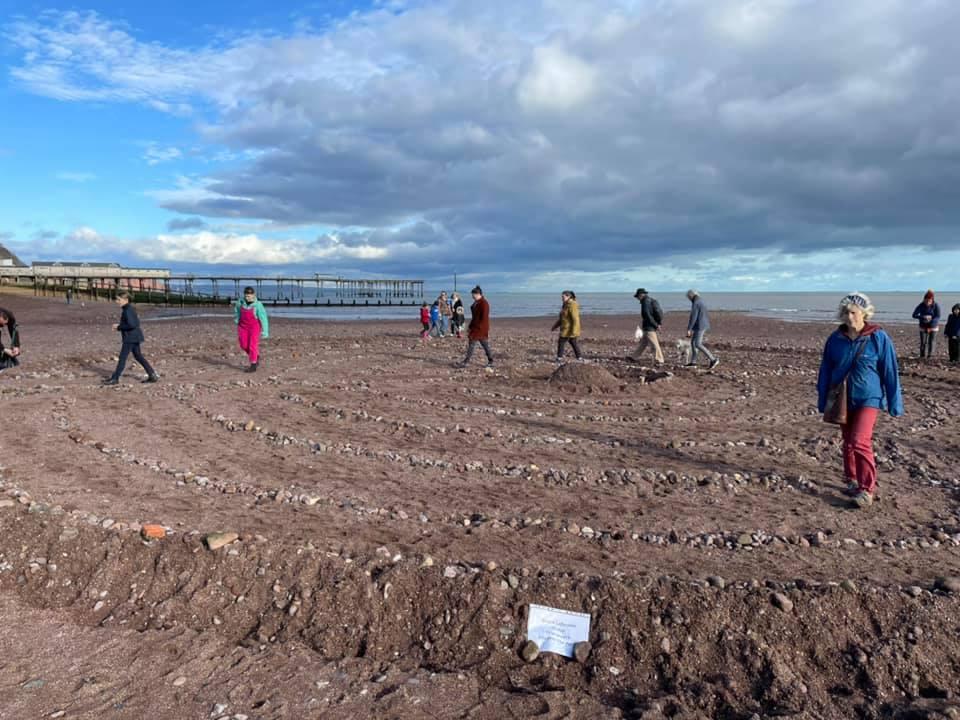
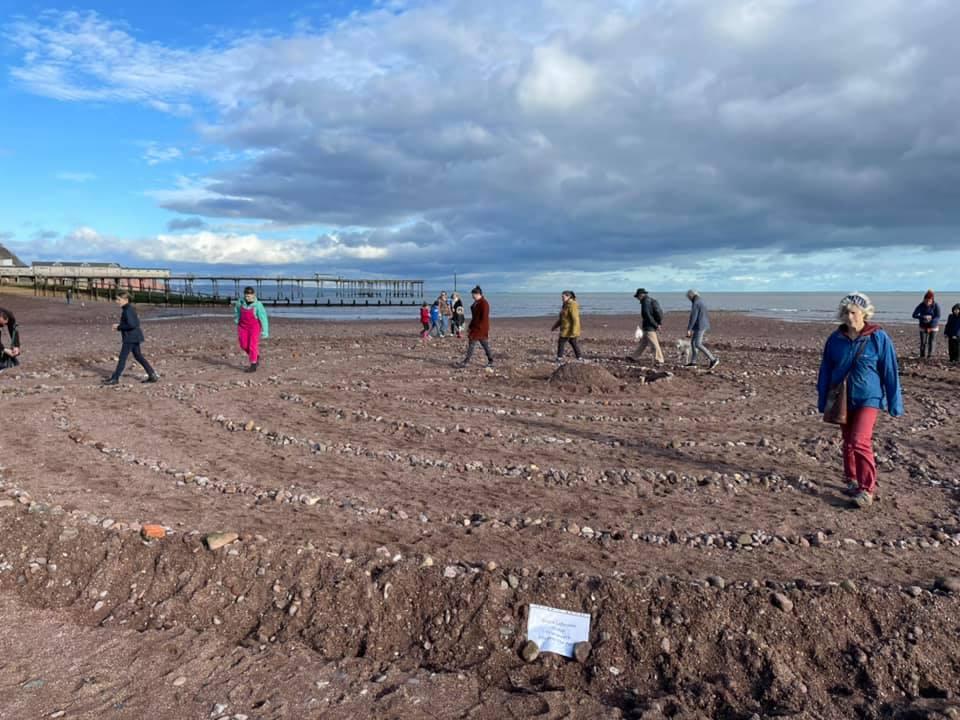
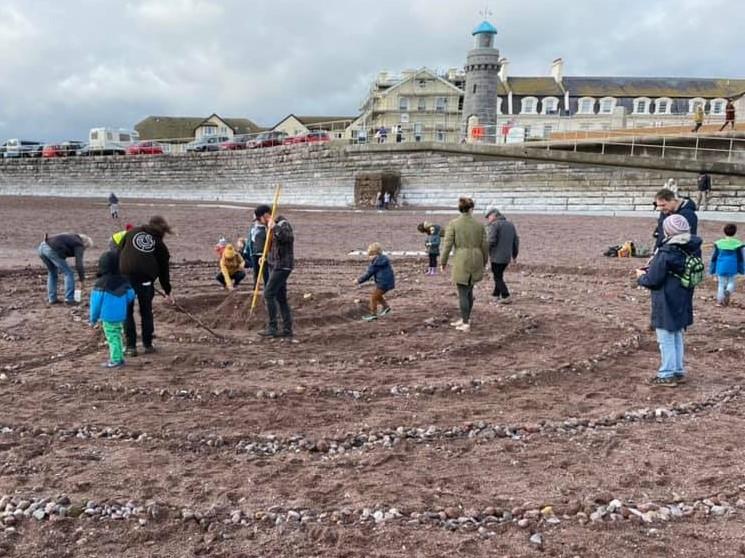
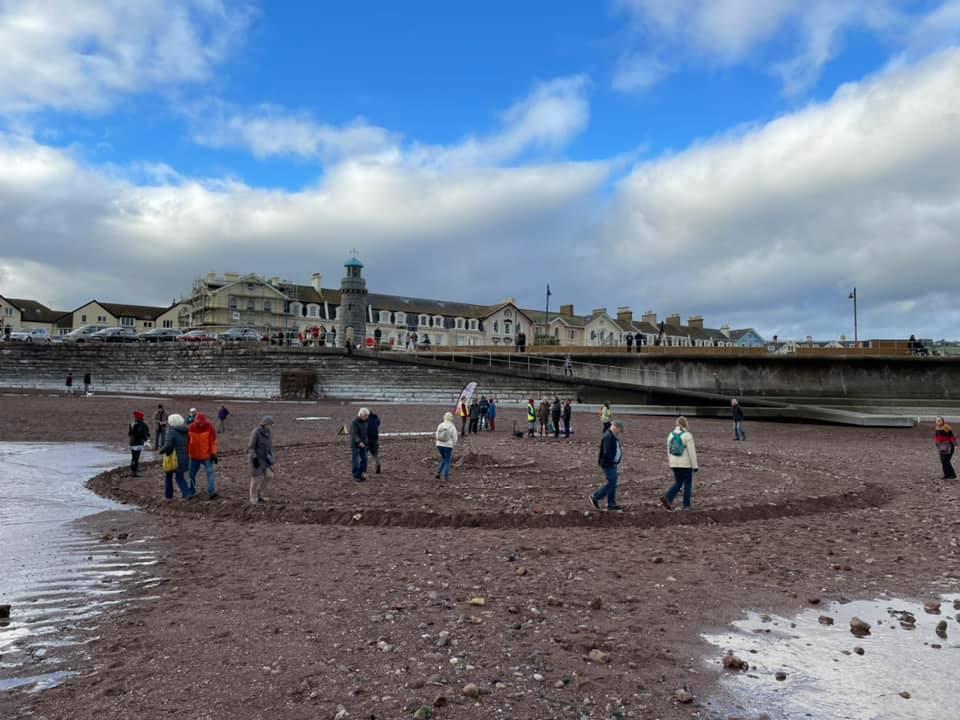
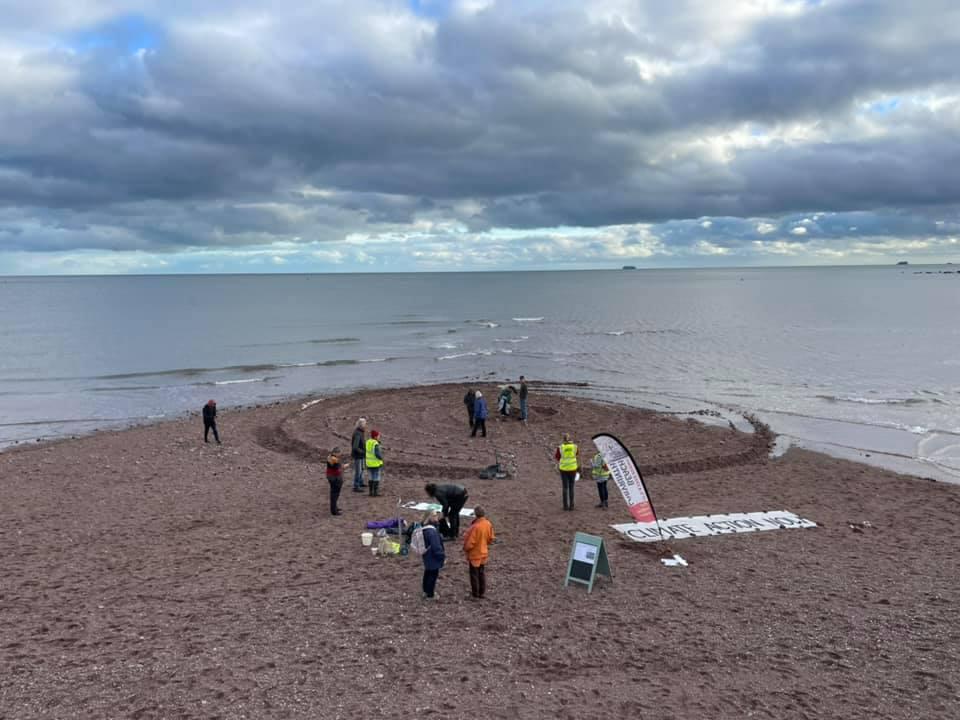
Around 100 people walked the labyrinth created on Teignmouth Beach last weekend for the Global Day of Action for Climate Justice. Plenty more watched the walkers from the promenade.
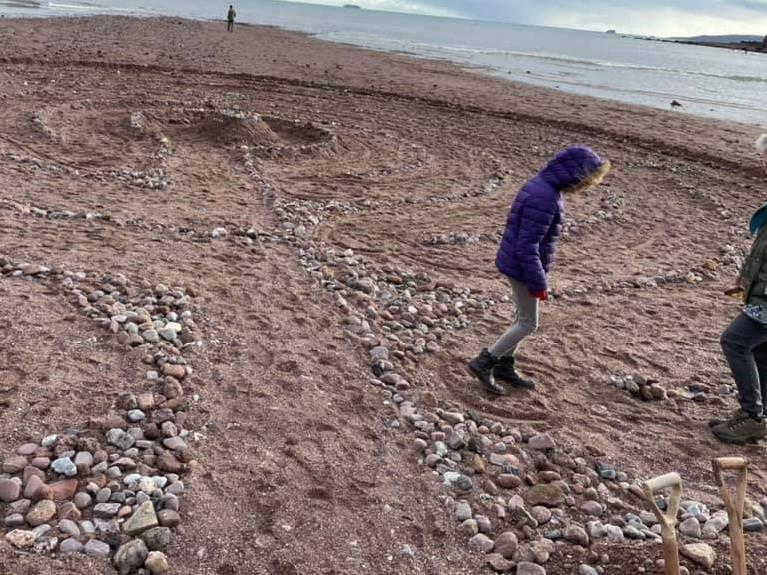
The construction effort, directed by labyrinth artist Andrew Nicholson, was tough work as the chosen location, below the lighthouse, was particularly stony. Still, the stones added to the attraction of the finished artwork as they were used to mark the labyrinth pathways.
Passing families with children joined in enthusiastically to place the stones. “That building effort with the parents and children was my favourite part of the experience,” said John Watson of Action on Climate in Teignbridge, which organised the event. “All in all, it was quite a spiritual event which I think connected with people in a most original way.”
Labyrinths have a long history. People have been creating and walking them since the times of the ancient Greeks. In medieval times, Christian monks would walk them to reflect on the journey of their lives.
The idea of the Teignmouth Beach labyrinth was “to reflect on our concerns for the environment and be thankful for the special places in our lives”, said Andrew Nicholson (pictured above).
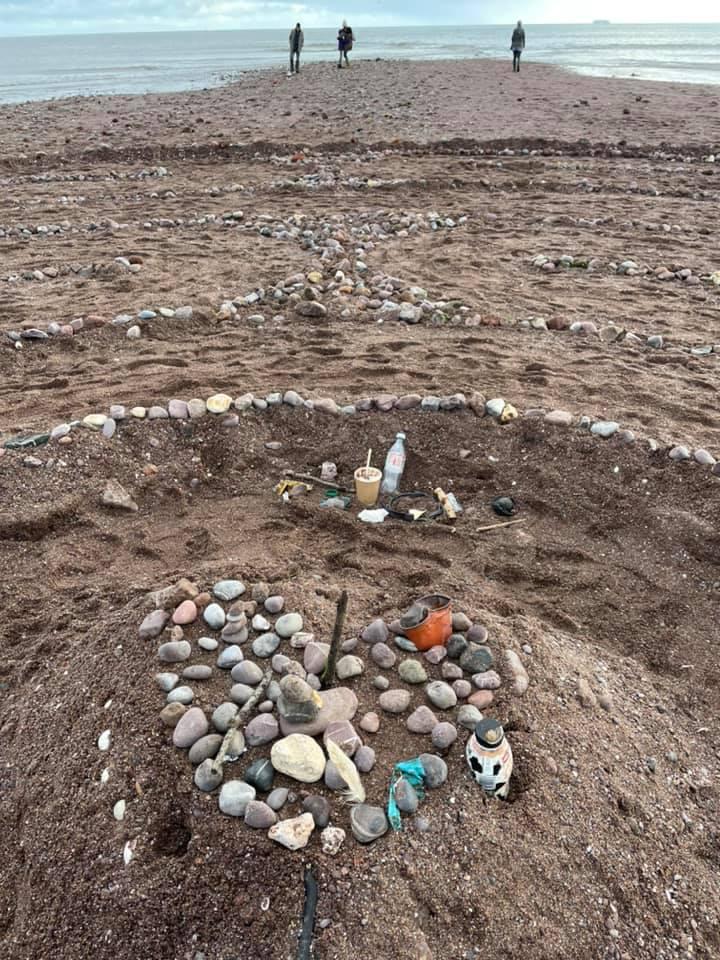
Those walking the labyrinth were invited to pick up a piece of rubbish found on the beach at the entrance, reflect on their concerns as they trod the meandering path to the centre, then leave the rubbish and their concerns there. They could then take a stone from the centre and walk back thinking of places precious to them.
Scott Williams, an ACT member, said: “It was amazing and moving to see the flow of people travelling through such an ancient symbol. The solemnity and peace it created within those that walked it will stay with me.”
Of course, the sea claimed the labyrinth as the tide came in later in the day. Watching the water engulf the construction, a vicar from Dawlish remarked how appropriate the image was; a symbol of the threat of climate change to many people around the world.
“There were lots of people watching as the tide came in,” said Audrey Compton of ACT. “People of all ages. People who wanted to talk. It was obvious to me that we have suddenly reached a tipping point of understanding about the environment and desire for change. COP26 may not achieve nearly enough politically, but it has galvanised ‘people power’!”
For more on beach labyrinths visit the facebook page.
In this podcast Emily Marbaix updates us on what wildlife wardens have been up to, reminds us of autumn jobs to do in the garden, especially those that help wildlife, and takes a look at the eco-friendliness (or not) of our pets, including what we feed them and the flea and worm treatments we give them.
Here is this month’s Newsletter dominated by two COPs, ie one more than you’ll see in the news. These and other topics covered are:
Devon-wide Retrofit survey.
COP26 is almost upon us.
The Convention on Biological Diversity and COP15.
A joint approach to Climate & Ecology.
The Devon Climate Assembly Report.
ACT Wildlife Wardens.
How to farm sustainably.
What more can we do about Climate Change?.
We’d really appreciate some feedback on the general depth, contents and structure of our newsletters. Do they match your needs, go over/under your head, what are we missing or overdoing? Please feel free to comment below or email Paul, with any thoughts and suggestions.
Newton Abbot resident Jessie Stevens is heading to Glasgow for the COP26 summit in November, and plans to pedal the whole 570 miles! She will be cycling under the banner of the People Pedal Power mission she has created. This aims to inspire people (particularly young people) to join her on her journey and deliver a message to the climate conference on the need for urgent action on green transport infrastructure, and much else.
Jessie, 16, is a climate activist determined to make the voice of youth heard at COP26. Such events have long been dominated by adults, she says, many of whom may not live to see the worst effects of the climate crisis. “The youth are rarely a part of these talks despite the impacts of climate and ecological breakdown impacting them the most.”
After looking at her travel options, Jessie found the easiest, cheapest, but most polluting way to get to Glasgow would be by car or plane. Taking the (less polluting) train looked complicated and expensive. She decided she would like to travel under her own power and resolved to cycle, and make as much noise as possible along the way.
“To me, cycling is a very community orientated mode of travel. This perfectly fitted my visions of #ride2COP26 as it gives space for many individuals to join the ride, gathering force and power,” she says.
Jessie will be supported on her trip by Adventure Syndicate, a collective of women endurance cyclists, who will accompany her on a cargo bike, carrying everything she needs.
“The cargo bike will not only provide physical support, but will also tangibly represent one of the viable solutions to developing a more sustainable transport system,” says Jessie. “After all, this journey is not just about highlighting what is wrong, but also about demonstrating solutions.”
Adventure Syndicate will also co-produce a film documenting the journey and the stories of those involved and the people Jessie meets along the way.
Jessie will set off on 20th October, covering between 50-70 miles a day, and invites people to join her for a few miles to highlight people power—both in terms of active travel and political voice.
This month’s newsletter covers a talk on Cirl Buntings by Cath Jeffs, a conservation officer with the RSPB; information about upcoming webinars; the Great Big Green Week events held in Dawlish and Newton Abbot; plus a summary of the projects Wildlife Wardens have taken on around the district.
“Working with industry aiming to generate 5GW of low carbon hydrogen production capacity by 2030 for industry, transport, power and homes, and aiming to develop the first town heated entirely by hydrogen by the end of the decade”
On 17 August 2021 the department for Business, Energy and Industrial Strategy (BEIS) released its Hydrogen Strategy announcing, in the press release:
A ‘twin track’ approach to supporting multiple technologies including ‘green’ electrolytic and ‘blue’ carbon capture-enabled hydrogen production.
A UK hydrogen economy could be worth £900 million and create over 9,000 high-quality jobs by 2030, potentially rising to 100,000 jobs and worth up to £13 billion by 2050
Hydrogen could play an important role in decarbonising polluting, energy-intensive industries like chemicals, oil refineries, power and heavy transport like shipping, HGV lorries and trains
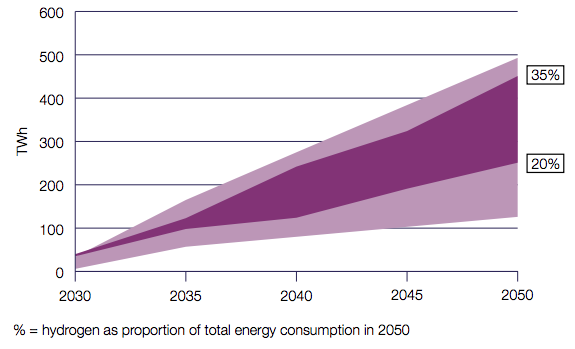
By 2050 20-35% of the UK’s energy consumption could be hydrogen-based.
A consultation to be launched, based on offshore wind, to look at ways to overcome the cost gap between low carbon hydrogen and fossil fuels, plus a consultation on a £240 million Net Zero Hydrogen Fund, to support the commercial deployment of new low carbon hydrogen production plants.
Working with industry to assess the safety, technical feasibility, and cost effectiveness of mixing 20% hydrogen into the existing gas supply.
£105 million in UK government funding provided to support polluting industries to significantly slash their emissions
In the original press release, and elsewhere, it was mentioned that 3 million homes would be powered by hydrogen by 2030 but BEIS have now amended the press release and confirmed that this was an equivalent illustration and that hydrogen will predominantly be used in heavy industry.
As stated in the strategy, with currently almost no low carbon production of hydrogen in the UK or globally, meeting the 2030 target will require rapid and significant scale up over coming years. It then describes where Hydrogen comes from:
“There are almost no abundant natural sources of pure hydrogen, which means that it has to be manufactured. The most common production route is steam methane reformation (SMR), where natural gas is reacted with steam to form hydrogen. This is a carbon-intensive process, but one which can be made low carbon through the addition of carbon capture, usage and storage (CCUS) – to produce a gas often called ‘blue hydrogen’. Hydrogen can also be produced through electrolysis, where electricity is used to split water into hydrogen and oxygen – gas from this process is often referred to as ‘green hydrogen’ or zero carbon hydrogen when the electricity comes from renewable sources. Today most hydrogen produced and used in the UK and globally is high carbon, coming from fossil fuels with no carbon capture; less than 1% can be called low carbon. For hydrogen to play a part in our journey to net zero, all current and future production will need to be low carbon.”
So in following its “twin track” approach the government assumes that blue hydrogen will initially start the strategy going with green hydrogen becoming more abundant (and cheap) in later decades. Without specifying proportions however, it seems that in both mix and, as shown below, use, the government is relying on the market to find the best combination.
Some key points:
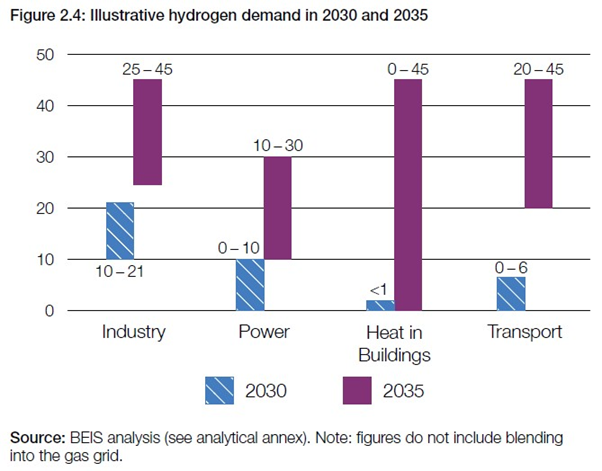
Here is a graph from the report showing the estimated hydrogen demand in various sectors, in Terawatt Hours (TWh) (one Trillion Kilowatt hours), in 2030 & 2035.
Note in particular the 0-45 estimate for heating, this reflects the uncertainty about the lesser priority of hydrogen for domestic use and the availability today of alternatives, eg Heat Pumps. To put this into perspective the anticipated <1 TWh in 2030 and up to 45 TWh in 2035 represents about 0.2% and 10% respectively of the UK’s current energy demand for space and water heating.
It’s likely therefore that, as mentioned in the Climate Change Committee’s (CCC’s) balanced pathway to Net Zero, hydrogen may play a part in heating where the housing is near to the hydrogen production and electrification is not possible or where there is stored hydrogen created from surplus renewable energy.
Unless using this stored hydrogen however, it makes little sense to use green hydrogen for heating when the renewable energy used to create it would be better used to provide the heating directly and so save the wasted energy from conversion.
It’s often quoted that “the only waste from using hydrogen is water”. This is true when hydrogen is used in “fuel cells”, where a chemical reaction takes place, or where hydrogen is burned in pure oxygen but it is not true when, as would be the case with heating, it is burned in air. Air’s main constituent is Nitrogen and burning hydrogen in it produces other pollutants, known as NOx. The strategy considers these and how industry must ensure they are kept within emission limits, opponents however consider that, along with the infrastructure changes needed, it’s unacceptable to plan for any such emissions.
As explained in an Annex, with an established battery electric vehicle industry now well established, cars and vans do not feature in transport assumptions, leaving the use of hydrogen for haulage, busses, rail, shipping and aviation however, given the rapid development in battery technology, the annex casts doubt over the likelihood of the first three. Consequently, as mentioned above, it seems the government will wait and see what the markets come up with.
In 2050 the strategy estimates somewhere between 20% to 35% of the UK’s total energy demand being provided by hydrogen. In the CCC’s 6th Carbon Budget report last year, its balanced pathway relied upon a maximum of about 20%. Until the government releases its own energy pathway it’s not possible to reconcile the two.
As blue hydrogen relies on a supply of natural gas there’s suspicion outside government over its promotion as an energy source by the fossil fuel industry and studies, including this one in the USA, indicate that current production methods, including carbon capture and storage, result in significant CO2 and Methane (CH4) emissions, both in the extraction of the gas in the first place and then leakage in the capture and storage processes.
This view was reinforced by reports that Chris Jackson, the chair of the UK Hydrogen and Fuel Cell Association resigned in advance of the government’s strategy saying he could no longer lead an industry association that included oil companies backing blue hydrogen projects, because the schemes were “not sustainable” and “make no sense at all”.
As mentioned above, in its twin track approach, the government sees blue hydrogen as useful in creating a path to green hydrogen but, with BEIS talking about up to 15 year contracts, concern has been voiced among climate groups that over-reliance on blue could lock the UK into decades of North Sea gas production, fossil-fuel imports and millions of tonnes of carbon emissions.
ACT’s view is that there will be a place for hydrogen in providing energy where electrification is not possible and in some industrial and chemical processes. With the uncertainties over the impacts of its production however and without scaled-up and effective capture and storage, blue hydrogen is wholly inappropriate as a solution and so efforts are better directed towards immediate reductions in the use of fossil fuels with any hydrogen pathway being primarily towards green hydrogen.
Our wildlife wardens have been busy gathering information about many sites, and some have submitted responses for their areas individually. Here is the response on ecological matters, which includes information about many sites.
We have also studied chapter 11 low carbon, in detail and have been assured that a further consultation on renewable sites will occur later in the year. Chapter 11 is based on a report from Exeter University, which identifies the district’s energy requirements and potential for renewable generation. We await this consultation with interest.
As usual, it was been a busy month! We are currently writing ACT’s response to the Local Plan consultation, so this newsletter is a little shorter than usual.
Thank you to those of you who have responded to the Local Plan Consultation. This could be our last chance to influence where development happens in Teignbridge!
If you haven’t yet commented on any sites, you have until midday on Monday 9th August. Here is some guidance on how to comment on ecological impacts.
Rewilding
Two groups of Wildlife Wardens visited Ambios’ rewilding project at Lower Sharpham Farm. We saw how they are using small numbers of Belted Galloway cattle and Mangalista pigs (an old Hungarian breed) to mimic natural grazing and disturbance. As we walked around the site we were lucky to see some of the wildlife that is benefiting from rewilding, including a group of swifts flying over the Dart and some interesting peacock butterfly caterpillars.
In collaboration with the Woodland Trust and Rewilding Britain, Ambios is hosting the Devon rewilding network, which you can join here. It is a place for people to share news and upcoming events about rewilding in Devon.