Category: News

General News items

  • Heat pump pros and cons

    I remember as a student putting a shilling (2.5p) in the meter to run one bar of an electric fire for an hour to heat my single room. The heat was soon lost again due to poor insulation. 

    I now live in a large house heated to a steady 21C by an air source heat pump that uses less energy per hour than the one bar fire did to heat a single room, even in cold weather. It also heats water twice a day to 55C. 
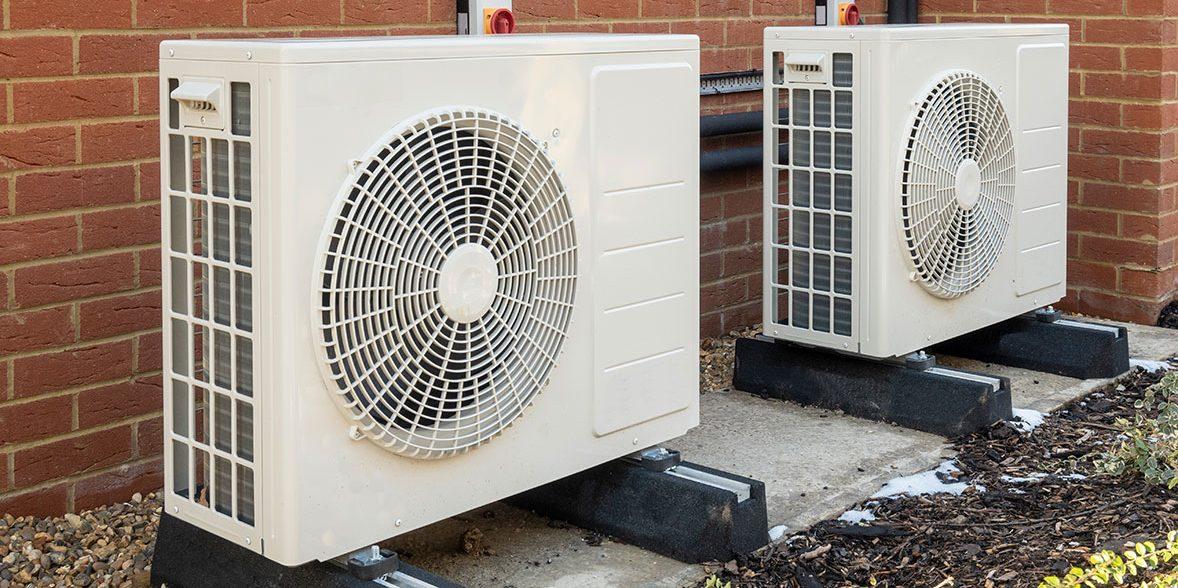
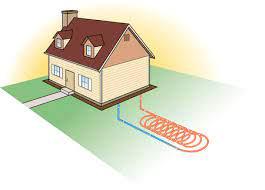
    Our heat pump works by extracting heat from the air outside and using it to heat water,  which then circulates through the underfloor heating system. This works well because the floor area radiating heat is much larger than traditional radiators, so the circulating water does not need to be as hot as in a conventional system. The key point is that the electrical energy needed to run the pump is much lower than the heat energy it provides.

    Many households will need to replace their gas or oil boilers with heat pumps if we are to have any chance of reaching the government’s net zero carbon target by 2050. Heating accounted for nearly one third of UK household greenhouse gas emissions in 2017, according to the Energy Saving Trust. We need to cut heating emissions by 95% to reach net zero by 2050, it says.

    So far we have made little progress. Currently, biomass is the main source of low emission heat in British homes, primarily supplied via wood burning stoves. Around 1 million homes make use of this energy source, according to the Climate Change Committee, which advises the UK government. Heat pumps account for fewer than one in 100 sales a year of heating systems and show little sign of becoming more popular.

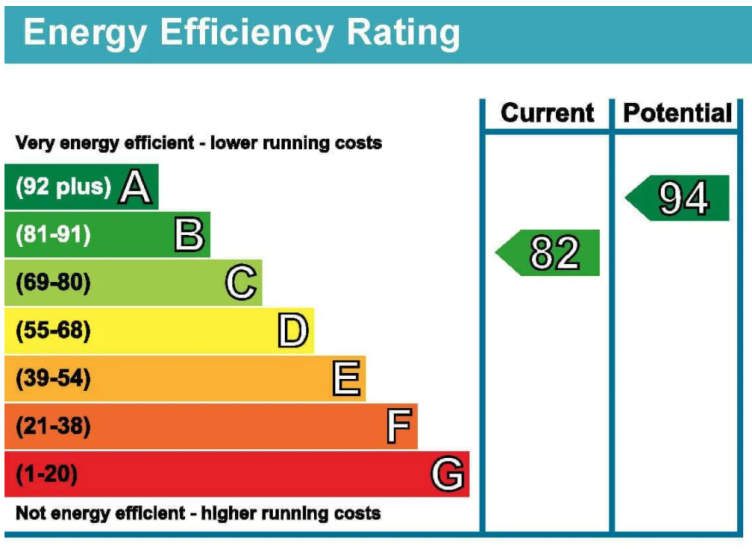
    Part of the problem is that heat pumps work best in houses that are well insulated and airtight. That makes them a good choice for new build houses. My house, for example, was built 10 years ago and designed for maximum energy efficiency. It is an oak framed building with insulated wall and roof panels, underfloor insulation and triple glazed windows. Plus solar panels and the heat pump. It has an Energy Performance Certificate rating of A and is as airtight as possible while still being well ventilated.

    Installations in older buildings are possible but it is important to obtain a professional whole house heat loss calculation so that the heat pump and radiators or underfloor heating are correctly sized. If this is not done a heat pump may not work well. 

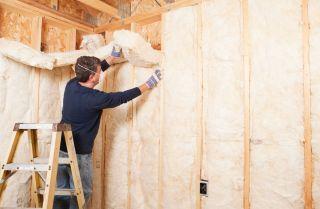
    It is likely you will have to improve your home’s insulation before you can install a heat pump, but this is an investment worth making however you decide to heat your home. It will reduce your energy use, which is the first step to decarbonising your home.


  • December 2020 Wildlife Warden Newsletter

    In a year that has been difficult for everyone, it has been immensely uplifting to see so many people enthusiastic about helping nature bounce back. Thanks to all of you for the time and energy that you have put into this scheme. At the time of writing, we have almost 50 Wildlife Wardens signed up , representing 24 of the 54 parishes in Teignbridge. I look forward to seeing your great ideas being implemented in 2021!    

    Continue reading…

  • I thought my diesel car would have to go

    I thought my diesel car would have to go

    More than seven in 10 people in the UK are concerned about climate change, surveys show. Nearly half think it is caused mainly or entirely by human activity. This is good news: if enough people are convinced by the scientific evidence that we are the cause of the problem, there is hope that we can be the solution too.

    The question is, can we wait around for the government, or industry, or someone else, to take responsibility and action? Tackling climate change feels like too large a task for individuals but I have come round to the view that what we do both individually and collectively is crucial. 

    Making changes to the way we live is a challenge, of course, and it is easy to make assumptions about what will make the most difference. In my case, I thought driving was my biggest carbon emissions problem. You see I love driving – it’s always been my escape route from life’s troubles. I can just jump into my car and go somewhere – anywhere. 

    When I realised a couple of years ago what a mess we’re making of our environment I became almost embarrassed to drive my old diesel car. I thought it would make my carbon footprint really high. So I tried out both electric and hybrid cars – in fact my husband really wanted one. But however much I tried I really struggled with them. They were automatic, and it felt as if the car was in control rather than me doing the driving. So I decided the car would have to go. 

    Then some friends suggested I use a carbon footprint tracker to find out how I was spending my carbon budget. Imagine my surprise when I discovered my car made a relatively small contribution to my footprint, due to the low mileage I now do. I try to walk most places, usually with my dog – everyone where I live knows me by my dog!

    My highest emissions turned out to come from stuff, which is almost more embarrassing than my car being my biggest problem! The damage my spending on DIY projects, outdoor clothing, gadgets, etc, does to my bank balance is bad enough. The fact that it’s also damaging the planet is double trouble. I now pay much more attention to where my stuff is produced, and  make a conscious effort to buy local, even if it means I don’t receive it the next day. 

    At least I now know how I am spending my carbon budget, and more importantly, what actions I can take to reduce it.

    I was so close to selling my car and making the massive mistake of thinking I was now clean and green. And I could have carried on accumulating more stuff without a thought to the real cost to the environment of each new purchase. 

    So my advice to all my friends is, if you want to make changes, just check they are the ones that will really make a difference to your impact on our planet. 

    Let’s make 2021 the year of climate action!

  • Are you interested in retrofit?

    Are you interested in retrofit?

    In 2019 nearly 70% of Teignbridge’s existing housing stock had an EPC rating D and below.  Despite the significant increase in new build, this % has changed little in the past 10 years and, in the last 2 years, has actually increased.

    Green-House Gas (GHG) emissions from heating our buildings are significant with Teignbridge’s domestic emissions in 2018 accounted for approximately 25% of all its emissions, most of this from heating.

    In order to to reach the UK’s Paris targets we can reduce emissions by retrofitting properties to:

    • decarbonise heating energy, by using low-carbon fuel sources (eg Biomass & Hydrogen) or switch to electric heating (eg. Heat Pumps) and using low-carbon electricity generation.
    • reduce the heating energy demanded by eliminating waste and minimising heat loss (ie with better insulation).

    Homeowners invest significantly in home-improvements, especially in the able-to-pay sector, however this sector tends to have the highest GHG emissions, primarily because energy pricing is still low relative to incomes in that sector.

    Whilst Climate Change is accepted as a serious threat by the majority of the population, including the able-to-pay-sector, it is still the case that, in general, they do not act to address their contribution to Climate Change.

    Those who do act are faced with a plethora of solutions, deals and government incentives.  More often than not, many are either disappointed that their emissions and running costs have not reduced significantly or they do not measure the GHG emission reduction to find out.  One of the most common concerns is ‘can I trust the salesperson?’ followed by ‘will the builder do a good job?’.

    To address this, ACT is considering an initiative, initially targeted at the able-to-pay, to identify local commercial organisations with the expertise and quality of work, backed by relevant industry standards, to deliver bespoke whole house retrofit solutions.

    By identifying suitable customers, designers, architects, builders and material suppliers we hope to demonstrate that a sufficient market can be stimulated to become self-sustaining.  This will of course represent a small percentage of the retrofit needed, but it could be a model to deliver more ambitious initiatives such as in the Carbon Coop model. 

    Teignbridge District Council does not currently have plans, or resources, to formally address this and Housing Associations will develop their own specific supply-chain solutions.

    Teignbridge has a large number of older, poorly insulated, rural properties.  Increasingly these properties are owned by those wanting to undertake significant improvements and having the budgets to do so.  Normally a piecemeal approach, based on little (if any) measurements or holistic assessment, results in costly retrofits and inappropriate heating solutions.

    As an impartial community-based organisation ACT is ideally placed to bring the different parties together under a replicable scheme of effective retrofits, helping to develop a template scheme for both homeowners and service providers.

    The initial model proposed is that adopted by the Carbon Coop, based around an assessment/design phase and using suitably experienced local builders/crafts people.

    To get the scheme started, ACT would need someone to either volunteer or be paid (grant funding may be available) to identify suitable providers and customers and liaise with similar groups to discover their approach and put a proposal together on how it could work in Teignbridge.

    Ideally, we should also find a customer with a retrofit project willing to work with ACT’s Built Environment & Energy group to pilot some of the approaches already well understood.  Trialling each of the elements of the scheme to identify an appropriate supply chain should help identify problems that may occur.  Several such projects are likely to be needed before a Teignbridge-specific model is developed.

    Are you interested? If so, drop us an email with your details.

    Extracted from a paper written by Fuad Al-Tawil

  • Could you be a parish Wildlife Warden?

    Could you be a parish Wildlife Warden?

    The ACT Ecology Group is looking for parish-based, volunteer Wildlife Wardens, writes Audrey Compton. They are needed to help support, protect and increase our district’s wildlife and improve its chances of surviving the ecological and climate emergencies we face. Wildlife Wardens need to love wildlife but don’t need specialist knowledge, we will provide training.

    Having Wildlife Wardens will help our communities become more involved in the natural world, enhancing their physical health and giving them more joy and happiness.

    Our aim is for all 54 Teignbridge parishes and Newton Abbot wards to have one or two Wildlife Wardens by the end of 2021. As our training capacity increases, we will recruit up to 5 wardens for each Parish.

    Who can be a Wildlife Warden and what will they do?

    Anyone who is interested in or knowledgeable about wildlife/ecology can become a Warden. You will:

    • Commit to giving your parish’s wildlife several hours of your time a month.
    • Look out for opportunities to protect, help and increase the wildlife in your parish.
    • Carry out practical work in your parish that will benefit wildlife.
    • Either work in a team or possibly train to lead local volunteers on practical tasks (or you could call in specialists from ACT Ecology Group).
    • Send ACT and your parish council a brief, monthly account of what you have been doing, so we can all share successes and difficulties.

    Wildlife Wardens in neighbouring parishes could work together on joint projects. Wardens with special skills and knowledge might also help train other Wardens.

    Unfortunately, we don’t have funds to pay for Wardens’ expenses. However, Wardens who are ACT members will be covered by our insurance.

    Some of our existing parish wildlife groups will be Wildlife Wardens, organising work and sharing expertise. If there isn’t a local group, Wildlife Wardens can work together – and maybe even start a group.

    Project areas:
    A. Surveying and helping to improve and connect habitats.
    B. Promoting organic wildlife gardening
    C. Monitoring building and development within the parish and alerting ACT of any wildlife damage.

    The Ecology Group hopes to provide free training in these areas:

    • Identification of all types of wildlife
    • Habitat management and connectivity: hedges, woodlands, meadows, verges, ponds
    • Farming and wildlife
    • Writing risk assessments – and working with them!
    • Wildlife gardening
    • Creating pesticide-free zones
    • Carrying out desktop surveys
    • Monitoring planning applications and developments.

    We will stay in close contact with the Council’s Green Spaces Team, and collaborate wherever we can, but we are aware their resources are limited. We have support from Teignbridge District Council, RSPB, the Woodland Trust and Devon Biodiversity Record Centre.

    We have been granted funding by Teign Energy Communities, Councillor Jackie Hook’s DCC Locality Fund and Dartmoor National Park Authority, and extend our thanks to them for this vital help. Among other things it has enabled us to appoint a coordinator for a few hours a week, who will ensure good communication and record keeping.

    If you are interested in becoming a parish Wildlife Warden, please get in touch with our coordinator, Flavio Winkler Ford: flavio@actionclimateteignbridge.org

  • Why carbon intensity apps are greenwash

    Why carbon intensity apps are greenwash

    There is an app for almost everything. One that recently drew my attention is a carbon intensity app, which at first sight looks really helpful in alerting you to when you can put washing on or charge up batteries while the electricity grid in your area has low carbon emissions.

    Renewable energy is not yet stored in sufficient quantity so needs to be used when it’s available. Carbon intensity apps tell you when output from renewable sources of electricity is high and the carbon intensity of the grid is therefore low. 

    What’s not to like? Well, the devil is in the detail, as the saying goes. The claims made for these apps are little more than ‘greenwash’, says ACT energy expert Fuad Al-Tawil. Teign Energy Communities (TECs) has produced a detailed explanation of why this is so.

    Essentially, the only sure way to lower grid carbon emissions is to increase the renewable energy that feeds into the grid. Point in time readings from a carbon intensity app are not a reliable indicator of surplus low-carbon electricity being available. If demand for electricity from users of the apps increases when intensity is low and there is no renewable surplus, it will just lead to gas being switched on. A gas-fired power station is currently the easiest type of electricity generator to turn on and off at short notice.

    There are additional complicating factors due to the way the national grid operates. The financial settlement system for generating, transporting, distributing and consuming electricity is based on price. There is no accounting for carbon emissions. This can lead to renewable generation being turned off and a gas fired power station being turned on to maintain the balance of the grid, so generation and consumption are matched. 

    By all means download a carbon intensity app, but don’t assume you will be increasing the use of renewable energy and thereby reducing the carbon intensity of the electricity you buy. 

    The only way to help reduce the carbon intensity of the national electricity supply is to encourage the market to build more renewable generation.  You can do this by buying a 100% green tariff from a provider.  Ideally use one of the few providers that buys directly from renewable generators or generates its own supply. TECs names Good Energy and Ecotricity as two such companies. The more people who use such providers, the greater the demand for renewable energy as part of the energy mix of the grid. 

    The 100% ‘green’ tariffs offered by other energy companies will not help so much in this regard as they are achieved by a form of offsetting using tradable certificates called REGOs (Renewable Energy Guarantee of Origin). Despite the name, they will not be adding new renewable generation to the grid, simply offsetting against existing renewable generation.  This will not reduce the carbon intensity of the grid. The TECs paper explains this in more detail.

    Of course, the most reliable way to reduce emissions from electricity generation is to lower your usage. Use the carbon calculator to work out your carbon footprint then consider what changes you can make to reduce it. Generating your own renewable energy also helps, as does buying from Good Energy or Ecotricity. Sadly, timing your energy consumption to coincide with low carbon intensity periods via an app will not help and could even increase carbon emissions.