Category: News

General News items

  • ACT Newsletter January 2026

    ACT Newsletter January 2026

    Welcome to ACT’s first newsletter of 2026 keeping you informed of the latest activities our Groups have been working on. Do get in touch if you are tempted to join in with any of our projects!

    Featuring:
    The Sun Will Still Shine – A climate song
    Climate Action event
    Two Ducks to Go Please
    National Emergency Briefing
    Carbon Cutters – More less rare, less high tech
    I may be addicted to My Electricity
    What is a Heat Pump, and will it work in my house?
    Wildlife Warden Update
    Carbon Cutters update

    Produced by Scott Williams

    The Sun Will Still Shine – A climate song

    Richard Large is a member of the Bovey climate action group CABH. Richard has produced a video of his own climate action song called The Sun Will Still Shine which you can see here: 

    The lyrics are:

    The sun will still shine

    You directors of doubt
    You that draw the black gold
    You that tear up the earth
    Youโ€™re destroying our world
    You that try to deflect
    You that seek to deny
    We no longer accept all
    your odious lies.


    As the wildfires scorch
    And the waters they rise
    The glaciers recede
    And the snowline gets higher
    You think that your
    petrodollars protect
    But no they wonโ€™t keep you
    from what could come next.


    While you scorn all the young
    Whose anger will hold
    your guilt to account
    As the changes unfold
    The darkening ice
    The dry wells abound
    No birds in the sky
    In the forest no sound.


    Dโ€™you think of your children?
    And your grandchildren too?
    In thirty yearsโ€™ time
    Their shame will be you
    Theyโ€™ll not admit to your name
    Disbelief and disgrace
    That their forebearsโ€™ self-serving
    Couldโ€™ve been so misplaced.


    Not a soul would look up
    Not a soul would look down
    And would heartland care
    if Bangladesh drowns?
    The hurricanes reap
    The flood on the tide
    Dโ€™you really believe you have
    God on your side?


    So the young will fight back
    at your petrified scorn
    Your foxy-fake news
    Your deceits are all torn
    We know what you do
    Weโ€™ve opened your door
    This is not about doom
    We just need to do more.


    Great-grandchildren will
    Look forward and know
    The sun will still shine
    The tides will still flow
    The waters will fall
    The winds come around
    And the carbon weโ€™dโ€™ve burnt
    Stays deep in the ground

    Mandy Cole
    ACT Public Engagement Group


    Climate Action event

    Bovey & Heahtfield Climate Action Group are holding an upcoming event this week, in partnership with First Draft Books, when Tim Lenton, Chair in Climate Change & Earth System Science at University of Exeter, will explore the part we each play in triggering vital positive tipping points that accelerate us out of the climate crisis.

    There are a number of ways in which you can get tickets. For more information click here.

    Kate Benham
    ACT Director


    Two Ducks to Go Please

    Weโ€™ve all heard about Artificial intelligence (AI), what great things it can do for us but also some of its downsides. The most recent controversial use in the news was about Elon Muskโ€™s social media platform X and its built-in Grok AI function.

    I think AI has an important role to play in improving many aspects of our lives, including decarbonisation. Like fossil fuels the technology causes significant ghg emissions. Also, like the internet and computing, it can be misused and cause harm. In themselves, these are not reasons to stop using AI, but they are reasons to consider how/where/when it is used.
    ACTโ€™s focus is of course the impact AI has on climate change, global AI energy use is forecast to double by 2030 to 945 TWh p.a. The UKโ€™s annual electricity use in 2024 was around 319 TWh. While investment in new renewables has outstripped those for fossil fuels by 2:1, our ghg emissions are still increasing. Thatโ€™s because demand for energy is growing faster than renewables and technological efficiencies put together.

    What benefits are we getting from AI, do they justify the negative consequences?

    Considering only the energy consumption, it seems unreasonable that AI should be used for frivolous things especially those that are unnecessary. What is frivolous or essential is a personal choice and can vary over time.

    We often debate whoโ€™s responsible and therefore should take action. Some say it is the governments because they are โ€˜in league withโ€™ or โ€˜beholden toโ€™ the fossil fuel industry. Others say it is businesses โ€˜enticingโ€™ the consumer, while others say it is the consumer. In the end we will all suffer the consequences, maybe not at the same rate, but as more irreversible tipping points are reached, everyone will.

    It therefore makes sense that we all act on the things we can control. Some may already have turned off the AI internet search feature in their browsers, turning this on occasionally when necessary. We may even have two browsers with the AI feature enabled and disabled. What many donโ€™t know is that doing this simply hides the AI search which still takes place and consumes additional energy. There are some 10 billion browser searches every day, 90% of these are using the Google search engine.

    The default search engine in most internet browsers is Google. Unfortunately, the search engine cannot be turned off. Luckly there are alternative search engines that allow you to both hide AI search results and turn them off. A leading example is Duck Duck Go. Here is a 1 minute video guide on how to change your search engine in Google Chrome. Remember to set the setting of the search engine to stop AI not just hide it.

    Fuad Al-Tawil
    Energy group coordinator


    National Emergency Briefing

    Itโ€™s an emergency!
    At a National Emergency Briefing (NEB) on 27th November 10 of Britainโ€™s top scientists and experts warned over 1,200 politicians, business and community leaders of the major climate-related risks to the UKโ€™s economy, public health, food systems and national security.

    Newton Abbot MP Martin Wrigley attended the briefing. Central Devon MP Mel Stride did not.
    Attendees heard from experts on nature, climate, tipping points, weather extremes, food security, health, national security, economics and the energy transition. You can watch videos of the presentations on the NEB website, and at 10-15 minutes each they are not too demanding, although the presenters do not mince their words.

    Lt General Richard Nugee said: โ€œWe are facing the potential of an ungovernable state unless government takes this seriously.โ€

    Prof Tim Lenton noted we have already passed some tipping points. He said the biggest tipping point risk for the UK is the failure of the ocean current known as the Atlantic Meridional Overturning Circulation (AMOC). It is already weakening and could tip at around 2C of global warming. If it tips, winters would be much colder (-20C for three months in London, -30C for 5.5 months in Edinburgh),summers hotter and rainfall lower. โ€œThis would end large-scale agriculture in the UKโ€, he said.

    Prof Kevin Anderson said there is no viable way to stay below 1.5C of global warming, and if we keep burning fossil fuels, 2C of warming is highly likely by 2050, and 4C is possible by 2100. โ€œ3-4C of heating means the collapse of our systems,โ€ he said. โ€œWe would face the widespread breakdown of society and the loss of any meaningful global economy.โ€

    So far, so apocalyptic. But Tim Lenton also talked about positive tipping points, noting we have already passed one in phasing out coal from power generation. Strong policy helps trigger such tipping points, but if politicians are to take the emergency action needed, they need to see strong public support for such measures.

    The NEB organisers are calling for a televised national emergency briefing by the government and public broadcasters, like those staged during the pandemic, to inform the public and counter the misinformation flooding the media. You can sign the petition calling for this.
    A follow-up film from the Briefing, to be released in March or April, will be available for community screenings. You can register an interest in hosting a showing on the home page of the NEB website or on its Take Action page.

    To help show public support for government action on the climate and nature emergency, please ask your town or parish council to sign up as a supporter of the Climate and Nature Bill. Check first to see if it is already on the list of supporters. Teignbridge District Council and Devon County Council are already signed up and Teignmouth Town Council recently agreed tp do so too.

    Pauline Wynter
    ACT Public Engagement Group PE Co Chair 


    Carbon Cutters – More less rare, less high tech

    I write regular articles in Reconnect Magazine, here’s one about my new concept – Enough Tech – a new strand of sustainability innovation that deliberately avoids rare, scarce, or geopolitically sensitive materialsโ€ฆ.

    Last issueโ€™s article on salt batteries was well received, and it got me thinking more deeply about what kind of future we are actually trying to build when we talk about sustainability. Not just which technologies we adopt, but the assumptions beneath them: about progress, materials, complexity and resilience. Salt batteries are compelling not because they are flashy or futuristic, but because they quietly challenge the idea that a renewable future must be ever more high-tech, mineral-intensive and globally fragile.

    This line of thinking – Iโ€™m calling โ€˜Enough Techโ€™ points towards what might be called a post-tech philosophy of regenerative modernity. It is not anti-technology, nor nostalgic for a pre-industrial past. Rather, it asks a simple question: what if the most resilient future is one that blends modern insight with abundant materials, biological intelligence and time-tested physical principles?

    Much of todayโ€™s green transition risks replicating the bad extractive logic of the fossil age. Lithium, cobalt, rare earths and complex global supply chains promise decarbonisation, but often at the cost of new forms of ecological damage, geopolitical dependency and social injustice. Regenerative low-complex โ€˜enough-techโ€™ modernity takes a different path. It prioritises systems that are repairable, locally sourced, materially humble and ecologically embedded.

    Energy storage is a clear example. Alongside salt batteries, gravity-based storage systems use weight and height rather than rare metals, lifting heavy masses when energy is plentiful and releasing it when needed. Thermal storage systems rely on sand, stone, water or clay to hold heat for hours, days or even seasons. Pumped hydroโ€”one of the oldest forms of energy storageโ€”continues to outperform many newer alternatives when designed at appropriate scales. These technologies succeed not through novelty, but through alignment with basic physics and long lifespans.

    The same principles apply to buildings. Passive solar design, natural ventilation and thermal mass dramatically reduce energy demand before a single gadget is added. Insulation made from hemp, straw, wool, cork or wood fibre replaces petrochemical products while locking carbon into the built environment. Masonry heaters and rocket mass heaters deliver steady warmth using a fraction of the fuel of conventional systems. Here, efficiency emerges from design intelligence rather than technological escalation.

    Water and food systems reveal perhaps the clearest expression of post-tech thinking. Gravity-fed water networks, long used in traditional settlements, offer reliability with minimal energy input. Regenerative agriculture and agroecology replace synthetic fertilisers and precision machinery with soil health, biodiversity and timing. Productivity arises from living systems working in relationship, not from increasingly complex external inputs. Biochar, made from waste biomass, improves soil fertility while sequestering carbonโ€”turning a by-product into a regenerative asset.

    Even materials themselves are being reimagined. Timber, bamboo and earth construction reduce reliance on steel and concrete, while mycelium-based materials are literally grown rather than mined. Repair, reuse and low-tech recycling challenge the idea that progress requires constant replacement. In my worldview, durability and care are signs of advancement, not stagnation.

    Energy generation, too, benefits from a enough-tech lens. Solar thermal systems use mirrors, pipes and water rather than rare metals, providing hot water and heat with remarkable efficiency. Modernised wind and water wheels can perform mechanical tasks directlyโ€”pumping, milling, liftingโ€”without converting everything into electricity and back again. Sometimes the most elegant solution is to remove steps, not add them.

    What unites these approaches is a shared orientation: from scarcity to abundance, from complexity to appropriateness, from global dependency to local resilience. Regenerative modernity recognises that the future will not be secured by ever more intricate systems that only specialists can maintain, but by technologies that communities can understand, adapt and steward over generations.

    I guess what I propose is a cultural shift as much as a technical one. It asks us to value sufficiency over optimisation, resilience over speed, and relationship over extraction. It reframes progress not as domination of nature, but as deeper participation within it.
    Salt batteries were never just about salt. They were a signalโ€”one example among manyโ€”that a sustainable future does not have to be rare, brittle or extractive. It can be grounded, accessible and regenerative. In embracing a enough-tech philosophy, we are not stepping backwards, but choosing a form of modernity mature enough to live within planetary limits while still meeting human needs.

    We need to recognise that sometimes the most radical innovation is learning to build wisely with what we already have.

    If youโ€™d like to join our Carbon Cutters group email Scott our CC coordinator (scott@actionclimateteignbridge.org)

    Scott Williams
    ACT CC Coordinator


    I may be addicted to My Electricity

    This is a warning to anyone who hasn’t yet joined a My Electricity session – playing detective with your electricity usage is habit-forming! Read on to find out how it all started for one anonymous participant.

    What was meant to be an evaluation session with a facilitator got me going. Iโ€™d heard about this joint ACT/TDC initiative, My Electricity. The session got me thinking about what and how much electricity I was using and where. Iโ€™m not a numbers person and donโ€™t really like to use gadgets to measure things, but the session got me interested, it was a bit like a detective game.

    I managed to do enough during the session to practice the basics. I wanted to give feedback, so I got going soon after the session. Getting help from ACT when I got stuck made it really easy to measure things using the tool they lent me and the smart meter app I already had but never understood.

    Iโ€™m over the moon that I managed to quickly find about 79 kWh of saving in the first month. Iโ€™m especially pleased with that as there isnโ€™t anything significantly different about the way we led our lives compared to before, apart from:

    • Changing underfloor heating in kitchen to come on 2 hours later on weekday mornings.
    • Ensuring we run the washing machine when the sun is shining and therefore using solar.
    • Being much more conscious of switching lights off when not in a room. 

    I also found electrical items Iโ€™d been stressing about, my fridge freezer, turned out to be quite efficient. I cleaned it instead of buying a new one.

    Ongoing, the changes I have made require no further input or time commitment, they were one-off easy and quick to implement. The energy monitor is easy to use and not a big time commitment. 

    Next I will be filling in the My Electricity online tool (app), this will help me to be a bit more systematic to find out where else I can cut out unnecessary consumption. When I first heard about My Electricity I thought itโ€™ll be daunting and boring, it turns out to be fun and rewarding. I must make sure I watch screens other than my electricity app!

    Fuad Al-Tawil
    Energy group coordinator


    What is a Heat Pump, and will it work in my house?

    ith the future homes standards coming into force in 2025, new homes will be banned from installing gas and oil boilers with a total ban on the sale of oil and gas boilers planned from 2035 (with a few exceptions).
    Assuming no other breakthrough solution or significant reduction in the energy intensity of hydrogen, our domestic heating and hot water will be provided by heat pumps in the future.
    What is a heat pump?
    A heat pump absorbs heat into a liquid refrigerant from the outside air, ground or water. The refrigerant is compressed to increase its temperature. This heat is then distributed to radiators and / or underfloor heating and the hot water tank.
    Heat Pumps are powered by electricity. As the grid reduces its carbon intensity this will increasingly be most peopleโ€™s lowest carbon emission source of energy for domestic heating and hot water supply.
    Will a heat pump work for me?
    It depends on what you are trying to achieve. Cost reductions? Greenhouse gas reductions? Improvements to the comfort of your home?
    Most heat pumps operate efficiently at lower temperatures than gas and oil boilers. If your house is particularly poorly insulated, very draughty or has few or small radiators it is possible a heat pump will not produce enough heat to keep your home at a comfortable temperature without remedial actions.
    For most homes though, a heat pump will be an efficient solution.
    Will I need to upgrade my pipes and radiators?
    If you can keep your house at a comfortable temperature today and you consume less than around 100 KwHs of energy per sqm of heated floor space annually to heat your home, then a heat pump should work for you.
    What next?
    Contact us at Action on Climate Teignbridge (independent advice) or another expert on thermal performance and home heating. We can, or they should, guide you through collecting data to determine how a heat pump would perform in your home.

    Paul Bloch
    ACT Carbon Cutting Team


    Wildlife Warden update

    The Wildlife Warden diary of recent happenings:

    Nov 7th and 9th: Waxcap Walks – Two this year, 1st a Waxcap Workshop with Sean Cooch and Rob, the fungi experts from Natural England. After weeks with very, very few grassland fungi, just one field blossomed overnight, and we had a great day, including Val finding a new one for the farm that has only recently been discovered and named. For the Sunday walk we had a constant downpour – but everyone insisted on continuing and we came back sodden but happy.

    Nov 12th: 10 of us wedged ourselves into the kitchen for a seed swap – a great way of sharing local seeds and creating wildflower areas, as well as swapping ideas on where differnet species grow best and how to get them established.

    Nov 13th: Shira (WW for Ashton) entertained a full room at Chudleigh Town Hall with ‘Murder in the Garden’ – her very interactive talk that gets the audience really immersed in the complex consequences of pesticide use. We took a lovely wildlife garden and watched it all collapse when we decided that our cabbages were too holey and our roses too scabby! Thank you Shira – a wonderful example of how you can help your audience to discover the message for themselves! Let’s see if we can apply it to every other important message!

    Nov 15th: over 20 of us enjoyed a fantastic fungi walk at Stover with Dr Christian Taylor, who must be one of the best mycologists at explaining the tangled and amazing fungal world – including all the ways in which it is essential to our survival. Great for anyone who has pondered on ‘the meaning of life’!

    Dec 9th: Sue Smallshire looked at the Dormouse tubes that Teign Valley WWs put out on several local farms in September – and picked up again. She showed us how to detect signs of use by Dormice and other wildlife. 

    Audrey Compton
    ACT Wildlife Wardens

    To find out more about the Wildlife Wardens head to our recent Winter Newsletter


    Carbon Cutters update

    We continue to have monthly informal meetings, now set at every second Friday of the month.

    Our steering group met recently to decide on immediate (rather than longer term) direction, and decided on the following actions:

    – My Electricity project:  more sessions and more facilitators. Initially Kate and Rob will take part and attempt to help increase coverage, and others will bring it to the attention of other organisations and groups.  It is worth bringing this project to the attention of as many (willing) people as possible, because firstly it’s relatively tangible and straightforward, and secondly because it is being promoted by TDC as well as ACT. Let us know if you’d like to get involved.

    – Identify potential recruits by personal recommendation in order to increase the likelihood of trained CCs becoming more involved. We hope that if such people take the full CC training course they will become actively involved and help ‘spread the word’.

    Robert Gillett
    Action on Climate Teignbridge, Carbon Cutters support group lead

  • Act Newsletter November 2025

    Act Newsletter November 2025

    Welcome to ACT’s November newsletter keeping you informed of the latest activities our Groups have been working on. Do get in touch if you are tempted to join in with any of our projects!

    Featuring:
    Spotting Greenwash
    ACT Film Night
    Carbon Cutters – Championing Carbon Reduction Solutions
    Newton Abbot Constituency Climate and Nature Bill Supporters Group Formed to Lobby MP
    Food Farming Fisheries and Forestry
    New ACT Website
    Lower emissions holidays
    Wildlife Warden Update
    Becoming Pesticide-Free
    COP30

    Produced by Scott Williams

    Spotting Greenwash!

    Itโ€™s no secret a large majority of people are concerned about our natural environment and what climate change, if unchecked, will do to it. We are motivated to do our bit whenever the opportunity arises.
     
    Sales and marketing are all about understanding what motivates potential customers. Itโ€™s great to see so many highlighting the environmental benefits of their product/service, it demonstrates the power we have through our purchasing decisions. Unfortunately, not all are fully transparent with their claims, and not just when it comes to environmental benefits. Luckily, we have consumer protection laws to prevent the least truthful providers, but not all. There will always be loopholes and grey areas to exploit, which is why we need to be a little more questioning of some claims. โ€œThere is no such thing as a free lunchโ€ is a good starting thought.

    One of the long established and widespread claims is around โ€˜greenโ€™ electricity. Why would we not buy from someone who sells us โ€˜100% cleanโ€™ electricity? Even better when they encourage us to use low tariff electricity overnight because itโ€™s the โ€˜cleanestโ€™ and cheapest. We run our electricity hungry devices and charge our batteries during these low-cost periods. We feel good that weโ€™ve reduced our emissions, unaware that more likely we have increased our emissions, sometimes by more than double!

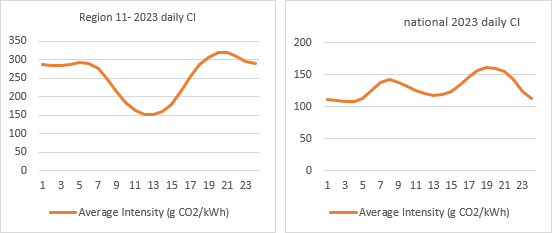
    Grid electricity can never be Zero emissions, in fact nothing we do or use today can have no greenhouse gas emissions. The better question to ask is how much emission something produces (e.g. a unit of electricity, kWh). Itโ€™s called the Carbon Intensity (CI), for electricity itโ€™s measured in weight of emissions per kWh (e.g. the average UK CI of grid electricity in 2024 was ~250 gCO2e / kWh at the plug).

    The electricity gridโ€™s CI varies hour by hour, but itโ€™s normally not measured at the sub-station you and I are connected to. It is only measured accurately at major nodes in the network. Electricity Info now provide easy access to regional CI, just enter your postcode. They also reference information on REGO certificates explaining some of the greenwash that still happens. The regional CI is based on NESOโ€™s grid Carbon Intensities data, the โ€˜officialโ€™ source used in the UK.

    The industry has been using the average CI to make its low emissions claim for overnight electricity. They ignore the data for regional CI, either through ignorance or deliberately. ACT has been highlighting this discrepancy for several years now, but many chose to ignore it.

    The charts below highlight the difference between what is used by providers (national) and what is published for the southwest (region-11). The average CI overnight in our region is more than double that of the national average. You should avoid using cheaper electricity overnight, unless you go and check the NESO portal on the day. If you have any questions on any of this, please ask, the energy group loves to be challenged.

    Fuad Al-Tawil
    Energy group coordinator


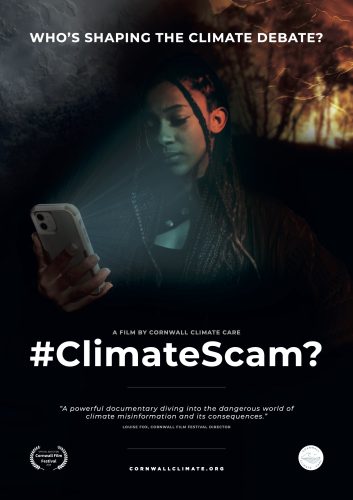
    ACT Film Night – Climate Scam

    Thank you everyone who came to our showing of the film โ€˜Climate Scamโ€™ in September. Many of the 55 people who came were subscribers to ACT, but it was also open to anyone who might be interested. The film was made by Cornwall Climate Crisis, and at only 45 minutes long, it managed to pack a lot in, including the effect of climate change on wildlife, the role of the media, the views of โ€˜disbelieversโ€™, the role of activism, solutions both effective and ineffective, the roles of communities and governmentsโ€ฆand more!. Thank you to the Cornwall team, who invited feedback from us all, using a QR code.

    The evening began with a social hour, with curries and drinks available. The good attendance made moving around to chat rather difficult, but the food and venue were really great, so thank you to the Alice Cross Centre, Teignmouth, and all the volunteers and staff who helped make the evening a success.

    The discussion which followed the film was absolutely what ACT was hoping for; we really wanted to bring people together to share ideas and reaction. We know from scientific studies that communicating about climate change has an impact on our behaviour. As well as helping to manage emotions which can arise with awareness of the crisis, it can also stimulate new ideas about what we can do, as individuals and as a collective, and importantly, show us that we are members of a huge majority of climate concerned people across the world.

    A great range of views was shared, and not at all restricted to those about the filmโ€™s title. Quite rightly, there was some disagreement but overall a very motivated, constructive and positive atmosphere.

    ACT will certainly be reflecting on this event, and hoping to offer other opportunities for us to get together, always focussed on how we can make a difference, with our sights set on a brighter future.

    Mandy Cole
    ACT Public Engagement Group


    Carbon Cutters – Championing Carbon Reduction Solutions

    Tackling the climate crisis means acting locally as well as globally. Across the UK, towns and communities are leading the way by trialling new carbon-cutting ideas โ€” from renewable energy projects and community transport schemes to home-grown food networks and tree-planting initiatives.

    Here in Teignbridge, we can play our part by supporting innovation, sharing practical solutions, and backing projects that reduce our dependence on fossil fuels. Every step counts โ€” insulating homes, choosing local products, switching to clean energy, or simply cutting waste.
    By championing and accelerating carbon-reduction measures, we not only help stabilise our climate but also strengthen our communityโ€™s resilience, save money, and improve the places we live in.

    The Carbon Cutters Scheme trains folks to turn ambition into action and show that even those from a small village or town can lead in shaping a cleaner, fairer, low-carbon future.
    Itโ€™s easy to get involved: you decide what level works for you, and weโ€™re happy to provide training tailored to your needs, guide you and give help when you ask for it.

    If youโ€™d like to join our Carbon Cutters group email Scott our CC coordinator (scott@actionclimateteignbridge.org)

    Scott Williams
    ACT CC Coordinator


    Newton Abbot Constituency Climate and Nature Bill Supporters Group Formed to Lobby MP

    The UKโ€™s legislation on mitigating climate change and protecting nature is out of date. The Climate and Nature (CAN) Bill seeks to update it with the latest science and to compel the UK to meet new legally binding targets. But it needs more support if it is to have a chance of becoming law. So far only 192 of 650 MPs have signed up as supporters.

    The Zero Hour campaign group that is behind the Bill has encouraged people to lobby their MPs to support it, and convened constituency focused groups to meet with their MPs. One such group has formed in Newton Abbot, with the members representing a number of local organisations, including ACT.

    The group met with Newton Abbot MP, Martin Wrigley, in early October. Martin is already a supporter of the CAN Bill so the group asked him to join the Climate and Nature Crisis Caucus of MPs, a cross party group of MPs and peers that launched recently to champion joined-up action on climate and nature. Martin said he would be happy to join.

    Following the meeting, the group emailed Martin to request that he also attend the National Emergency Briefing on climate and nature in Parliament on 27th November at which eight of the UKโ€™s leading experts will brief those attending.

    The idea behind organising people to press their MPs to support the Bill, join the Caucus and attend the Briefing is to show the government that MPs who do so are representing the wishes of their constituents, and to show MPs that their constituents want action on climate and nature. The Newton Abbot Constituency CAN Bill Supporters Group is keen to raise awareness of the Bill and gain a wider backing for our MP to lobby government ministers about it and ask questions in the House of Commons. The group aims to do this by holding a peopleโ€™s assembly ahead of the Bill being brought back to Parliament in the spring. A steering group has been formed to organise this.

    The CAN Bill has been before Parliament as a Private Members Bill a number of times, the most recent in January 2025 when it was withdrawn following a vote to end the debate on the Bill. These are the key proposals in the Bill:
    โ— Create a joined-up planโ€”as the crises in climate and nature are deeply intertwined, requiring a plan that considers both together.
    โ— Cut emissions in line with our international 2015 Paris Agreement-aligned Nationally
    Determined Contributions (NDCs)โ€”expanded to include international aviation and
    shipping.
    โ— Halt and reverse ecosystem decline in nature across the UK by 2030โ€”in line with
    the mission of the 2022 Kunming-Montreal Global Biodiversity Framework.
    โ— Take responsibility for Britainโ€™s overseas footprintsโ€”both emissions and ecological.
    โ— Prioritise nature in decision-makingโ€”and end fossil fuel production and imports as
    rapidly as possible.
    โ— Ensure no-one and no community is left behind in the nature-positive just transition
    neededโ€”through fairness provisions.
    โ— Involve the publicโ€”giving people a say in finding a fair way forward through a
    Climate and Nature Assembly.

    Update: Martin Wrigley has joined the Climate and Nature Crisis Caucus and accepted the invitation to attend the National Emergency Briefing.

    Pauline Wynter
    ACT Public Engagement Group PE Co Chair 


    Food Farming Fisheries and Forestry

    The ACT 4Fโ€™s Group held an event on the 4th of October on โ€˜How to support greater local food production.


    At the first session Your Health and Your Food
    Dr Kim Zhuoxiu Jin from Exeter University spoke about the benefits of a plant-based diet for health. There is a clear trend of lower BMI for people eating plant-based diets. Dietary fibre are broken down by the microorganism in our gut โ€“ the gut microbiome, producing short chain fatty acids (SCFA). SCFA play an important role in reducing inflammation, strengthen intestinal barrier, improve insulin sensitivity, thus supporting cardiovascular health. However, many people worry that some essential elements will be missing when eating a mainly plant based diet. Kim highlighted that any diet should be well planned and that some nutrients, such as Vit B12, iron and calcium have to be carefully sourced. The right amino acid profile on a plant based diet is achieved by combining brown rice, soja and beans. There is more production of fava beans and peas in the UK, although production is challenging.
    Kim then talked about her research in developing a plant-based protein dense sauce for older adults (ProSauce) in conjunction with Dartmoor Community Kitchen Hub. This is important as older people eat smaller portions and have a greater requirement for protein intake. Kim is still looking for people that are interested in taking part in her research and can be contacted at Z.Jin3@exeter.ac.uk. Kim belongs to the research network on food and diet and they regularly run events and talks Exeter Food | Exeter Food | University of Exeter.


    Lori Diggle writer and artist living in Newton talked about her self-devised Red Earth Spirit food equity and art project. She is working with local unique producers of food along the Teign (their origins, community ethos, a recipe, list of local supplier that they use). She makes lino cuts and greetings cards about the venues and revenue goes towards venues and the creation of a new book, a celebration of local food and drink stories along the River Teign. Contact Lori at coolerplanet@me.com for more info.

    Why we Need Local Food in our Schools
    Fatma Sabet (Devon Food Partnership and University of Exeter) showed a film about school children going to a farm, learning where the food comes form and picking their own ingredients to cook. They then went back to school and devised their own menu, cooking with the ingredients that they sourced at the farm. The children then talked about how this changed their perception and experience around food.
    Fatma also runs a social enterprise at Shillingford Organics, creating a cultural shift around peoples learning around food.
    Children donโ€™t get to decide choices around the food they eat and a lot of assumptions are made about what they would eat. This is a myth as children love good, fresh, vibrant food! There is a need for a multi-level assessment of school meals, economic value, environmental impact and nutritional value. School caterers work with very small margins and there is a need for more talented chefs in schools.
    School food is delivered in different ways โ€“small companies or businesses that have a contract with the school, a model where the school runs its own kitchen with a chef and small team, or its local authorities. We need to have:
    1) Local food going into schools
    2) Cook from scratch
    3) Reduced meat and increase diversity of plant-based food
    Fatma gave an example that in some areas in Wales food is procured from local farms and cooked in schools. This is driven by policy. We need ethical leaders willing to deconstruct the status quo. This can start on a microlevel and then it ripples out. Trusts can learn from these models.
    Fatma mentioned the Sustainability Conference for Schools coming up in November in Devon. She will be talking there in the afternoon.

    How to Support Local Food Production
    Andy Johnson talked on behalf of Rebecca Sandover from the Devon Food Partnership
    Big supermarkets are responsible for the majority of food retail.
    Food is responsible for 25-30% of global GHG emissions and thereโ€™s a lot more to it than just the farming aspect. In the UK farms are responsible for 11% of UK emissions. Local food reduces transport and there is less packaging. Organic food standards mean itโ€™s the only food system that delivers on biodiversity.
    The Broken Plate Report highlighted that the price of unhealthy food has risen 11% and the price of healthy food 21%. Everyone is paying much less on food, the cost of housing has risen and money being spent on rent/mortgages. How can we reconnect with our food? The Broken Plate 2025 | Food Foundation
    The Devon Food Partnership is run by DCC and came out of the Devon Climate Emergency and is composed of DCC, Devon Climate Emergency, food retailers and farmers. It has a โ€œgood food strategyโ€, organise events and launched the โ€˜Every Bite Countsโ€™ campaign for the public. Please help to promote it.

    We need regional approaches to sustainable food change, with shorter supply chains, more of the retail market going directly to farmers and food networks working at a range of scales.
    Andy put a tender to take on the running of the indoor market in Newton Abbot. The deadline is November and the market will open in spring. He is hoping that a third of the food will be locally supplied and the money will go back into the local economy.


    Martin Braag โ€“ Shillingford Organics (Shillingford Organics | Farm Delivery | Exeter)
    The soil of the farm is 30% clay and is mainly south facing being ideal to grow vegetables! They would be able to grow more and sell more food to Exeter but its difficult to get more customers.
    Farmers got encouraged to produce commodities, therefore the farms got bigger and specialised in producing 1 or 2 crops to the detriment of nature. British farms have to compete with food produced in other countries where the costs are a lot lower (for example the minimum wage is lower in Morocco and Spain). The tenancy of farming has changed, often big companies are growing on an area and then moving, and there is no incentive to look after land/soil for future generations on the farm.
    There are some positive changes โ€“ the box scheme went up post covid and now dropped back to pre-covid. They go to 5 different markets either weekly or every other week and farmers markets are becoming more popular. If a bigger range of crops is grown it is better to supply farmer markets and its beneficial for the biodiversity of the farm.
    Martin highlighted the Local Food Growth Plan that describes what the local, regional authorities can do.


    Leonie Flug from Teig Greens (Teign Greens)
    Teign Greens is a Community Supported Agriculture (CSA). They try to grow most themselves. They ask people to commit to join for a whole year. This gives security that they are growing for a certain number per year. They encourage people onto the land and have lots of volunteers on a Tuesday and some Saturdays and do open days. Collection points Newton Abbot, Bovey, Chudleigh, Dunsford, Christow, Exeter.

    Betina Winkler
    ACT Food Farming Fisheries and Forestry


    New website

    Check out the new look website. It should work much better even on a phone screen.

    Weโ€™ve had positive feedback on how it looks and navigates, please share yours. Let us know if you spot anything that doesnโ€™t work, weโ€™d really appreciate this.

    The News items get a separate menu.

    Our working groups can still be found under Activities.

    Weโ€™ve given Resources and Get Involved a new look including updated Stories and FAQs.

    Julian Stringer
    ACT Website


    Lower emissions holidays

    If you prefer to holiday away from Dartmoor and the South Devon coastline, here are some ideas you might like to consider for lower carbon emissions holidays.
    Walking is a low carbon intensity mode of transport. We have more than 600 miles of coastal footpath within easy reach by public transport and miles of almost empty moor a short walk from home.

    Cycling is also a low carbon intensity form of transport. There are Sustrans routes running right through our village that connect us to the rest of the UK and the Eurovelo network of routes that crisscross Europe. Check out the websites. There is also the option to take the train from Newton Abbot or a ferry from Plymouth (to Roscoff or Santander) to start your ride. I think arriving in Roscoff on a bike and pedalling into town for breakfast is much more fun that arriving by car. Britanny is very electric bike friendly, and the tourist offices provide cycle route maps.

    Train is nearly always the lowest carbon intensity mode for moderate to long distance transport. I use โ€œthe man in seat 61โ€ web train guide to plan an adventure to anywhere on the European rail network. You can access the network or connect by bus from most ports.
    Ferries are a lower carbon intensity form of travel than flying. As well as ferries from Plymouth to Roscoff in France and Santander in Spain, there are ferries from the UK to Ireland, Spain, Holland, other ports in France and from the Scottish Mainland to the islands.

    Driving is more efficient for shorter distances than flying, particularly with multiple passengers. Driving gives us access to the UK and all of Europe via the channel tunnel and ferries. You can reach the coast and mountains of Northern Spain, the Pyrenees, much of France, Belgium, Holland and Germany within a one-day drive from a continental port.
    If you have an electric car there are good charging systems in each of these countries, often accessible through Chargemap.

    Enjoy!

    Paul Bloch
    ACT Carbon Cutting Team


    Wildlife Warden update

    The Wildlife Warden’s Gathering at Moor Barton was a great success, with about 50 attendees. We all enjoyed the walk around the 120 acre site – especially going inside the 7 acre (14 ordinary football pitches) beaver enclosure, where the beavers had made amazing, and pretty enormous, dams; these have transformed the valley from having a 1 metre wide stream, into a series of ponds full of wildlife, with more mosses and ferns and an enormous water storage capacity. All of this fights flooding and the effect of droughts, as well as helping our wildlife. The Moor Barton team have also created lots of different woodland habitats which were supporting loads of fungi and wildflowers.

    Vicky and I had another enjoyable conversation with the Idverde gang, who look after Teignbridge’s open spaces. We discussed ways that they could create mini-habitats by recognising their potential and then simply NOT cutting them; it was really good to give them ownership of the sites they care for and let them use their intelligence to make them better. Best of all, Mark, the Green Spaces manager, had given his permission for them to do this and came along to the meeting to support it. At the end he asked if we could all discuss the use of pesticides at our next meeting in November!

    Vicky and I were on a TEAMS meeting with Green Spaces on the 21st Oct to discussing pesticides and other shared topics.

    Vicky, Shira and I had a TEAMS planning meeting, to put on paper some ideas for the Teignbridge Pesticides Campaign. We want to work with Andrew Rotherey on a lot of different aspects and will TEAMS meet with him on Friday.

    Natural England’s grassland specialist, Sean Cooch, came to Deer Park Farm on the 7th Nov for an all-day Waxcap Walk (on a rather higher level than my usual ones!). We are doing this in partnership with Moor Meadows.

    Vicky is planning a programme of about 5 TEAMS meetings, each of which will cover a different topic. These will keep us all happy during the winter months!
    Thank you Vicky!!!!!

    Audrey Compton
    ACT Wildlife Wardens


    Why move to pesticide free?

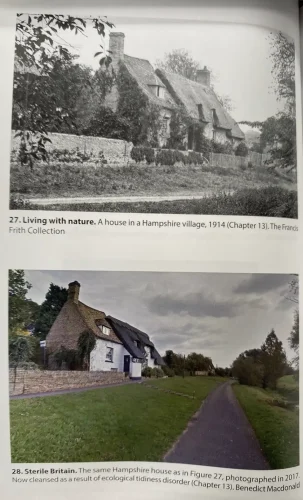
    Taken from Rebirding by Bendict Macdonald

    Summary of Information for Local Authorities on Becoming Pesticide-Free

    • Pesticides (insecticides, herbicides, fungicides) are a key contributor to biodiversity decline. LAs have a responsibility to contribute to the national target to reverse this decline.
    • Pesticides damage soil and water health with effects on both humans and wildlife. There is accumulating evidence that glyphosate is carcinogenic. It is the primary chemical used by Local Authorities and they have a duty to reduce the risk of employees and residents being exposed to harmful chemicals. It is understood that children, pregnant women, and older adults are especially vulnerable to environmental toxins. Many areas managed by Local Authorities include parks and play areas frequented by children.
    • Whilst the untidiness of nature was accepted by previous generations, in recent decades peopleโ€™s expectations have been shaped by the ready use of pesticides, with public areas mown and tidy. Public education could help people to see this โ€˜messinessโ€™ as habitat that supports the creatures that they love, such as birds, butterflies, bees and dragonflies. These photos show the same house and village street a century apart, demonstrating the contrast between the pre and post pesticide environment.
    • The urban/suburban landscape can provide a vital network of corridors for invertebrates and other animals, and use of pesticides severely impacts the richness of these habitats. Phasing out the use of chemicals would provide important benefits for nature.

    Where to begin:

    Audit – Carry out an audit on where pesticide is currently used.


    Review โ€“ Determine if there are areas/actions that are unnecessary. Stopping these will be a cost saving.


    Consider alternative management/planting โ€“ Where can spraying be reduced in frequency or moved to spot treatment? Can planting of beds be more naturalised/ use more native plants and perennials rather than bedding plants (this would reduce weed issues as there is less disturbed and exposed soil)?


    Involve communities โ€“ Make the public aware of how a change to less or no pesticide use benefits biodiversity, water quality and human health (and particularly children). Set up regular weeding parties in parks and public areas. Provide Health and Safety support for residents who wish to take responsibility for their own streets. One estate in Lewes, Sussex, decided to go glyphosate free and to weed pavements themselves.

    Review with contractors โ€“ Discuss with them the use of non-chemical methods and request that they invest in the appropriate machinery. Alternative methods include: Hot water; Steam; Foamstream; Infra-red flame burner; Thermoelectric weed treatment.

    Share resources โ€“ If the council is buying its own machinery, the initial outlay for non-chemical methods can make them appear more expensive. However the ongoing costs can be lower than chemicals and safer for the people using them. They can also be shared with neighbouring councils. Renting out to other councils is easier as these methods can be used in any weather, unlike chemicals which cannot be used in the rain or when rain is due.

    Invasive species โ€“ Increasingly non-chemical control is being explored to eradicate Japanese knotweed (JKW) and Giant hogweed, including heat methods and mesh (which cuts off energy from the tubers as the stems grow). Conventional methods, including chemical treatment, require repeated application and patience. The Wales Wildlife Trust are trialling a new biological control method for JKN called Roots Reset, developed by a company called Soilwise. The method involves removing the above ground parts of the JKW, spreading CleaRoot, a plant based product, mixing it into the soil, covering with a barrier to exclude oxygen, and then allowing the microbes already in the soil and enriched by the CleaRoot to consume the roots of the JKW. This process takes 6-12 months.

    Mowing – Is mowing happening more frequently than necessary? Can areas of mown grass become wildflower areas with paths mown through and the whole area cut once or twice a year? This will save money.

    Communication – The success of change requires good publicity and communication with the public so that they understand the goal and the benefits to them and their environment.

    Councils that have gone pesticide free: Locally Newton Abbot made a formal commitment to be pesticide free in 2023. In 2015 Glastonbury was the first council to be pesticide free. There are about 50 other councils that have also taken this step and many others who have pledged to phase out use of pesticides.

    The European experience โ€“ The Europeans are far ahead of the UK in moving towards being pesticide free, some areas beginning as far back as the 1980s (Belgium) and the 1990s (Denmark). Effective programmes have been characterised by a combination of public awareness campaigns and a gradual phase-out. Resistance has tended to come from the pesticide manufacturers rather than the general public. Significant progress has been made over the years but there is variance between municipalities in individual countries and derogations continue to be permitted. However since 2023 Germany has prohibited the use of glyphosate in public areas and in private gardens and France implemented a broader pesticide ban on use by public authorities, with exceptions for some specific areas, and in private gardens, across the country in 2022 (including in forests).

    Proposed Bill โ€“ Sian Berry (MP) has proposed a Private Memberโ€™s Bill to prohibit the use by Local Authorities of professional plant protection products on amenity land under their control. The Bill is has cross-party support and is due to receive its second reading in on 12 December 2025.

    Online sources: Pesticide Action Network; Wales Wildlife Trust; Lewes Climate Hub;
    Books: Vicki Hird Re-bugging the Planet; Benedict Macdonald Re-Birding;

    Shira Rรผb
    Action on Climate Teignbridge, Volunteer Wildlife Warden


    COP30

    Conference of the Parties UNFCCC COP30. Annual United Nations climate change conference in Brazil. International climate summit banner. Global Warming. Vector illustration

    This yearโ€™s United Nations climate summit, COP30, is held next week in Belem, at the edge of the Amazon โ€“ a fitting yet fragile setting for marking ten years since the Paris Agreement. Unlike previous summits, this one has no single headline theme, but the pressing issues remain all too familiar.

    Global emissions are still not falling fast enough to meet the targets agreed in Paris, and despite promises of ambition, many nations missed the February deadline to submit their updated 2035 climate plans. By early November, around sixty-five countries had responded, but few have inspired confidence. Chinaโ€™s plan has disappointed observers, the European Union remains divided, and India is yet to confirm its targets. Brazil, hosting the talks, now faces the difficult task of steering discussions toward a stronger collective effort.

    Money will again dominate the debate. Wealthier nations had pledged $300 billion a year by 2035 to help developing countries adapt to a low-carbon future, alongside hopes of raising a further $1.3 trillion from public and private sources. Yet much of this remains vague, and poorer nations are calling for firmer commitments and clearer pathways for adaptation fundingโ€”especially to protect vulnerable communities from rising seas and extreme weather.

    Finally, forests will take centre stage. Brazil plans to launch the โ€œTropical Forests Forever Facility,โ€ a fund rewarding countries for keeping trees standing rather than cutting them down. It could become a milestone in forest protection, though campaigners warn that real progress will only come when deforestation truly stops.

  • ACT Newsletter August 2025

    ACT Newsletter August 2025

    Welcome to ACT’s August newsletter keeping you informed of the latest activities our Groups have been working on. Do get in touch if you are tempted to join in with any of our projects!

    Featuring:
    Find that Zombie
    Great Big Green Week
    Carbon Cutters Update
    ACT Film And Curry Night
    The BIG News
    New ACT Website
    Retrofitting Your Home
    Wildlife Warden Update
    Mow Like A Cow
    Food Farming Fisheries and Forestry
    ACT Schools Climate Concert
    Send us your events
    Forthcoming events

    Produced by Scott Williams

    Find that zombie!

    Is your home harbouring a zombie electrical item consuming lots of power and running up your bill? You can find out by joining the My Electricity project and playing Watt detective.

    The project is a joint initiative with Teignbridge District Council to help everyone reduce their impact on climate change and save money at the same time. Itโ€™s free to everyone in Teignbridge.

    Weโ€™re asking all ACT supporters to publicise this within their personal circles and social media networks. You can find more details in the link here, there is a poster/leaflet you can use.

    Why not try it out with a few friends, family members or colleagues at work? Youโ€™ll be in a much better position to talk to others about it.

    Fuad Al-Tawil
    Energy group coordinator


    Great Big Green Week

    Climate Emergency Bovey and Heathfield (CEBH) and Bovey Tracey Town Council celebrate GBGW every year, and this year was the best ever. Members of ACT contributed in various ways through the week.
    The Great Big Green Week is the UKโ€™s biggest ever celebration of community action to tackle climate change and protect nature. Every year, people come together to unleash a wave of support for action to protect the planet. Tens of thousands of people in every corner of the country celebrate the heartfelt, brave, everyday actions being taken to stand up for nature and fight climate change.
    Every day during the week, informally led Climate Cafe Conversations were held at the Youth Cafe. This was an opportunity to drop in for a drink and chat about various climate related conversations
    Prof. Peter Stott, world climate scientist, came to give a talk on the Thursday evening based around his book, ‘Hot Air – The Inside Story of the Battle Against Climate Change’. Amongst other things, he explored creative ways in which to get the message ‘out there’ through the Arts and storytelling. 
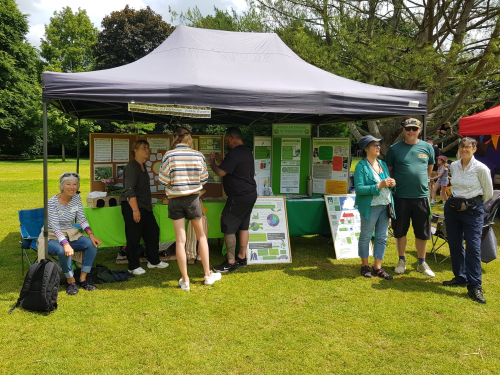
    The Fair in Mill Marsh Park on the Saturday was bigger this year with musical entertainment, including the Exeter Climate Choir, food and environmental stalls. ACT had both Wildlife Wardens and Energy stalls which attracted interest and good conversations as usual.
    Thanks to everyone involved.

    Mandy Cole
    ACT Public Engagement Group


    Carbon Cutters Update

    Here are the essentials for effective action on mitigating climate change. The resources in brackets can be found on ACTโ€™s Carbon Cutters page, if not, please contact the cc coordinator.
    1. Only a significant reduction in greenhouse gas (GHG) emissions is effective, everything else is about making us and others feel good. (CC Lite session)
    2. Reducing GHG emissions must start with measuring what they are and where they happen. You canโ€™t manage what you canโ€™t measure! (Carbon Footprint Tracker or (CFT)
    3. The majority of the energy we use globally comes from BURNING fossil fuels. So managing our energy and where it comes from is a good place to start, but beware of โ€˜greenwashโ€™. (CC & CC Lite training)
    4. Start by cutting out wasteful actions, things that use energy but are not useful; turning things off when not needed or only heating water you need are easy examples. (My Electricity)
    5. Then look at ways of doing things differently, compare the GHG emissions of different options. (CFT, CC Actions Search, Carbon Factor Search)
    6. Sometimes itโ€™s necessary to replace an energy consuming thing with a more efficient version, but make sure you calculate the GHG payback time first. (CC Actions Search, Carbon Factor Search)
    7. If youโ€™ve done all those things, and you have the up-front capital, consider buying/investing in low-carbon energy generation. Check out the ยฃ and GHG pay-back time. (TECs technology guides)

    Robert Gillett
    ACT CC support group lead


    ACT Film And Curry Night

    ACT will be showing the film ‘Climate Scam’

    The latest in a series of documentaries highlighting the impacts of climate change from Cornwall Climate Care.

    Despite all the evidence of rising global temperatures and climate-related disasters โ€“ and almost 100% consensus among the worldโ€™s climate scientists about what is causing this โ€“ there are still a surprising number of people who do not believe we are facing a climate emergency.

    Climate conspiracies, whipped up by social media algorithms that push the most extreme viewpoints to the fore, have resulted in death threats being made against people like city councillors trying to introduce traffic reduction schemes and weather forecasters trying to keep people safe from hurricanes.

    Join young presenter Jaz as she sets out to discover why these conspiracy theories are so popular, whether any of them actually hold a grain of truth – or whether they are threatening our ability to deal with the greatest challenge humans have ever faced.

    When: Saturday Sept 13th; 6.30 till 9pm

    Social and food from 6.30pm; film at 7.30pm; discussion 8.15pm-9pm

    Where: Alice Cross Centre, Teignmouth, TQ14 9BT

    Food: Choice of two curries, one being vegan, for ยฃ15 per person, including rice, naan, poppadoms, and chutneys, available to purchase from 6.30 to 7..30pm

    Bar Service: The bar will be open throughout the evening, serving a range of alcoholic and non-alcoholic beverages at competitive prices.

    Limited space so book early. Please use the link below to book in advance. Donations only,

    Mandy Cole
    ACT Public Engagement Group PE Co Chair 


    The BIG news

    Weโ€™re really happy to tell you that our bid for funding from the National Lottery Community Fund was successful, with a grant of ยฃ19,959 to help our community thrive.

    Audrey and Vicky, who run ACT’s Wildlife Wardens scheme, wrote to the National Lottery to thank them:

    However wonderful a project is, it can be very difficult getting funding after the first 3 years – your support for what we are doing and how we are doing it not only relieves financial pressures, but is an enormous boost to us too. Knowing that your organisation believes we are doing things well and achieving the things we believe in is very important.

    Teignbridge is a district where there is lots going on – a place where a higher than usual number of people are aware of the need to look after our environment and our wildlife. Better than that, our volunteers are really enjoying what they are doing and have created a great network of friends; we can’t quantify everything that we are achieving, but we do know that it is very, very good. 

    So, now we can get on with what we are doing and tell everyone that Awards for All is behind us all the way!

    Thank you so much!

    Audrey Compton and Vicky Fairs
    ACT Wildlife Wardens


    New website

    Watch out for a new ACT website in September. We have been working on it for some months and are nearly ready to go live. The new site will be more colourful and easier to use so please visit it in the autumn.

    Julian Stringer
    ACT Website


    Retrofitting your home

    There are around 28 million dwellings in the UK today. Of those 28 million, over 22 million were built before the year 2000. These older homes are typically less easy and more expensive to keep warm and dry than homes built in compliance with recent building regulations, and they can produce many times more greenhouse gas emissions to run than an efficient home.
    We will live in these older dwellings for years to come. To make them comfortable and efficient to modern standards will require a retrofit.
    What is a retrofit?
    A retrofit involves improvements to the thermal performance and energy efficiency of your home.
    It could involve improved insulation; elimination of draughts; higher performance windows, hot water and heating systems and controlled ventilation, all to keep the home dry, warm and comfortable while consuming less energy and emitting less greenhouse gasses.
    A retrofit may switch your heating and hot water to modern electric systems from oil or gas to reduce your greenhouse gas emissions.
    The average home in the UK today consumes approximately 135 kWhs of energy per square meter of floor space to stay warm each year. A deep retrofit should get most houses to an annual heating demand of around 50 kWhs of energy per sqm of floor space per year.
    How do I get started?
    Get good advice!
    Not all homes are average, and retrofitting is not always simple.
    Literature is available to help you start thinking about the task, risks, and rewards.
    Energy Saving Devon has information and a guide to retrofit. It is a valuable resource with great regional information at https://www.energysavingdevon.org.uk/document/
    There is an online tool to help users make a first level assessment of what might work in their home and you can register to get an independent assessment and advice.
    The Carbon Cutters team can provide you with ideas and help you develop your knowledge. We can also guide you to others able to provide technical knowledge and support.
    Let us know if we can help.

    Paul Bloch
    ACT Carbon Cutting Team


    Wildlife Warden update

    Many Wildlife Wardens and ACT members were at the ‘Pesticide Free Devon’ event held at the Courtenay Centre in Newton Abbot in June. It was very good – thanks to Andrew Rothery and his Green Futures team for great organisation, good speakers and interesting workshops. A Pesticide Free Devon is still a dream, rather than a possibility for the near future but we need to dream and take action – it was a good start!

    Pine Marten reintroduction: the reintroduced Pine Martens are certainly getting around – on the day after release, back in Autumn 2024, one had quickly crossed the A38 and was at Trago Mills (was it a special discount day?).  On the 10th June, one was 0.5km below Deer Park Farm (Trusham) near the Teign and Bramble Brook. Trail cameras were quickly put out, but we’re not sure where it went next! We also have some butterfly visitors from Normandy – more about them soon…

    We had a ‘Difficult Composites’ morning at Deer Park Farm for WWs – if it sounds nerdy, you’re right! What it means is flowers that look a bit like dandelions – but aren’t. They are still a bit of a mystery!

    WWs also joined Linda at the Courtenay Centre to find out more about her Tree Nursey and seed swaps.

    WWs also walked around the recently rewilded Kelland Farm and enjoyed a picnic by their fabulous pond! Thank you so much to Glen and Helen, our WWs who own Kelland Farm and showed just how fast wildlife can come back with love and care!

    The WWs have been very busy doing base surveys on Teignbridge District Ccouncil sites, in preparation for them being ‘Mown like a Cow’ (random mowing). We have surveyed 4-5 sites and are doing some extra ones to support the changes in mowing at Newton Abbot and Dawlish cemeteries.

    John Walters, our renowned local naturalist who you may have seen on Spring Watch, did a morning ‘Life in the Meadow’ walk for Devon Wildlife Trust at Deer Park Farm. He kindly did an afternoon walk for the Wildlife Wardens – the weather was good, the flowers were in full bloom and there were stacks of insects/minibeasts.

    There will be a big Wildlife Warden gathering on Sunday 21st September at a fabulous site between Bovey and Moretonhampstead. Wildlife Wardens should have been contacted about it with the details.

    Audrey Compton
    ACT Wildlife Wardens


    Mow like a cow

    Are you looking for something better than No Mow May for your lawn or meadow?
    The best flowery meadows are often grazed by cattle, who wander around eating patches of grass in a random way. You canโ€™t put cattle on your lawn โ€“ but you can mow like a cow. Whether you scythe, strim or mow, itโ€™s doable! (Unless your meadow is too steep โ€“ donโ€™t take any risks!)

    Itโ€™s May, and the grass is growing. First mow your paths so that your lawn looks cared for. Now go a bit mad and spend the next few minutes mowing squiggles โ€“ be a bit random! But donโ€™t mow more than about 20% of your lawn each month.

    Itโ€™s June and the grass has grown! Mow the paths again and then have a bit of fun โ€“ do some different squiggles! If there are any special flowers, just avoid them.

    Do the same in July and August and September.
    Maybe thereโ€™s been a drought and the grass hasnโ€™t grown much. Or maybe thereโ€™s been a monsoon and in some places itโ€™s up to you knees. Thatโ€™s fine!

    If you are lucky, there may be some flowers and butterflies around during the summer, but if there arenโ€™t any this year, there might be next year โ€“ and even more the year after. Blackbirds and thrushes love the short grass when searching for worms, insects love the longer grass.

    To increase the wild flowers, rake some bare patches in the winter and scatter yellow rattle and other seeds there. Tread them in gently!


    Food Farming Fisheries and Forestry

    4Fs is running an event on the importance of โ€˜Local Foodโ€™ on Saturday 4th October at the Courtenay Centre, in Newton Abbot. The event includes sessions on food and health, the importance of local food in schools, and how to support local food production.

    Book the sessions you want to attend on Eventbrite

    Find out more about the importance of eating local food and supporting its production from the Devon Food Partnership, and particularly its Every Bite Counts campaign.

    Betina Winkler
    Food Farming Fisheries and Forestry


    Schools Climate Concert

    The Childrenโ€™s Climate Concert, which took place on 3rd July at Teign School, was well attended and much enjoyed, with great performances from the children. More than 120 children from four schools came together following workshops where they shared their climate concerns through the expressive power of music and sound. The students were from Year 5 at Rydon Primary, Kingsteignton School, Year 8 at Coombeshead and Teign School. The workshops were in conjunction with Sonopera CIC, and the event was supported by Rotary Newton Abbot, Action on Climate in Teignbridge and the Helen Foundation. We hope to include a full report in the next issue.


    Send us your events

    ACT would love to get to as many local parish events as possible but we do not always hear about them. Please could you either get in touch with Pauline or Scott if there is a parish event you think ACT and the Carbon Cutters could come along to.

    Sit for climate at Teignmouth Triangle
    This happens every Saturday at 11am for up to 10 minutes. Itโ€™s for everyone whoโ€™s worried about the climate crisis and wants governments and businesses to take urgent action about it. We can demonstrate our feelings together at the same moment. Everyone can join in, everywhere, every week.


    Forthcoming Events

    ACT will be at
    Christow Show on Saturday, 16 August at Teign Valley Community Hall, Christow.
    Kingskerswell Grand Summer Event on Saturday, 23 August at Kingskerswell Pavillion Playing Fields.

    August 2025

  • ACT Newsletter June 2025

    ACT Newsletter June 2025

    Welcome to the June newsletter. Itโ€™s been a while, and we have been quite busy and have a lot to let you know about, so here are some snippets taken mostly from this month’s Group Reports to give you a flavour of what we ‘ve been doing – do get in touch if you are tempted to join in with any of our projects!

    Featuring:
    From the Energy Group
    Public Engagement Group update
    Carbon Cutters Update
    The Wildlife Warden Report
    The Chair’s Report
    W.A.D.E Project
    ACT with the ARTS Climate Festival 2024
    Food Farming Fisheries and Forestry
    Small Things
    ACT Website
    Climate Levy on Energy
    Send us your events
    Forthcoming events

    From the Energy Group

    Flat roofs are notorious for leaking, but they can also be a problem to insulate. If you live under a flat roof with inadequate insulation, you are likely to lose heat in winter and overheat in summer. So whatโ€™s the solution?
    Unfortunately retrofitting insulation in a flat roof isnโ€™t as easy as adding traditional loft insulation between and above ceiling joists in the loft space of pitched roofs (also referred to as a cold roof insulation because the loft space remains cold). Flat roofs typically do not have easily accessible space between ceiling and roofing material (often the finish is roofing felt). So to gain access, either the ceiling or the roof covering have to be removed to add insulation.
    If there is a leak and the felt or outer roofing material has to be repaired/replaced, this is an opportunity to add insulation. Ideally above the rafters or a combination of this and between rafters. Insulation above rafters is sometimes referred to as โ€˜cold roofโ€™ insulation, but the term is misleading when applied to flat roofs. Here is a useful explanation.
    There are also better roofing materials than felt, but these tend to be more expensive and require skilled installation, something the UK building trade is not famed for!
    Drawing curtains to keep the sunshine out in summer and in winter to keep the warm air in helps a lot. Opening windows if there is a marked temperature difference between inside an outside temperatures, this can cool/warm the room as needed.

    Fuad Al-Tawil
    Energy group coordinator


    Public Engagement Group update

    Last summer began with ACTโ€™s week long festival with the arts (reported elsewhere in this newsletter). After this, members of ACT were busy last summer providing information stalls at local events. Sometimes these are focussed on energy use and carbon reduction, sometimes our wildlife and environmental concerns, and sometimes both!

    We went to Kingskerswell and Christow Shows, Turn the Tide Festival in Dawlish, Newton Abbot, Buckfastleigh and Ilsington Fairs, Newton Abbot Library, and a Rotary event at Daignton.
    I personally attended Christow Show, and really enjoyed trying to talk to everyone, young and old, despite our stall being positioned right opposite one of the (very effective) loudspeakers. We certainly didnโ€™t miss any of the announcements and commentary on the main events! My highlights were getting a hug from a young person after our chat, and talking to an older couple about portable domestic solar panels. I must say the cream tea was a bit of a highlight too! It was great to spend time with each other and share the sessions between all 7 of us, plus 4 Wildlife Wardens who gave valuable help.

    Over the winter we have connected with other groups events, such as the launch of FORT (Friends Of the River Teign). We agreed to focus on connecting with outlying towns within Teignbridge. We met with climate/environmental groups in Ashburton, and subsequently attended their Thrive event in March this year. Many other community events will have an ACT presence through this summer. Public Engagement group are keen to put on an event for and with members, and to that end we have viewed the film Climate Scam, with a view to a group showing. We have also taken time to contribute to updating our website, and are liaising with others about a possible input to the Devon Schools Climate Ambassadors initiative.

    We are really keen to find out from people about their views on the climate and ecological emergency. We try to answer questions where we can, but always we are keen to engage, and to use this to better inform what we can do within ACT. Climate Change can be an emotional subject, but both positive and negative emotions play a part in making changes. What we know is that talking helps at all sorts of levels, and can be a really important trigger to action. The discussions are fascinating; itโ€™s so vital to keep informing ourselves about what turns people onโ€ฆ and off!

    We really appreciate local input to each yearโ€™s summer events; so if you are a member of ACT and you like attending your local Fair or Show, please get in touch and we can talk about coming along.

    Mandy Cole
    ACT Public Engagement Group


    Carbon Cutters Update

    ACT Carbon Cutters is a group of keen and concerned people across Teignbridge who have decided to have training in the โ€œhow, why and whatโ€ of carbon emissions and the effect on the planetโ€™s climate. They can help clarify the evidence-based facts and raise awareness of how our life activities contribute to the problem, locally and globally.
    Some individual Carbon Cutters are involved in join projects with Teignbridge District Council, such as:

    โ€ขMy Electricity โ€“ how to find out the where energy and costs are going in your home, and how to reduce them

    โ€ขCC Lite training โ€“ short workshops to help understand how and where to start reducing CO2 emissions

    You can join ACT and tick the CC box to receive more information. You may decide that is sufficient for now, or you can become more involved by joining the CC group, and have the full CC training over several instruction sessions.

    We’re having a meeting next Wednesday (04 June) to give an informal CC course refresher (on request) and discuss practical ways of get our CC message out.
    Look out for more Carbon Cutter events, workshops and training โ€“ weโ€™re here to help and to increase knowledge and understanding so that everyone in the community has the opportunity to do something positive, however small.
    Have look at our Carbon Cutters web pages for more information.

    Robert Gillett
    ACT CC support group lead


    The Wildlife Warden Report

    Ashton WW Shira gave a really creative and interactive presentation for the Bridford and Teign Valley Gardening Club which she entitled โ€œMurder in the Gardenโ€œ. Shira prepared cards featuring garden wildlifeโ€”from mycelium and invertebrates to birds and small mammalsโ€”each with details of their diet and vulnerabilities on the back. Some creatures were welcomed by gardeners (e.g., robins and hedgehogs), while others were not (e.g., slugs and greenflies). The group was invited to arrange these creatures in a โ€˜garden,โ€™ creating a food web of thriving biodiversity.

    This image has an empty alt attribute; its file name is Pesticide.jpg

    However, the scenario shifted when new homeowners took over the garden. Unhappy with anything eating their plants or disturbing their lawn, they turned to a big-chain DIY store and the local garden centre to buy pesticides-many of which harm non-target species and aquatic life. And who knew that while neonicotinoids are banned in agriculture, gardeners can still readily purchase them?

    The impact on the groups imagined flourishing garden was clear. The group unanimously agreed on the need to stop using chemicals and to dispose of those stored in sheds. Shira then introduced the upcoming launch of Pesticide Free Devon in June, which Wildlife Wardens are invited to support, with hopes for a district-wide pesticide collection in the future. What a fabulous way to help people discover the impact they can have for themselves!

    Vicky Fairs
    ACT Wildlife Warden Co-ordinator


    The Chair’s Report

    Around 30 ACT members are interested in helping local schools find out about Climate Change by joining the National, Government supported Climate Ambassador Scheme .

    Kate has also been finalising details for the Childrenโ€™s Climate concert on the 3rd of July when Teign School will host 2 performances (at 5pm & 6.30pm) for a Childrenโ€™s Climate Concert. This finale is the culmination of over 120 children from four schools coming together following workshops where they have been able to share their climate concerns through the expressive power of music and sound. Expect an uplifting and motivating conclusion.Volunteers are still needed to help gather the feedback from the children during the two concerts.

    Fancy helping out? email Kate.

    Kate Benham
    CHAIR ACTion on Climate in Teignbridge 


    This image has an empty alt attribute; its file name is WADEbrook-1024x768.jpg

    Waterways Around the Dawlish Environment (W.A.D.E) Project

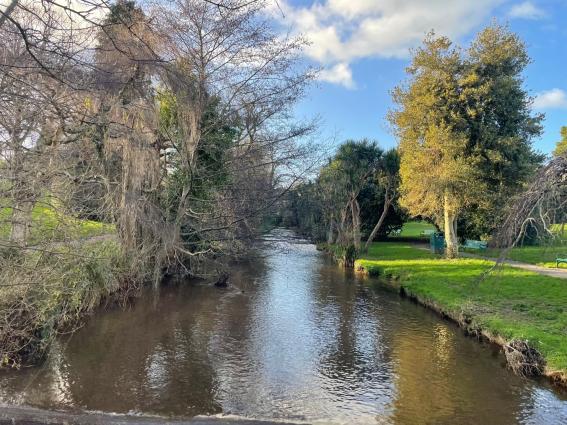
    An ambitious new project has been launched by Wildlife Warden and Town Councillor Scott in Dawlish. The Waterways Around the Dawlish Environment (WADE) group aims to get together a band of local volunteers to help care for โ€œThe Brookโ€, which runs through the centre of the town. The group will focus on clearing debris, removing litter, conducting regular water testing, and will be exploring future planting, to support wildlife, along the riverbanks.

    So far, there has been a fantastic response to this project, with around 40+ new volunteers signed up and receiving training to become wildlife wardens. We look forward to hearing about what they are getting up to in the months ahead. Please contact either Scott or Vicky if you would like to find out more about getting involved.

    Scott Williams
    ACT Carbon Cutter Coordinator


    ACT with the ARTS Climate Festival June 2024

    In June 2024, ACT hosted an 8 day festival, focusing on the arts. Around 1200 people attended, so many of you may have visited one or more of the 23 events, staged in towns around Teignbridge, but centred on Newton Abbot.
    So what have the arts got to do with climate change, which is after all, ACTโ€™s core business? We know that although around 83% of the population in the UK are aware of climate change and its human causes, a large percentage of us do not take much effective action to mitigate or adapt to the growing climate and ecological emergency that is taking place all around us.
    There are multiple and complex reasons for this. Amongst these, we know that how people feel about the crises is key. Itโ€™s very easy to feel hopeless, helpless, angry, frustrated or fearful about the effects of what is happening. This in turn may lead us to switching off, and convincing ourselves that thereโ€™s nothing we can do, or that people with more power, money and responsibility should be taking action instead of us.

    This isnโ€™t true however. We know that social movements such as the suffragettes or Black Power have changed the course of history. Tiny ripples can build to make great waves. Importantly, taking what action we can about climate change can help us feel better, and build connections with other like minded people in our community, which in itself can build resilience.
    Hence, the idea for the climate festival was born. The twin aims were to inspire people to engage with the climate and ecological crisis through the arts and to help people connect to their imaginative and emotional responses to encourage change. The events included creative arts, exhibitions, performances, music, dance, poetry, film and theatre, many of which were participatory.
    A great deal of feedback and data was collected. More than 80% of responses returned suggested people felt more connected to others, would come again and felt the arts was a good way of engaging in this challenging area. Around 50% of responses suggested a change in feelings, thoughts and intention to act (though we did not ask the direction of change). Also, participants may already have been very engaged and committed to the cause before the festival.
    By constructively disrupting the status quo for people, we hope that shared experience of climate and nature arts events will lead to increased pro-environmental action. Please visit the website to see more detail and some interpretations of what this innovative occasion could mean for other organisations, and for all of us concerned with climate and ecological activism. We would also welcome your ideas and suggestions for future arts events, using the โ€˜Contact Usโ€™ link.
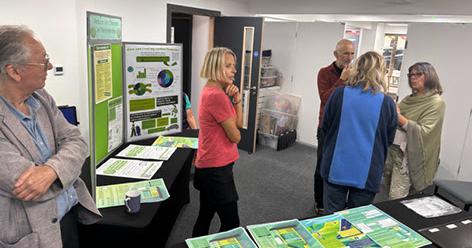
    Mandy Cole
    ACT Public Engagement Group


    Food Farming Fisheries and Forestry

    4Fs are organising a meeting on the importance of ‘Local Food’ on the 4th of October. More details to follow soon.

    Betina Winkler
    Food Farming Fisheries and Forestry


    Small Things

    I, like most people I meet, hesitate to make big changes to my lifestyle.
    I am budget conscious and have no desire to harm to us or future generations of people, plants and animals by increasing the CO2 concentration in our atmosphere.
    I have a conflict of interests.
    In this article I list some simple things everyone can adopt to reduce their CO2 emissions and often save money.
    First I recommend you complete the Teignbridge Climate Action carbon footprint tracker found at https://test.act.stringerhj.co.uk/newsite/page.php/page/carbon-calculator.
    This will introduce you to the numbers and get you thinking about your current energy use and carbon emissions.
    After that:

    Around the house

    1. Make sure the heating controls are set to keep you comfortable without wasting energy.
    2. Turn the hot water temperature down if hotter than you need.
      Eliminate unnecessary draughts and fully shut windows and doors when trying to keep the house warm.
    3. Turn devices and lights off when not in use.
    4. Boil only the amount of water you need in kettles and saucepans.
    5. When heating water or food in a saucepan, put the lid on the pan.

    In the garden

    1. Make wood piles and compost from woody and green material rather than burning. Burning releases the stored carbon.
    2. Mow a little less. Youโ€™ll save petrol or electricity, and wildlife will be grateful.
    3. Rake autumn leaves into borders and beds rather than burning. The worms will recycle them for you.

    In the car

    1. Turn the engine off when idling for more than 30 seconds.
    2. Drive a little slower if you have the time. Fuel consumption increases as speed increases.
    3. The RAC, AA and others have fuel saving tips on the web.

    Iโ€™m hoping you will agree with me, none of these ideas are too inconvenient and each one makes a small difference that adds up.
    Once you have completed your carbon footprint tracker youโ€™ll find energy and emissions reduction ideas on a following page.
    Let us know how you get on.

    Paul Bloch
    ACT Steering


    ACT Website

    After lots of work by lots of different people, a new ACT website will soon be launched – more colourful and easier to use!


    Climate Levy on Energy

    Will cutting support for renewables cut Environmental and Social charges on energy bills?

    OFGEMโ€™s analysis from October 2021 showed that a proportion of energy bills is accounted for by environmental and social charges, 2.5% for gas and 25% for electricity in 2020. 

    This image has an empty alt attribute; its file name is image.png

    Based on 2020 electricity and gas prices


    Some have argued that at a time when energy costs are rising that these can be cut to save increasing peopleโ€™s bills. At the time of this graphic the average dual fuel bill was ยฃ1184, so environmental and social charges accounted for ยฃ181.54 or ~15%
    Increasing electricity wholesale prices
    The cause of increasing bills is an unprecedented increase in the wholesale price of fossil fuels, which increases the wholesale price of electricity as this is principally determined by the most expensive component (natural gas). There is no reason for most other costs to increase in the same proportion.
    Over the last year forward electricity wholesale prices have increased sharply

    Increasing electricity wholesale prices
    The cause of increasing bills is an unprecedented increase in the wholesale price of fossil fuels, which increases the wholesale price of electricity as this is principally determined by the most expensive component (natural gas). There is no reason for most other costs to increase in the same proportion.
    Over the last year forward electricity wholesale prices have increased sharply

    This image has an empty alt attribute; its file name is image-1.png

    As have day ahead wholesale prices

    This image has an empty alt attribute; its file name is image-2.png

    Reading off from the day ahead baseload contracts the average price for 2020 was ยฃ36.04 / MWh, whereas for 2021 it was ยฃ127.47 / MWh, a 3.45 fold increase.

    An electricity bill of ยฃ1000 for 2020 breaks down as follows:

    Item2020 Cost2021 Cost
    Wholesale costs292.81010.4
    Network costs233.7233.7
    Environmental / social254.8254.8
    Other direct20.920.9
    Operating costs163.4163.4
    Supplier pre-tax margin-13.2-13.2
    VAT @ 5%47.683.5
    Total10001753.5

    This assumes that other costs apart from VAT stay the same. In this case the proportion of environmental and social costs drops to 14.53%, we go on to explain how this proportion will drop still further.

    Breakdown of environmental and social charges.

    The components of environmental and social charges are given here. We have extracted annual costs and other information for each scheme from these pages and annual reports. These are shown in the following table.

    This image has an empty alt attribute; its file name is image-3-1024x918.png

    The majority of the cost of these schemes relates to past commitments, particularly to encourage take-up of renewables, the cost of these is fixed and so will decline as a proportion of bills. The only ways that these past commitments can be reduced beyond contracts expiring naturally would be for government to:

    โ€ขMove these payments to general taxation
    โ€ขRenege on these contracts. 

    The only bill funded schemes that will incur new future obligations are:

    โ€ขContracts for Difference, where in the last quarter of 2021 a payment of ยฃ133million was made from generators to suppliers, as the price of electricity was above the strike price. This will continue to be the case if electricity prices remain high.
    โ€ขA small fixed commitment to the green gas levy (maximum ยฃ130million per year).
    โ€ขWarm homes discount.

    Some are being replaced by alternatively funded schemes:

    โ€ขRHI and NHRHI are being replaced by boiler replacement scheme, which is treasury funded.
    โ€ขECO3 is being replaced by the Local Authority Delivery scheme, paid for by government grant.

    This means that each year the amount due from bill payers for past renewable subsidies will decrease, and if energy consumption increases its proportion will decrease.

    What part will environmental and social charges have in the future?

    Assuming that wholesale electricity prices rise no further, this means that the breakdown for 2022 and 2023 looks more like:

    Item2020 Cost2022 Cost2023 Cost
    Wholesale costs292.81010.41010.4
    Network costs233.7233.7233.7
    Environmental / social254.8171.9134.57
    Other direct20.920.920.9
    Operating costs163.4163.4163.4
    Supplier pre-tax margin-13.2-13.2-13.2
    VAT @ 5%47.679.3577.49
    Total10001666.41627.3

    So the proportion attributable to environmental and social schemes for 2022 is 10.32% and for 2023 8.27%. This proportion will fall further when:

    โ€ขElectricity wholesale prices increase
    โ€ขElectricity consumption increases
    โ€ขRO contracts lapse

    Specifically adding more renewables will reduce the cost of energy, not increase it.

    Julian Stringer
    Action on Climate in Teignbridge


    Send us your events

    ACT would love to get to as many local parish events as possible but we do not always hear about them. Please could you either get in touch with Pauline or Scott if there is a parish event you think ACT and the Carbon Cutters could come along to.

    Sit for climate at Teignmouth Triangle
    Happening every Saturday at 11am for up to 10 minutes. It’s for everyone who’s worried about the climate crisis and wants governments and businesses to take urgent action about it. We can demonstrate our feelings together at the same moment. Everyone can join in, everywhere, every week.

    Forthcoming Events

    ACT will be at
    Bovey Tracey Great Big Green Week on Saturday, 14 June at Mill Marsh Park, in Bovey Tracey
    Party In The Park at Courtenay Park, Newton Abbot on Saturday, 12 July
    Christow Show on Saturday, 16 August at Teign Valley Community Hall, Christow.
    Kingskerswell Grand Summer Event on Saturday, 23 August at Kingskerswell Pavillion Playing Fields.

    June 2025

  • ACT Newsletter February 2024

    ACT Newsletter February 2024

    Welcome to the first ACT Newsletter of 2024. We have a busy year ahead, with much of our attention focused on the ACT with the Arts Climate Festival planned for June this year. With the likelihood of a general election some time this year, we will also be taking a close look at the climate and ecology policies of the political parties expected to stand in our area.

    Featuring:

    ACT with the Arts Climate Festival dates and details

    Working with schools on the Climate Festival

    Newton Abbot Library presence

    Carbon Cutters Lite programme

    Council duty on biodiversity clarified last year

    Where are we with climate change?

    Dawlish’s Turn the Tide 2024

    What we’ve been reading

    ACT with the Arts Climate Festival dates and details

    Action on Climate in Teignbridge (ACT) is to hold its first Act with the Arts Climate Festival in 2024.

    ACT is inviting writers, poets, musicians, dancers, artists, actors, schools, and local community groups to join in creating events that engage, excite, illuminate, and explain what our changing climate means for people in the district and what we can all do to make a difference.

    The Climate Festival runs from Saturday 22nd June to Saturday 29th June 2024. 

    The climate and ecological emergency is the biggest challenge facing humanity and the natural world we all rely on.

    We need to make it our priority to reduce the carbon emissions that create global warming and minimise our impact on the natural world that is causing the sixth mass extinction. 

    Engaging with the arts can help us express our feelings. Many of us are fearful for the future if we fail to make the changes needed. We can share our concerns with family, friends, work colleagues and neighbours, and listen to theirs in turn.

    Kate Benham, chair of ACT, said: โ€œThe idea of our Act with the Arts Climate Festival is to bring awareness via the arts, as we need to make tackling climate change our top priority. The festival will give the people of Teignbridge the chance to find out more and encourage them to help make a difference.โ€

    There will be a wide range of events, exhibitions, workshops, performances, and films throughout Teignbridge, suitable for all ages. Highlights include the opening ceremony on Saturday 22nd June, the Forest of Childrenโ€™s Wishes, Nature on the Green event, and workshops and performances throughout the week.

    For more information, or to get involved, please contact Paul.

    If you can help at the event with stewarding or in any other way, please contact Kate.

    Working with schools on the Climate Festival

    We are inviting all schools across Teignbridge to take part in our Climate Festival. We suggest students become involved through dance, singing or creative projects to share how they feel about their future and their vision of what it should be.

    We are also inviting schools to create a tree from used plastic bottles and for students to decorate it with plastic leaves recording their wishes for the future. The trees will come together to create a Forest of Wishes, which we hope to make a centrepiece in the Festivalโ€™s opening ceremony, to be held in Newton Abbot.

    For more information, or to offer help with contacting schools, please contact Val Compton.

    Newton Abbot Library presence

    We trialed a regular presence at Newton Abbot Library in November, manning a stand twice weekly between 12.00 and 14.00. We had interesting conversations with a range of people, some of whom visited especially to talk to us.

    People quite often told us: “I’m doing everything I can,” but after chatting for a while, they went away with a new idea they were really pleased with, and that we thought they would act on. This often involved saving money as well as helping the environment, so a win-win! Technical advice about making homes more energy efficient was a common theme. And there was one lovely lady who was keen to talk about the health issues associated with synthetic fibres in clothing.

    We hope the people we talked to gained new perspectives, even if they didn’t change their minds that dealing with climate change is all up to the government, or to China/America or big finance. We felt it was a successful trial and aim to establish a regular presence in the library, or another venue.

    Carbon Cutters Lite programme

    The Carbon Cutters scheme is set to launch a new Lite programme, with the first six participants asked if they would like to join in February. The short training course is a simpler version of the current course and takes place in one session rather than three. Once the course has been tested, we hope to offer it as a resource on the Carbon Cutters page.

    There are other initiatives being proposed as part of a refresh of the Carbon Cutters programme, due to be announced in the spring. 

    In total 26 people have now had Carbon Cutters training – with eight joining the ranks in the last few months.

    Council duty on biodiversity clarified last year

    Did you know that public authorities, including town and parish councils, have a duty under the Environment Act 2021 to do what they can to conserve and enhance biodiversity? Many councils will be aware of this, but not perhaps of the clarification of what this duty entails contained in government guidance issued last May.

    This guidance set a deadline of January 1 2024 for councils to decide what action they can take, and said they must agree policies and objectives as soon as possible afterwards, and act to deliver them. Town and parish councils, unlike other authorities, are not obliged to publish a report on their actions.

    Kate Benham, chair of ACT, says: “I think this duty is really important and we would be pleased to work with any councils developing these policies and actions.”

    The SLCC, the membership body for council clerks, officers and others, issued a draft response to the biodiversity duty and a draft model biodiversity policy in October.

    The SLCC said: “Whatever action is agreed, as a minimum local councils could ensure they address biodiversity concerns when commenting on planning applications.” 

    South Gloucestershire has produced a useful Nature Action Plan Field Guide to help those with little or no ecological background. The guide will help councils assess a site for wildlife, identify opportunities and understand how to make sure site management benefits nature.

    Read more here.

    Where are we with climate change?

    Itโ€™s gone a bit quiet after the much-heralded breakthrough of COP28. Is it the usual moving on to the next news story and our immediate post-Christmas concerns or was COP28 just another tick in the climate box?

    Our government has announced that the UK needs to slow down on climate change and has rowed back on previous commitments. They, and at least one of our two MPs in Teignbridge, Mel Stride, assure us we are ahead on our Carbon Budgets. 

    We are told that things will be fixed by 2050 and we can carry on with life as usual. They say there is climate warming caused by our greenhouse gas (ghg) emissions, but there are technological solutions to reduce these emissions and safely capture/store the remaining gases. In any case, itโ€™s not the UK thatโ€™s causing the damage, itโ€™s the rest of the world that’s creating 99% of all ghg emissions.

    I think itโ€™s time to tell the truth: the government is lying! You may say thatโ€™s nothing new, but when it is being dishonest about an existential threat to life on earth, it’s important to speak bluntly. We need the message to be much more direct, science-based and honest about the necessary actions.  We can no longer wait for government to do this, we need to take direct action.

    This is not a call for protest and civil disobedience; there are other organisations that already do this. I believe we need to act much more locally and personally, and we need to do it this year.

    Rather than making disingenuous claims about the UKโ€™s emissions, the government may want to point to a strategy on how it will ensure that the UK remains within its legal Carbon Budgets. Better still, they should launch a public information campaign to explain the need to halve our per-capita consumption emissions from the unsustainable 10t CO2e/year.

    You have more control over your greenhouse gas emissions than you think, both as an individual or part of an organisation. Use 2024 to talk to anyone and everyone you know about what effective actions to take. Before you do this, it helps to be familiar with the basics and understand how to communicate this information. ACT can help with training, methods and ongoing support. Contact our Carbon Cutter coordinator to organise a 30 minute online introduction to see what is available to you or your organisation.

    You can also contact fuad@actionclimateteignbridge.org

    Dawlishโ€™s Turn the Tide 2024
    This festival, run by Scott Williams and Dave Hutton ( both ACT Wildlife Wardens) in association with Dawlish Town Council, returns for a third year, this time over three days from June 7th-9th. Featuring community groups and schools on Friday, the traditional event on Saturday (as itโ€™s the start of Great Big Green Week and the 8th is World Ocean Day) will include ACT and the Wildlife Wardens and a “Get Active” theme on Sunday.

    There are two fundraisers for the event in February on Saturday 3rd and 10th, 7.30pm, at Shaftesbury Theatre in Dawlish. Tickets are ยฃ10, available online or by calling the box office on 01626 863061.

    Please tell us about events in your area

    We want to take advantage of any opportunity to engage with the public so please let us know about events taking place in your parish or town where we could set up a stall. You can add an event to the events page if it relates to the climate and ecological emergency, or contact Pauline to let us know about events of a more general nature.

    What we’ve been reading

    Several stories caught our attention recently. The first, From CoP 28 to CoP 29: The Road to Hell by Jonathan Porritt, a well-known sustainability campaigner and writer, is damning in its condemnation of the CoP28 agreement (“another toxic suicide note” is Porritt’s description), and of governments, businesses and NGOs claiming the agreement as “real progress”. It’s time they told the truth, he says, and lists a “harsh and sometimes unbearable set of truths”.

    These include that the aim of keeping global warming within 1.5C is “definitively dead”; the CoP process almost as dead; and that the IPCC’s Assessment Reports do not tell the truth.

    His disillusionment is why he is “taking a different path โ€“ in advocating on behalf of those who believe that civil disobedience is now the only way forward: Just Stop Oil, XR and so on.” And if you can’t join them, he suggests “contributing as generously as your circumstances allow”.

    It’s a depressing, but essential, read.

    The second story, Human โ€˜behavioural crisisโ€™ at root of climate breakdown, say scientists in the Guardian recently, covered a new paper on the behavioural crisis at the root of planetary overshoot. The paper proposes that climate breakdown is a symptom of ecological overshoot, which in turn is caused by the deliberate exploitation of human behaviour. Essentially, the marketing and entertainment industries drive our over-consumption, so the solution is to use the power of these tools to tell a different story.

    The paper is relatively short and well worth a read.

    The last is linked to the second as it covers the contribution we in the UK make to deforestation elsewhere through our consumption of products such as soya, cocoa, palm oil, beef and leather. Apparently, the UKโ€™s deforestation footprint per tonne of product consumed is higher than that of other countries including China.

    Of course, there are many more stories to read about the effect of our lifestyles on nature and climate. They all underline the need to make change happen.

  • Council duty on biodiversity clarified last year

    Council duty on biodiversity clarified last year

    Under the Environment Act 2021 public authorities, including town and parish councils, have a duty to do what they can to conserve and enhance biodiversity.

    Government guidance issued last year set a deadline of January 1 2024 for councils to decide what action they can take, and said they must agree policies and objectives as soon as possible afterwards, and act to deliver them. Town and parish councils, unlike other authorities, are not obliged to publish a report on their actions.

    Kate Benham, chair of ACT, says: “I think this duty is really important and we would be pleased to work with any councils developing these policies and actions.”

    Many councils in Devon may be unaware of their duty as clarified under last year’s government guidance, but some have taken steps to comply. For example, Brixham Town Council, which addressed the issue in the November meeting of its Community & Environment Committee, resolved to:

    • Create a biodiversity policy.
    • Refresh the council’s climate and environment action plan to include.
      more detailed and ambitious plans to conserve and enhance
      biodiversity in Brixham.
    • Link in with local groups in Brixham already working on nature
      conservation.
    • Carry out a biodiversity audit of council landholdings.
    • Increase community awareness of biodiversity.

    The SLCC, the membership body for council clerks. officers and others, issued a draft response to the biodiversity duty and a draft model biodiversity policy in October. It suggested town and parish councils could as a minimum: 

    • Have biodiversity as an agenda item for a meeting before the end of 2023.
    • Note what action they are already taking to conserve and enhance biodiversity.
    • Agree what further steps they should take to conserve and enhance biodiversity.

    Such steps may include: 

    • Reviewing what biodiversity or nature recovery plans are already in place from other local  authorities, e.g. potential for jointly-supported wildlife corridors. 
    • Making contact with local voluntary groups working on nature conservation.
    • Carrying out a biodiversity audit of council landholdings and/or the whole council area,  potentially involving residents in a โ€œBioBlitzโ€ 
    • Gathering expert advice on possible actions in support of biodiversity, such as from Caring  for God’s Acre and the Eco Church initiative in respect of churchyards 
    • Drafting an action plan that covers action that the council will take itself as well as support for the actions of other local bodies. 

    The SLCC adds: “Whatever action is agreed, as a minimum local councils could ensure they address biodiversity concerns when commenting on planning applications.” 

    South Gloucestershire has produced a useful Nature Action Plan Field Guide to assist those with little or no ecological background. It aims to help councils assess a site for wildlife, identify opportunities and understand how to make sure site management benefits nature.

  • ACT with the Arts Climate Festival

    ACT with the Arts Climate Festival

    Action on Climate in Teignbridge (ACT) is to hold its first Act with the Arts Climate Festival in 2024.

    ACT is inviting writers, poets, musicians, dancers, artists, actors, schools, and local community groups to join in creating events that engage, excite, illuminate, and explain what our changing climate means for people in the district and what we can all do to make a difference.

     The Climate Festival runs from Saturday 22nd June to Saturday 29th June 2024. 

    The climate and ecological emergency is the biggest challenge facing humanity and the natural world we all rely on.

    We need to make it our priority to reduce the carbon emissions that create global warming and minimise our impact on the natural world that is causing the sixth mass extinction. 

    Engaging with the arts can help us express our feelings. Many of us are fearful for the future if we fail to make the changes needed. We can share our concerns with family, friends, work colleagues and neighbours, and listen to theirs in turn.

    Kate Benham, chair of ACT, said: โ€œThe idea of our Act with the Arts Climate Festival is to bring awareness via the arts, as we need to make tackling climate change our top priority. The festival will give the people of Teignbridge the chance to find out more and encourage them to help make a difference.โ€

    There will be a wide range of events, exhibitions, workshops, performances, and films throughout Teignbridge, suitable for all ages. Highlights include the opening ceremony on Saturday 22nd June, the Forest of Childrenโ€™s Wishes, the Nature on the Green event, and exhibitions, workshops and performances throughout the week.

    The festival now has its own website, which you can visit here for much more information.

    For more information, or to get involved, please contact Paul.

  • 4Fs Newsletter November 2023

    4Fs Newsletter November 2023

    Meeting at Shillingford Organics

    Owner Martyn Bragg showed us around his farm near Exeter where he grows fruit and vegetables for sale via veg boxes, at farmers markets and wholesale to local businesses. We had a look at the crops growing in the polytunnels and on the fields. We learned about the business model in which different growers work on the farm and how the crops they grow complement each other. Soil fertility is maintained by green manure that is incorporated in the rotation of the crops. We mostly managed to dodge the rain and went for a tractor ride to look at the more distant fields.

    We had a discussion on โ€˜How to support local food productionโ€™. Martyn said young people wanting to start a business growing vegetables struggle to find available land. He also said Shillingford Organics could be selling more vegetable boxes but there is no demand. Questions arose regarding championing local councils so that they increase the amount of land allocated for local food production. Points and questions that came out of the discussion include:

    • Training on regenerative agriculture is provided by the Apricot Centre.
    • Can we individually contact schools, care homes and similar to ask if they would buy more local food? The group thought it unlikely this would work because of the budget constraints of the institutions.
    • Martyn pointed to the Devon Food Partnership which he hopes will incorporate procurement of local food for schools and businesses.
    • The government was trialling a procurement pilot in the SW, but unfortunately funding was withdrawn before it was launched.
    • The Good Food Loop is a platform that connect different growers in the SW.
    • Exeter Community Initiatives is organising The Big Exeter Feast in November with lots of events around food in the city.

    There was also a discussion about local markets and the ones that work well. Working people cannot attend the markets that are in the middle of the day during the week. Please contact the 4Fs group if you know anyone wanting to champion buying local food or open new farmers markets.

    Applying for a countryside stewardship woodland grant and possible meetings on agroforestry and woodland creation

    Steven Short shared his experience of applying for a grant to create a large area of woodland. If you have recently applied for a similar grant and would like to share it with the group please contact 4Fs. We can look into organising a meeting on woodland creation to share experiences. We are also planning a meeting on agroforestry.

    Water quality event

    A new Water Quality Group has been formed following the meeting on this topic in June to carry on the discussion and take small projects forward. The next meeting will discuss natural flood management on the Teign, pollution coming from disused mines, contacting South West Water, and water quality measurements being taken and the state of the rivers. If you want to take part in the meeting please contact the 4Fโ€™s group.

  • ACT Newsletter November 2023

    ACT Newsletter November 2023

    Welcome to the ACT newsletter for November, with lots of information about what we’ve been doing and what’s coming up. There is an update on the new ACT with Art group, news of Teignbridge District Council’s climate scorecard, ideas from ACT’s list of actions you can take to reduce your heating bills and carbon emissions, and more.

    Featuring:

    Meeting the public in Teignmouth, Newton Abbot and Totnes

    The ACT Carbon Cutters group decided to try out establishing a regular presence in Teignmouth with a couple of carbon reduction drop-in sessions at TAAG. The first, on Thursday October 12th, went well but was poorly attended so the second will happen on Saturday November 11th, in the expectation that footfall will be higher at the weekend. Our thanks to TAAG for making the space available.

    In Newton Abbot, we have been offered a regular slot at the library. We will be there every Wednesday and Thursday from 12.00-14.00, from Wednesday November 1st. The aim is to chat about climate change and reducing carbon emissions to anyone coming into the library who has the time and inclination.

    ACT will also have a stand at the Totnes Energy Wise event on November 11th. We attended last year and felt it was a good event to support.

    People came to get advice about reducing energy consumption and costs, draught proofing, grants, retrofitting, trading locally generated renewable energy, and carbon footprint assessment. The event included stalls, workshops, speakers, videos, and a cafe.

    Please tell us about events in your area

    We want to take advantage of any opportunity to engage with the public so please let us know about events taking place in your parish or town where we could set up a stall. You can add an event to the events page if it relates to the climate and ecological emergency, or contact Pauline to let us know about events of a more general nature.

    ACT at Newton Abbot Fayre

    ACT took a stand at this event on the August Bank Holiday weekend in the hope of interacting with a wider audience than those who attend more environmentally focused events. It was a combined energy / carbon cutting and wildlife warden stand. Seven of us turned up to chat to the visitors and enjoyed talking them through the various models, games, exhibits and interactive โ€œopinionameterโ€ (a white board and pens!).

    You can read more about it here and watch the video on our Facebook page to get a flavour of the ACT offering. 

    Energy For All

    ACT has signed up to a campaign run by Fuel Poverty Action called Energy For All, which calls for every household to be given the essential energy they need to stay safe and well, for free. You can call on your MP to support the campaign or sign the 350.org petition as an individual.

    ACT with Art

    In our last newsletter we mentioned the plan to form a new group to help communicate the climate emergency in a different way. We had a good response to our call for expressions of interest and the group ACT with Art is now up and running.

    Early indications from the various groups we have contacted across the district show a real appetite to move the idea forward. Our idea is to hold a creative arts festival next year, with small events happening in our towns and villages and a larger event taking place in Newton Abbot. Please contact Kate for further information.

    Political neutrality

    The ACT Carbon Cutters group had a discussion recently about ACT’s political orientation. ACT clearly wants the government, as well as local councils and individuals, to take action on the climate and ecological emergency, and some political parties are more in tune with that than others. So the question raised was why we shouldn’t ally with the parties that have relevant policies.

    After wider discussion within ACT we decided on the following statement to make clear why ACT has always been politically neutral, and why it is important to remain so.

    “The aim of ACT is to help people to take action to mitigate climate change and repair ecological damage by providing independent encouragement and support to local councils, community groups, businesses and individuals in Teignbridge.
    In order to retain this independence, we are strictly neutral on party political matters so we can liaise and engage with council members regardless of which party they represent.

    However, where there is clear evidence that government and/or local council policies conflict with our independent encouragement and support to keep Teignbridge on a path to no more than 1.5C of warming, we will highlight this in a non-party political way. We will only comment on the likely impact of the policies concerned, and suggest alternatives that would better achieve our stated mission.”

    Teignbridge scores well on climate action

    Teignbridge District Council has performed well in the first UK-wide Council Climate Action Scorecards produced by Climate Emergency UK. It scored 47% overall, placing it 6th among other district councils. Among neighbouring councils, only Exeter City Council is ahead of Teignbridge, with its score of 56% putting it in second place, behind top scorer Lancaster City Council (61%). Teignbridge is ahead of East Devon (42%), South Hams (37%) and Mid Devon (28%), while Torbay, a unitary authority, scored 22%. Read more here.

    Lower your heating bills and carbon emissions

    Here are a few ideas from ACT’s list of actions you can take to reduce your carbon emissions.

    The higher the difference in temperature between inside and outside, the more energy you will need to heat your home. You can lose heat in winter from walls, roofs, floors, windows, doors and from unwanted ventilation. Some actions will cost you little or nothing, so consider doing those first.

    • Try keeping yourself warm while reducing the background heating temperature, perhaps by turning your main thermostat down by 1ยฐC. Warmer clothes, a hot water bottle or even a โ€˜safeโ€™ electric blanket are good options. You can also investigate infra-red heating panels or even use small electric heaters for short periods when/where you need these.
    • If possible, heat only the area you need and set the thermostat to the lowest temperature to remain comfortable.
    • Use thermostatic radiator valves to control heating and make sure your main thermostat is in the right place and used appropriately.
    • Put up thick curtains to retain heat and make sure they fit snugly into the reveal of the window and don’t overhang a radiator.
    • Find out where you are losing most heat and tackle those areas first. You may need help with this from an independent source. It may be your walls, roof or floor that need additional insulation.
    • Get advice on whole house retrofit, ideally from an independent trust mark assessor with appropriate qualifications (e.g. PAS 2035). This will cost more than an EPC but should give you effective advice on what to do and when in terms of your insulation and ventilation options.
    • Contact Energy Saving Devon for households or Decarbonise Devon for organisations to get access to independent assessment or inform yourself through the Devon Retrofit Guide or the TECs Energy Assessment Pack.

    Carbon Cutters newsletter

    Read the latest newsletter to find out what Carbon Cutters have been doing. Here’s a flavour:
    New Resources for Carbon Cutters
    ACT Website Carbon Footprint Tracker Resources
    Spread The Word
    ACT Website
    Carbon Cutting Training

    Wildlife Wardens newsletter

    The wardens are as busy as ever, as you can see from the last newsletter, which featured:

  • Why ACT is politically neutral

    Why ACT is politically neutral

    The ACT Carbon Cutters group had a discussion recently about ACT’s political orientation. ACT clearly wants the government, as well as local councils and individuals, to take action on the climate and ecological emergency, and some political parties are more in tune with that than others. So the question raised was why we shouldn’t ally with the parties that have relevant policies.

    After wider discussion within ACT, we decided on the following statement to make clear why ACT has always been politically neutral, and why it is important to remain so.

    “The aim of ACT is to help people to take action to mitigate climate change and repair ecological damage by providing independent encouragement and support to local councils, community groups, businesses and individuals in Teignbridge.
    In order to retain this independence, we are strictly neutral on party political matters so we can liaise and engage with council members regardless of which party they represent.

    However, where there is clear evidence that government and/or local council policies conflict with our independent encouragement and support to keep Teignbridge on a path to no more than 1.5C of warming, we will highlight this in a non-party political way. We will only comment on the likely impact of the policies concerned, and suggest alternatives that would better achieve our stated mission.”