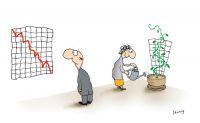
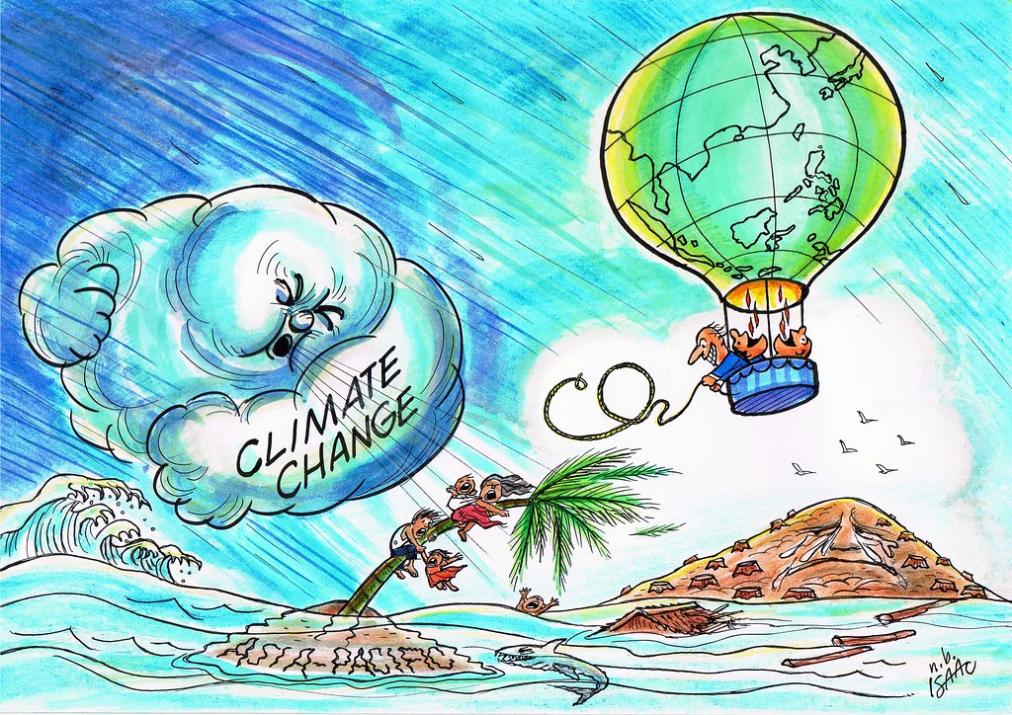
“In an age of climate crisis, growing inequality and economic turmoil, there is a strong case that this outdated metric [GDP] should no longer be the dominant compass guiding policy making. It fails to distinguish whether economic activity is harming or benefitting people and the planet. Government policies and budgets should be guided by a set of metrics that look at the whole picture, including closing the divide between the richest and the rest, instead of relentlessly pursuing growth for its own sake.”
This report from Oxfam reinforces the growing realisation, as covered our recent post, that GDP completely ignores principal aspects of the “real economy”, in this case, millions of hours a week undertaken to support humanity and the inequality resulting from the pursuit of endless economic growth.
Much of the advice ACT offers can best be described as “how to live sustainably”, ie living in a way that does not jeopardise the needs or wellbeing of others, future generations or the environment. It often involves satisfying needs rather than wants and considering “sufficiency” when we consume.
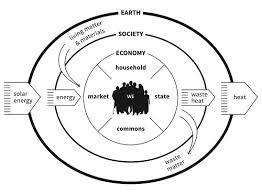
ACT’s Economy group explores how these principles of sustainability impact on the “real” economy (lives, nature, materials & resources) and how they are a direct challenge to the traditional economic thinking that has dominated politics, business, taxation, finance and personal prosperity for nearly 100 years, that the economy is distinct from society and the environment and that it needs to grow indefinitely.
Growth in what?
For individuals, growth means ever increasing wealth and for businesses it means growing sales and/or profits, all within a national economy that our politicians and economists tell us must always grow in terms of GDP (Gross Domestic Product), the total £value of goods & services produced in a period.
Often, when we perceive excesses in personal income and wealth, we ask “when is enough enough?” but it soon passes and we will rarely, if ever, ask the same question of business profits or GDP, although, surely, it is equally as valid?
Ever since its inception, and even by the economist who devised it, GDP has been criticised as being a poor measure of “socio-economic welfare” mainly because it fails to:
differentiate between good and bad GDP, eg the costs of developing a vaccine or solar panel tech (good), the health costs of smoking or cleaning up an oil spill (bad) and so politicians tend not to care which GDP they promote, as long as it goes up;
recognise the value of unpaid work such as care in the family or volunteering or the materials and resources provided by nature in the form of say growing trees, minerals or freshwater;
recognise where the wealth created by growing GDP ends up. In a recent report, it was found that about 2/3rd of global GDP growth, in a two year period, had ended up in the hands of 1% of the population.
In summary, whilst GDP is a number that reflects the monetary measure of the economy over a period, politicians and economists put the cart before the horse and promote it as a driver of the economy; “by increasing GDP we will increase prosperity”.
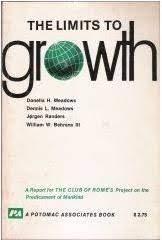
In 1972, following extensive research and using earth systems modelling, the book “Limits to Growth” was published explaining how the Earth’s finite resources could not be expected to cope with the demands and waste of exponential economic & population growth and how, unless remedies were found, environmental and societal collapse, sometime during the 21st century, was inevitable.
Despite its, and subsequent, predictions looking closer to reality, the need for economic growth remains dominant as does the belief that reducing the size of the economy would spell disaster.
How does acting sustainably impact the economy?
So let’s look at some specifics of how the pursuit of sustainability directly conflicts with the imperative of never ending growth.
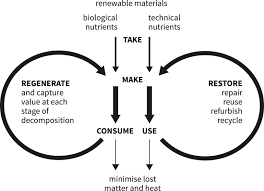
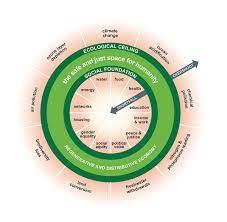
ACT, other environmental groups and ecological economists such as Kate Raworth (Doughnut Economics), advocate for circular economies in which materials and resources are kept in service by repair and reuse and, where possible, waste products from one process feed another. This contrasts with our current linear economy in which materials and resources are extracted, used (often only once), then thrown away.
From fast fashion (a piece of UK clothing is said, on average, to be worn only 7 times) through plastics to electronic equipment, in which, through planned obsolescence and huge advertising budgets, we are encouraged to replace equipment with the latest version every couple of years, there are many examples of how circular processes could be used to cut consumption and waste.
But think of the impact of circular economies on profits of industries that produce these items, from extracting the raw materials, through processing and manufacture to transport, sale and disposal, and the knock on impact on GDP. Imagine if everyone was able to keep their smartphone for four, rather than two years, it would halve company revenues and dent global GDP.
We also encourage people to consume and do less, or to find alternative goods or services that have less impact on the environment. So we talk about flying and driving less and finding alternative forms of transport for essential journeys. We encourage “buying local” to reduce the need to import from far flung places and to avoid industrial meat and processed food products in favour of less damaging plant-based sources of nutrition and calories.
Imagine how, for example, with decent public transport, we were able to do away with owning a car, making use of taxis, car hire or car sharing services for unavoidable journeys. How many fewer cars would there be on the road, how many car parks and other car infrastructure would we need, how many times would roads need to be repaired and how many motor and component manufacturers would we need, and what types of vehicle would they make, luxury SUVs or efficient family and city cars that use half the resources? Imagine the impact on revenues, costs and GDP of all these reductions.
Finally, on top of reducing material and resource use, with their waste and damaging impacts on the environment, there is energy and its emissions. Every industry and activity mentioned above consumes energy plus we need energy to heat, cool and light our homes and to cook our food. In addition to the reductions in demand described above, we also promote energy efficiency in our homes and in the products and services we consume but all too often our economic systems fail to take advantage of these efficiencies.
As far back as the steam engine, engineers have striven to increase energy efficiency however, rather than industries using those efficiencies to produce the same volume of products with less energy, they almost always use them to produce higher volumes with the same energy and, with efficient marketing, tell us we need to buy more, and more often, thus increasing profits and GDP.
Similarly, on a personal basis, as cars became more fuel efficient motorists just end up driving more miles for the same quantity of fuel and, as homes become more energy efficient, whilst there might be an initial period of keeping thermostats at lower settings, the temptation is to return to 21C, or higher, for the same cost, but with more energy.
If we champion energy efficiency it must be to reduce energy consumption.
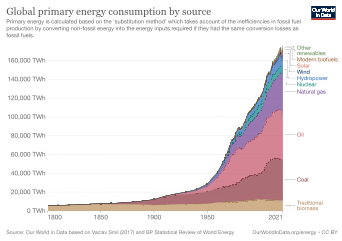
It should go without saying that the immediate benefit of reducing energy consumption is to reduce our dependence on fossil fuels but globally, because total energy demand continues to rise, increases in renewable energy sources can’t keep pace and so, despite predictions that 2023 will be the turnaround year, we are still adding renewable energy to fossil fuel energy, not replacing it.
The objective must be the end of fossil fuel use but there is huge resistance from the industry and its vested interests. It will happen and the loss of global GDP from the demise of this activity will be huge. This prospect however should not diminish our need to act sustainably and only use the energy we need.
Many believe the antidote to fossil fuelled growth is “green” growth and yes the renewables industry must grow but to replace not enhance fossil fuels and, with renewable energy and its infrastructure requiring earth’s minerals and resources, often extracted from the poorest regions, the environmental and societal impact must continue to be our prime concern.
The dichotomy
Even if the public has a grasp and acceptance of sustainability and the need to do less, many are unaware of the conflict with economic growth. This lack of awareness (or deliberate ignorance) has been played out many times over the past four decades in government policies. In 1988/89 Margaret Thatcher became a global leader in the understanding of Climate Change but policies to tackle it soon hit her Chancellor’s economic brick wall and today we have a government promoting Net-Zero emissions whilst granting licences for new sources of fossil fuels.
It is time therefore to help resolve this conflict, to continue to support people and organisations in going for sustainability but showing them that, whilst economic growth might happen, it’s just a number on a spreadsheet not an objective. This is best summed up by Kate Raworth:
“Today, we have economies that need to grow, whether or not they make us thrive, and what we need, especially in the richest countries, are economies that make us thrive, whether or not they grow”
In other words, our objective should be the wellbeing of humans, nature and the environment, using multiple measures available to judge our success and, although important for national accounting, a single £ value for GDP is not one of them.
So what next?
In the UK there have been whispered doubts over economic growth for years including the creation of an APPG “On Limits to Growth” and recently the media have started interviewing and running pieces from “post-growth” thinkers.
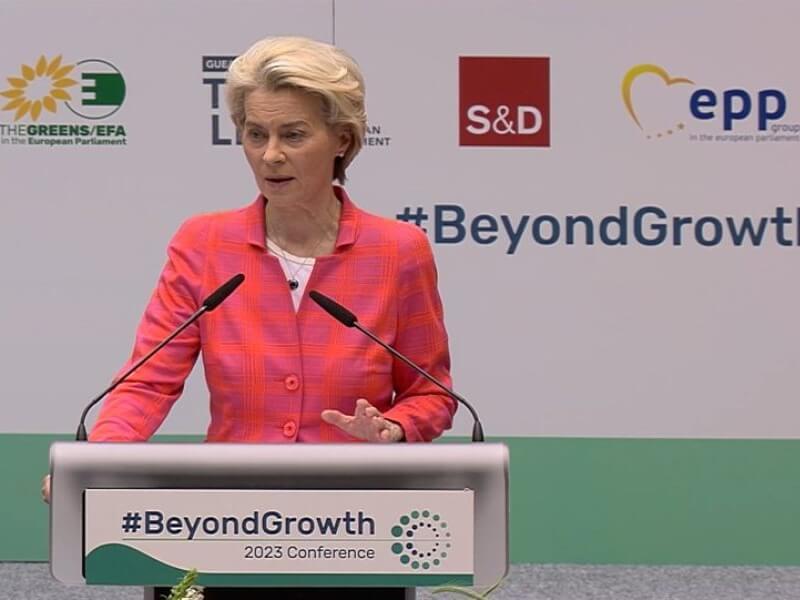
Outside the UK there is far more awareness, with the UN starting to explore ways to adjust GDP to account for factors such as sustainability and the natural environment and, in the EU parliament, a three day “Beyond Growth” conference was held in May 2023 with around 7,000 attendees and 150 speakers talking about what a “post-growth” world would look like and what we’d need to do to get there.
So we will continue to provide advice and resources on these issues to our members in the hope that they will feel enabled to pass the information on to others, to sow seeds of doubt every time a politician or BBC economics editor mentions the need for economic growth, to suggest that, in the 6th richest country on the planet, Enough is Enough.
A word on Degrowth
At the same time as “Limits to Growth” was being written a French philosopher came up with the word Décroissance, translated as “Degrowth”. The word and its concepts are widely misunderstood, often deliberately, but it was coined to be both provocative and to make it difficult to hijack by vested interests, as has happened with “growth” (green, sustainable, inclusive, smart….).
As described above, an economy like ours, is dependent on, and structured towards, endless growth. If we and other rich nations decide to aim instead for a “post-growth” economy that is not dependent on growth but instead runs in balance, providing us with what we need whilst not adversely impacting the environment or society, what is often called a “steady-state economy“, we will need a phase of transition, a period of managed degrowth, changing the infrastructure of our economy and the activities that go on within it.
For examples of what this transition might mean refer again to; How does acting sustainably impact the economy? above. Each of the reductions in material, resource and energy use described represent what we need to do to go from where we are today to where we want to be, a sustainable economy.
In the words of Timothée Parrique, in his speech to the Beyond Growth conference:
“Think of Degrowth as a macroeconomic diet for biophysically obese economies”.
Because of the urgency in tackling all aspects of the climate and nature crisis, whilst enabling poorer countries to grow their economies and improve living standards, supporters of Degrowth propose a complete transition away from, not only fossil fuels, but also other damaging and unnecessary industries and activities, such as private jets & yachts, commercial aviation, SUVs, fast fashion and industrialised meat.
The above is a limited summary of how an economy fit for the 21st century might be imagined. Issues such as equity, how a decent standard of living could be provided for all, shorter working weeks and Universal Basic Services are also relevant and will be discussed in other posts.
So that we can provide appropriate and understandable information and opinions please do feedback thoughts, and pose questions, in the comments below or by emailing Paul.
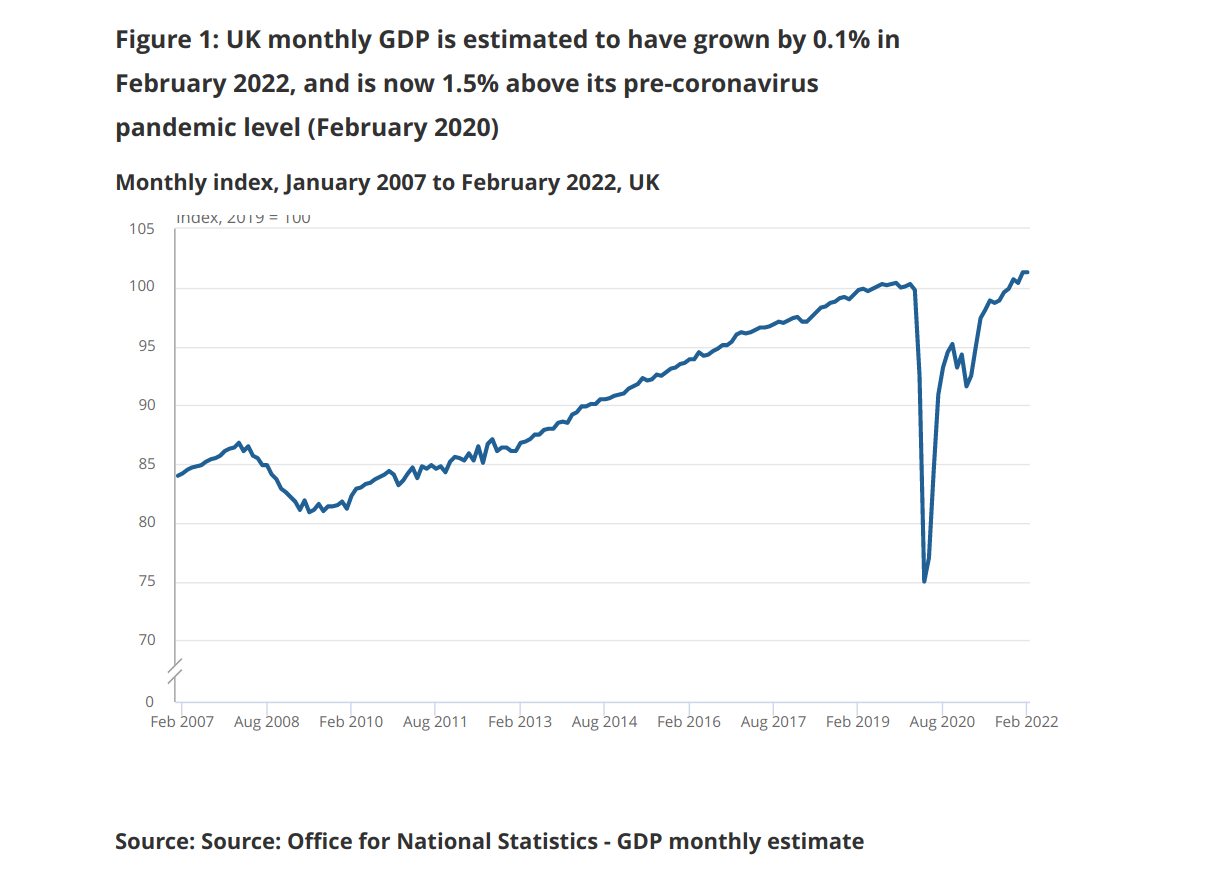
The UK economy shrank by 9% in 2020 but bounced back in 2021, growing by 7.5%. This year, it is expected to grow by 3.6%. These numbers matter a lot to the government, but there is increasing debate about how relevant they are to setting economic policies to tackle the climate and ecological emergencies.
That’s because our national prosperity is measured purely by the rise or fall in the market value of all the goods and services we produce (known as gross domestic product, or GDP). There is no consideration of anything that can’t be measured in price terms, including environmental and social matters. And that is a problem, according to climate focused economists called on to give evidence to the government’s Environmental Audit Committee earlier this year.
For example, the value of planting trees will only be measured if and when those trees are cut down and sold as timber. They are not valued for the shade they provide, the carbon they sequester, or the habitats they offer to wildlife. Even more perversely, the likelihood of more severe storms, floods, heatwaves and wildfires due to climate change will be good for economic growth because cleaning up after such events will add to GDP. There is no accounting for the loss of life, livelihoods, housing or infrastructure.
Similarly, GDP, which was developed as a measuring tool in the 1930s, ignores both the environmental damage caused by extracting fossil fuels and the pollution and greenhouse gas emissions caused by burning them. And what doesn’t get measured doesn’t get managed, as the well-known saying goes.
Another critical aspect in tackling climate change is that of equity. Richer nations have caused the problem while poorer nations not only suffer most from the effects but are also less able to adapt. This is recognised in environmental treaties, with richer nations committing to help poorer ones develop and cope with adaptation.
GDP also ignores distributional issues. This is most obvious when the government celebrates a rise in GDP whilst a majority of the population see a stagnation in their income and a drop in living standards. But it is also present when importing natural resources and value from poorer nations without properly compensating them.
Given these defects, the Environmental Audit Committee asked its five witnesses whether GDP is still up to the job of guiding economic targets. Only one declared support for GDP remaining a key metric, with perhaps some enhancement for environmental effects. The other four said it was no longer fit for purpose and we need to employ a range of measures, perhaps in the form of a dashboard, to record financial, social and environmental elements of prosperity or damage.
Many such measures are readily available, including sustainable development goals, environmental and planetary boundaries and measures of social wellbeing, but few countries build them into their economic plans or give them any prominence.
Some witnesses also threw doubt on the goal of ever increasing economic growth in rich countries like the UK, with research quoted showing that the richer a nation becomes, the less beneficial is additional wealth.
The ability to grow our economy whilst reducing carbon emissions, a process known as “decoupling”, was another topic of discussion. Witnesses criticised the government’s claim to have achieved significant decoupling, pointing out that the emissions embedded in our imports are not counted. We should also take account of our historic emissions and our material (non-carbon) footprint on the environment and planet, they said.
It will be hard to move away from the metric of economic growth as it is built into many of our social structures, and much work is needed to imagine how a post-growth society and economy would operate. But the consensus among the witnesses to the committee was that it needs to be done.
Climate activists are sometimes depicted as dangerous radicals. But the truly dangerous radicals are the countries that are increasing the production of fossil fuels. Investing in new fossil fuels infrastructure is moral and economic madness.
Christiana Figueres
TheIPCC report tells us we are on a suicidal path. Change or kiss stability goodbye.
There is a wealth of analysis and opinion on this report in the press and professional journals but CarbonBrief’s comprehensive detailed question and answer paper covers the main aspects.
Much more has still to be written but here is a summary highlighting some key areas of interest.
Introduction
On 4 April the IPCC released its third report, by Working Group lll (WG3), from its 6th Assessment Report, with an updated global assessment of climate change mitigation progress, explaining developments in emission reduction and mitigation efforts and assessing the impact of national climate pledges in relation to long-term emissions goals.
As is always the case, the main report from the scientists, of about 3,000 pages, was then summarised with every line of the summary discussed, and where necessary amended or removed, in order to gain the approval of 195 countries. The result is the 64 page “Summary For Policymakers” (SPM).
At two weeks, the discussions over the SPM were the longest of any such report with key text such as “vested interests”, “lobbying”, “degrowth”, “media” and even “economic growth” all appearing multiple times in the main report but missing in the SPM, reflecting the influence in the review process of vested interests determined to avoid publishing issues that reflect badly on their activities.
Based on current policies the report gives a likely increase in temperature over pre-industrial levels of 3C (2.2C to 3.5C) by 2100 and says that if we are to stay below 1.5C, with limited or no overshoot (ie exceeding 1.5C before 2100), greenhouse gas emissions must fall 43% below 2019 emissions by 2030 – on the whole that’s 48% for carbon dioxide and 34% for methane.
It’s worth noting that, as a result of the pandemic, CO2 emissions dropped by about 6% in 2020 but they have since bounced back meaning that, effectively, from the start of 2022 the report says we have to match 2020’s reduction in each of the remaining eight years of the decade.
One aspect of the report that has been widely misreported in the press is the point at which emissions must peak, covered in the report as:
Global greenhouse gases are projected to peak between 2020 and at the latest by 2025, in global modelled pathways that limit warming to 1.5C
This was taken to mean that we can continue to increase emissions for another three years whereas, in reality, emissions should have peaked closer to 2020. It is explained here.
What the new IPCC report says about how to limit warming to 1.5C or 2C
The report provides a detailed view of possible futures and potential solutions based on 1,200 scenarios from the IPCC’s database that were considered suitable to calculate a broad range of future greenhouse gas emissions and global climate outcomes.
In other words, the report doesn’t offer a projection of where we are going but, given where we are and promises made, provides a detailed view of possible futures, with emphasis on those indicating temperature outcomes of below 1.5C and 2C. So, for example, some will involve rapid reductions in fossil fuel use and others rapid reductions in energy demand.
Nearly all scenarios however rely, in differing degrees, on Carbon Dioxide Removal (CDR) either to cater for residual emissions of CO2 and non-CO2 gases (eg Methane) or to reverse interim temperature “overshoots”, say to 1.6C, by anticipating “net-negative” emissions, to bring the average temperature back down to the target by the end of the century.
The CDR envisioned is a mix of natural, eg afforestation (planting on new ground) & reforestation (replacing trees lost), and technological, eg Bioenergy with Carbon Capture & Storage (BECCS) & Direct Air Capture & Carbon Storage (DACCS).
There are no scenarios where large deployments of CDR avoid the need to substantially reduce emissions over the course of the 21st century, if warming is to be limited below 2C.
Nevertheless the authors caution that CDR “cannot serve as a substitute for deep emissions reductions” pointing out that the role of CO2 removal can at times be over promoted in some scenarios due to insufficient reliance on renewables, such as wind and solar, limited use of demand-side options (reducing the energy we use) and understating the future costs of CDR technologies.
Concerns are also expressed that:
..the prospect of large-scale CDR could…obstruct near-term emission reduction efforts, mask insufficient policy interventions, might lead to an overreliance on technologies that are still in their infancy, could overburden future generations, might evoke new conflicts over equitable burden-sharing, [and] could impact food security, biodiversity or land rights.
Despite these warnings scientists and environmentalists see CDR, and now larger overshoots, to say 1.7C or 1.8C, as just another way for policy makers to kick the can further down the road, rather than take the radical action needed today to both replace fossil fuels with renewables and reduce energy demand.
It is also noticeable that with the IPCC judging that 1.5C is now likely to be reached early in the next decade; statements by policymakers and media are shifting from emphasising a 67% likelihood of staying below 1.5C and “keeping 1.5 alive” to a 50% chance of 1.5C and a 67% chance for 2C. The report indicates that, with current policies, the chance of remaining below 1.5C with little if any overshoot, is now around 33% and some academics are now indicating that 1.5 is no longer achievable.
As an aside, research subsequently published in Nature assessed and plotted all national pledges (promises) currently on the table and surmised that if all came to fruition (action) temperature at the end of the century could be limited to just below 2C. Unfortunately some in the media have painted this in an over optimistic light, ignoring both the poor history of turning pledges into policy, then action and warnings of the threats in a +2C world. Here is a more balanced opinion by Christiana Figueres.
Summary of mitigations
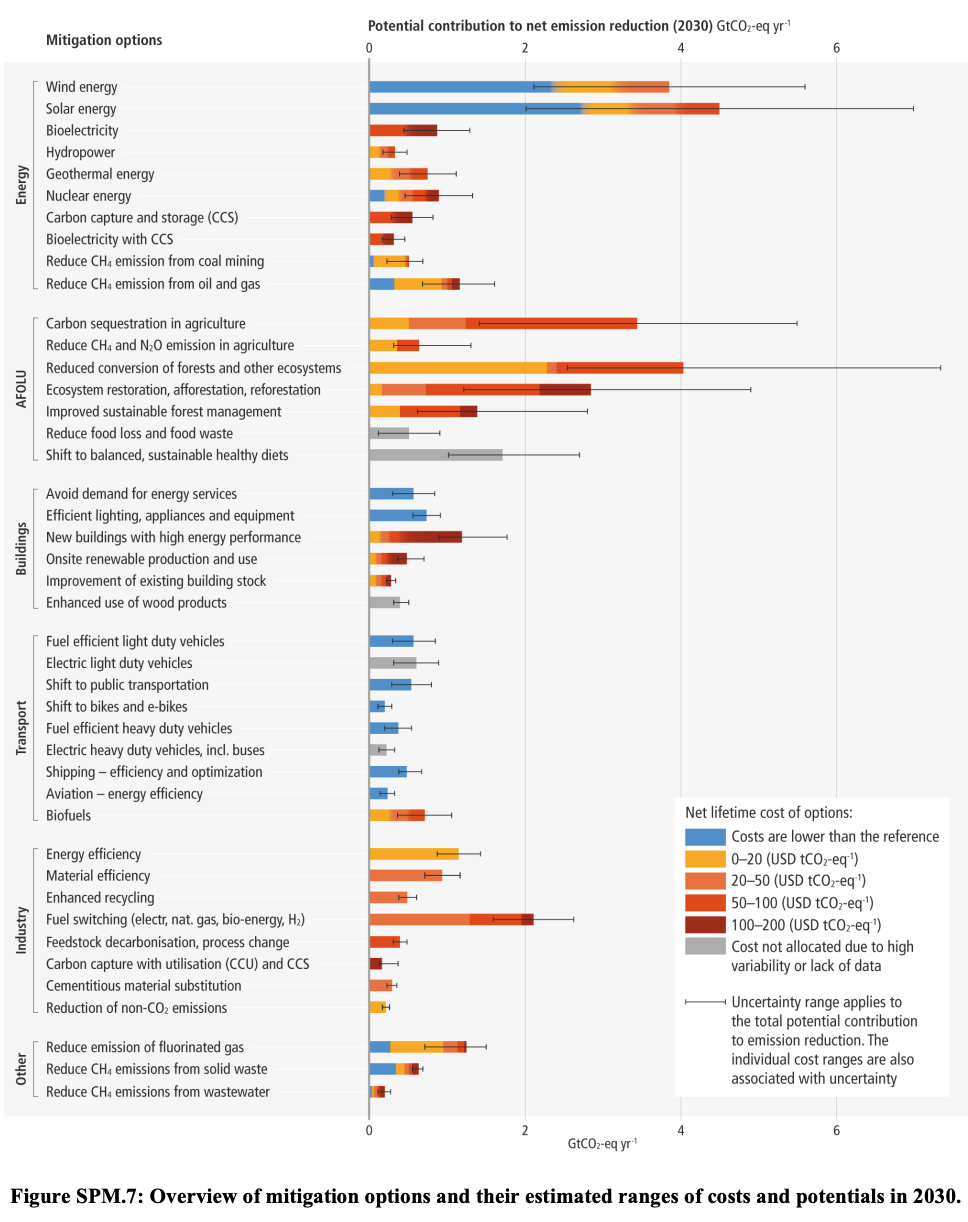
Section C12 of the SPM (page SPM-48) sets out the costs and savings associated with each mitigation option, making the point that no account is taken of the costs of doing no more than is already in place.
It ends with this chart which shows, for each type of mitigation, its potential for reducing emissions by 2030, so the longer the bar the better the result, with the colour gradation indicating the relative costs, blue = saving and red = the costliest.
Chapter 5: Demand, services and social aspects of mitigation
The title of this chapter in the main report belies its importance. This is the first time a WG3 report has contained a section on the realities of demand in terms of what people currently consume and what they need, rather than what suppliers, eg the fossil fuel industry, say drives them to keep supplying more, a given in all the climate models.
The chapter dispels the myth, again favoured by fossil fuel companies, that poorer nations will need to continue to use fossil fuelled energy to improve their wellbeing, before being able to switch to renewables and other forms of mitigation.
The environmental movement has always promoted circular economies of reuse, sharing, more efficient alternatives and the need to stop overconsumption and it’s now official, scientific research not only backs this up but takes it to the wider global economic level best summed up by one of the chapter’s co-lead authors, Prof Joyashree Roy :
Assessment of social science literature from various disciplines helped this report to mention with high confidence that people do not need energy per se but they need a set of services to meet their basic needs such as comfortable homes, mobility and nutrition.
A paradigm shift in the way we think about climate action is reported for the first time in this IPCC report. If people are provided with opportunities to make choices supported by policies, infrastructure and technologies, there is an untapped mitigation potential to bring down global emissions by between 40 and 70% by 2050 compared to baseline scenarios.
The evidence described in the chapter dispels the myth that demand drives supply and economic growth, rather suppliers drive increasing supply, economic growth, overproduction, built in obsolescence and waste (in resources and money). Similarly it highlights that, by using the potential of demand side mitigations, the need for CDR technologies could be minimised.
Environmental economist Prof Julia Steinberger, a contributing author to chapter 5 commented:
This is the first time we’ve ever had a chapter on demand because this idea about economic growth and demand being linked was just untouchable. Everybody wants economic growth, so everybody wants demand to increase and that’s it. But as soon as you start questioning it, you realize that it’s a God with clay feet. That you can actually do a lot better with a lot less. There’s nothing preventing us from doing a lot better and using a lot less, including resolving poverty and deprivation around the world.
Recognising the inequitable use of energy, and greenhouse gas emissions of wealthier regions and households, the chapter describes how the global population could be provided with the essential services it needs for decent living standards with half of the energy currently expended.
Not surprisingly, considering the need for international approval, including by vested interests, much of Chapter 5 didn’t make it to the SPM however a few seeds were sown including, in Section B, regional and societal disparities summed up in this extract from B.3.3:
In 2019, around 48% of the global population lives in countries emitting on average more than 6t CO2-eq per capita….35% live in countries emitting more than 9 tCO2-eq per capita. Another 41% live in countries emitting less than 3 tCO2-eq per capita. A substantial share of the population in these low emitting countries lack access to modern energy services. Eradicating extreme poverty, energy poverty, and providing decent living standards* to all in these regions in the context of achieving sustainable development objectives, in the near-term, can be achieved without significant global emissions growth. (high confidence).
*Decent living standards are defined as a set of minimum material requirements essential for achieving basic human well-being, including nutrition, shelter, basic living conditions, clothing, health care, education, and mobility.
In addition to the chapter 5 download there’s an easier read starting on page 101 of the Technical Summary.
The Environmental Audit Committee has written to both the Chancellor and the Office for National Statistics (ONS) to ask for estimates of greenhouse gas emissions to be published alongside GDP figures to indicate whether economic growth and slashing emissions can be achieved together.
This follows the committee’s inquiries in February and March into “Aligning the UK’s economic goals with environmental sustainability” and, in particular, how the reliance on GDP as a sole measure of prosperity can hide the climate and ecological impacts of economic growth.
The letters highlight in general the isolation of climate and ecological data reporting from fiscal reporting and how a true picture of how the country is progressing in all aspects of the economy, the environment and net zero targets is impossible unless integrated reporting is provided.
Much is made of the failure to implement the recommendations of the “Dasgupta” review into our economy’s reliance and impact on the natural world. This was a review commissioned by the Chancellor and had these headline messages.
The two letters are similar in content but the one to the Chancellor provides the main thrust of the committee’s recommendations.
Following Part 1 of the enquiry this part questioned witnesses on how environmental sustainability could be incorporated better into the economic measurements that guide Government policy.
The full inquiry of over an hour can be viewed on parliamentlive.tv however we have separated out the following clips covering the discussions around the use of GDP and how it does, or doesn’t, represent a valid measure of prosperity and how other measures should now be regarded as more fit for purpose in the 21st century. The witnesses in this session were as follows:
Professor Kate Raworth (KR) – Co-founder and Conceptual Lead, and author of Doughnut Economics at Doughnut Economics Action Lab.
Professor Henrietta Moore (HM) – Founder and Director at Institute for Global Prosperity, and Chair in Culture, Philosophy and Design at University College London (UCL).
Matthew Lesh (ML) – Head of Public Policy at Institute of Economic Affairs.
Clip 1 (15 mins) How useful is GDP as the primary methodology and can it cope with the increasing demands of how we view prosperity in our economies?
ML: who, as a traditional economist, accepts that GDP as a measure is flawed but believes it’s still the least worst option as a measure of prosperity. He extols the virtues of GDP and also mentions the UK’s track record in decoupling economic growth from its carbon emissions (see clip 2).
KR: who isn’t a traditional economist, puts the case for a dashboard of measures, in addition to GDP, and also introduces an element of Modern Money Theory surrounding the ability of governments, like the UK, to pay for essentials without worrying about tax revenues.
HM: GDP is not a good proxy for prosperity, it’s a 20th century metric not fit for the 21st century as it tells us nothing about distribution (of income), sustainability, inequality and environmental degradation. She talks about speaking to people in regions over what’s important to them for their prosperity.
Clip 2 (17 mins) Are policy makers trying to have their cake & eat it, when they argue that it’s possible to tackle the climate & nature crisis whilst continuing with economic growth?
KR: Yes they are. She dismisses stories of “Green Growth” and points out that there’s little evidence that we can decouple carbon emissions and our material footprint from economic growth at anything like the speed or scale needed. She goes on to dispute ML’s earlier opinion on the UK’s record on decoupling and how our structural dependency on GDP growth will hamper our ability to deal with the climate & nature crisis.
ML: continues his support for economic growth as a solution to environmental and social problems, (as predicted by the Kuznets Curve*) but that we need to price carbon, and find ways to price other damage to the natural world, in order to bring them into the economic (GDP) equation.
HM: we need to recouple social and economic prosperity and embed it into environmental prosperity and that market solutions alone can not achieve this. We also need to reshape and create new markets dependent on regions.
KR: As a follow on to HM, the Doughnut Economics model is being used in cities, regions and local governments around the world, in the way that HM describes.
Clip 3 (5 mins) A question to KR – how could policy makers reduce the dependencies on growth built into our economic systems?
*The environmental Kuznets curve suggests that economic development initially leads to a deterioration in the environment (and an increase in inequality) but, after a certain level of economic growth, a society begins to improve its relationship with the environment and reduce levels of environmental degradation (and inequality).
A fascinating in depth inquiry into how government policy could move away from GDP as the prime measure of national prosperity to encompass other, more meaningful, measures for social and environmental wellbeing and to consider issues such as a post-growth world, non-monetary capital and inequality.
The remit of the Environmental Audit Committee is to consider the extent to which the policies and programmes of government departments and non-departmental public bodies contribute to environmental protection and sustainable development, and to audit their performance against sustainable development and environmental protection targets.
The full inquiry (76 minutes) can be viewed on parliamentlive.tv however we have broken it up into the following clips, each concerned with themed questions to the following two witnesses.
Dr Matthew Agarwala (MA), Project Leader, The Wealth Economy, Bennett Institute for Public Policy, University of Cambridge.
Prof Tim Jackson (TJ), Professor of Sustainable Development and Director, Centre for the Understanding of Sustainable Prosperity (CUSP), University of Surrey.
Clip 1 – (6 Mins) Question to MA, “whether you think that the current measurements of economic success take into account, sufficiently, the role that’s required in order to achieve a decarbonised economy?”
MA explains why GDP was fit for the 20th century but is not for the 21st, it’s a backward looking “flow” measure whereas what we need are forward looking “capital” measures. Using the analogy of assessing a bakery’s pantry of ingredients today in order to determine the quality and quantity of tomorrow’s pies. So, looking at the wealth available, net of any inherent harm, assessing natural assets & ecosystems, healthy & well educated human assets, physical and social infrastructures with strong communities and degrees of trust between people, business and government.
Clip 2 – (3 mins) Question to TJ about whether growing GDP is compatible with the challenge of the government’s sustainability plans.
TJ discusses the history and difficulties of the UK decoupling its GDP growth from its emissions and says how its historic responsibilities for emissions should also be factored in. Also brief reference to how carbon taxes can incentivise decarbonisation.
Clip 3 – (8 mins) Question and discussions over the benefits and pitfalls of GDP and the other measures we should be considering to judge our prosperity.
MA talks more on the history of GDP and expands on the pantry/portfolio approach raised in clip 1 and the excellent statistics, data and accounting available in the UK to measure the various elements.
TJ points out the importance of not just looking at the portfolio of financial, natural and social capital but also at its distribution across society, something GDP ignores, and how an unequal society puts social cohesion at risk. He goes on to explain how GDP takes no account of housework or the true value of care work, most often undertaken by women.
Clip 4(14 mins) Question and discussions on alternative measures to GDP.
TJ explains dashboards of non-monetary indicators, such as climate, health, inequality etc, and how they are already available around the world and how they can be aggregated into single measures.
He describes more subjective measures like wellbeing and how measures can be assigned prices to come up with a single monetary measure, as happens with GDP, and how, being subjective, some measures and how they are used will involve policy decisions.
MA discusses the challenges of defining and measuring social capital, especially as it can’t be assigned a £ value. How it involves measuring trust in, for example, the ability of communities to come together, after say a flood or during the pandemic. It is measured through regular surveys of how people feel in their neighbourhood and about their neighbours, taking into account cultural differences and using scales of 1-10 over trust in people and institutions.
Clip 5(17 minutes) Question over the comparison of monetary values determined by “the market” and those assigned to non-market measures and whether these will always be swayed by political rather than economic decisions, thus bringing in issues over trust.
TJ pushes back by saying that we already have a political element in market prices in that political rules and policies will determine how markets work and discusses existing national satellite accounting by the ONS, for non-market statistics, and how this doesn’t currently make it to policy.
By going back to the origins of GDP, MA explains how its construction and measurement has always involved politics.
TJ discusses carbon targets and the need to put a value on carbon in the economy to encourage or discourage behaviours, but how this must factor in inequality, eg lower income families spending a larger proportion of their income on carbon intensive purchases. He also comments on the importance of some kind of hypothecation in carbon taxes, ie in knowing where the tax comes from and where it is then applied.
MA discusses the UK’s ability to influence international environmental and natural capital accounting including the move away from GDP and how the UN’s system for national accounting for GDP is currently under review to recognise human & natural capital.
Clip 6(12 mins) Question 1 to MA over whether the Treasury is making full use of existing alternative accounting statistics and if not, why not.
MA points out that the recent leveling up approach takes into account various capital approaches but misses out natural capital, a “missed opportunity”. He then goes on to discuss the potential for the UK Treasury to take advantage of its national Green Bonds by underpinning them with the good science and statistics we already have.
Question 2 “As tax revenues are tied to income & spending would it be economically disastrous for government to deprioritise GDP growth?” (Government relies on GDP growth as it believes it needs an ever increasing tax take to help it pay off ever increasing government spending).
TJ starts by explaining the importance of GDP as an accounting measure, and how he is not calling for it to be removed, but expands on his previous comments on where it falls down in recognising the distribution of wealth and the changes in the assets, and environmental impacts, that go to create it.
He says that, in order to move away from GDP as the sole measure, we first have to unravel infrastructures and institutions that are growth dependent and which therefore drive the need for GDP growth, eg privatised social care, and imagine what a post-growth welfare state would look like, pointing out that, with production growth already having fallen, we are, in effect, already there.
Question 3 then explores how the government might square the promotion of green and net-zero policies, eg switching to electric vehicles, with the resulting drop in tax and duty.
Clip 7 – (6 mins) Question about the Treasury’s response to the DasGupta report on The Economics of Biodiversity, in particular, that relying on GDP growth as a measure of our success ignores the reliance we have on nature and its resources.
TJ points out that whilst the report rightly calls for “inclusive” accounting, again it misses social inclusion in terms of the distribution of wealth and environmental/social harms.
MA discusses the lack of government response to the report and how this could be achieved within this parliament, warning that if we keep relying on GDP, the increasing gap between what GDP is telling us about the world and what people are experiencing will diminish public trust in statistics.
“The difference between using wealth versus GDP as a measure of the economy is the difference between getting a backwards, after the fact, diagnosis at an autopsy from a coroner versus getting one ahead of time from the doctor in their surgery that you can then treat”
Other resources:
DasGupta review – report to UK Treasury February 2021 – “The Economics of Biodiversity”
When considering how to mitigate the effects of the climate and nature emergency, or what has to be done to adapt to the effects we can’t mitigate sufficiently, the talk will mostly involve a myriad of practical things like switching to renewable energy, electrifying transport, changing the way we grow and consume our food or retrofitting homes for both insulation and to cope with hotter outside temperatures.
In the majority of these changes and solutions there will be an upfront cost, ongoing costs as well as savings.
How and when money is spent therefore is the one aspect that connects all the these disparate things together. It is pointless to discuss and plan for house retrofits or even speculative technologies like carbon capture unless someone, at an early stage, is prepared to put up some money to start things off, or commit to longer term risk-taking where it’s needed.
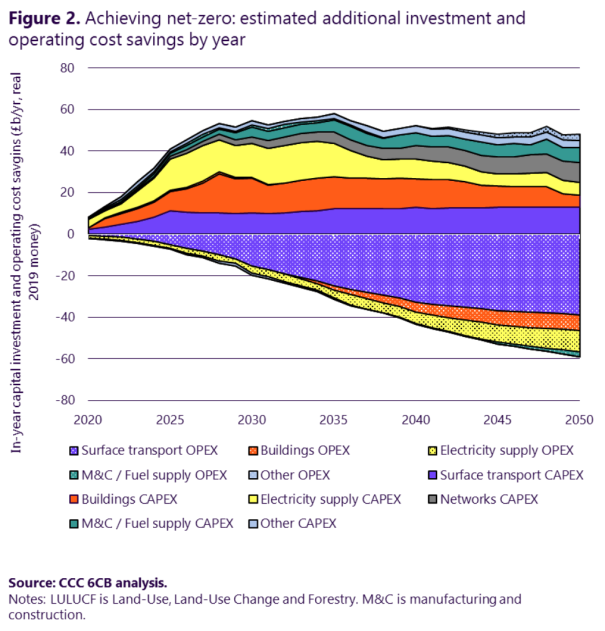
In its 6th Carbon Budget report, the Climate Change Committee produced projections for the capital costs and operational savings for all of its recommendations to achieve net zero by 2050, as shown in Figure 2.
Within 15 years the graph projects that we, as a country, must be investing over £50bn pa, and also shows increasing savings, eventually offsetting most of the investment. However, neither the report, nor graph, attempt to show how these sums should be split between the government and private sectors as this will be determined by government policy.
As has been the case for decades, and as we saw with the Covid vaccines, if innovations and new technologies or sectors are to make it to market, or be part of fixing a problem, the original risk investment is almost always shouldered by government in the form of funding for say research and development, viability trials etc.
In this case, however, the government is holding back from publishing its own financial projections in full and is likely to start small and to involve what it sees as constraints in terms of what it can tax and borrow to cover the costs.
The following pieces therefore provide a summary of how money is created and flows around the economy in a way that suggests that in the real economy, of people and resources, these constraints are fictitious and indicate political rather than financial obstacles to government investment in the climate and nature emergency.
Back in the late 1970s, after qualifying as an accountant, I went to work for a large city practice. I was told by those who had experience of them that, if I valued my will to live, I should avoid bank audits. Whilst training I had seen hundreds of clients’ bank statements, for all types of account, and so felt I knew all I needed to know about banking.
Up until recently I believed the conventional wisdom that, when my bank lent me £500 to start my own practice back in 1981, it could only do so because it was backed up by the money sitting in the accounts of other customers.
I received the first bank statements for my business loan and current accounts, seeing £500 credited to the latter and debited to the former, but even as a wizard bookkeeper, I never appreciated that this was the end of the story, one credit, one debit, nobody else was involved.
Last year I watched a 2014 video on the Bank of England’s website explaining that 97% of the money available to us in the economy is created by what I describe above. In other words, my bank created that £500 out of thin air and I spent it out into the economy. Then, when I finally repaid the £500 loan, the money was effectively destroyed.
Along with the video there was a debate in Parliament about this money creation and it turns out that, in a poll, 90% of MPs had no idea that it worked like this. Like me, they believed banks were constrained by the amount held in customers’ accounts.
My retired auditor’s brain then dug deeper and I learned that as well as high street banks being licenced by the Bank of England (BoE) to create this new money it too has a similar role in relation to government spending. So when the government tells the BoE to pay the NHS £4bn, the bank credits the NHS’s bank account with £4bn and debits the Treasury’s overdraft account with £4bn. That’s it, nothing else.
The surprise was that this overdraft is created anew every day, the BoE doesn’t turn to the Treasury and say, “hold on there’s only £3bn of taxpayers’ money sitting in your account”, it just spends the £4bn into existence on overdraft, rather than loan.
So, the Government instructs the BoE to create money for its own spending and commercial banks create the rest whenever they lend to anyone.
The above view on government spending reflects a new way of looking at how governments, like the UK, who issue their own currency, control the money flowing around their economies. There are several threads but, in general, it’s known as “Modern Monetary Theory” (MMT) and this is explored further in the following pieces.
Back in the 1970s & 80s, my prime function as an accountant revolved around the concept that tax was an overhead not an obligation and so, according to clients and my bosses, it was my job to keep their tax bills as low as possible.
As I developed my own practice and tax regulation became more sophisticated I got fed up with this pressure and started trotting out the line that, “as you are using the roads, police, schools & the NHS, it’s my job to make sure you pay the right amount of tax”. In other words, as we still hear today, tax pays for government spending.
So all these years later how does this hold up to scrutiny under the realities of money creation and through the lens of MMT?
Tax is collected into a government account with the BoE but there’s no matching or correlation with government spending. In other words, rather than “tax & spend” it’s “spend & tax” with the policies for both sides being independently decided and processed.
To sum up, similar to my bank loan, the government tells the BoE to spend money into existence and then the tax system claws back some of the money, effectively destroying it. There is no “government purse”, no “taxpayer’s money” and certainly no household type budget that you or I have to operate. Unlike the government, we are limited by our income, we can’t create new money.
The best analogy for all of this is air miles. You fly and earn air miles and then later you reclaim some or all of them against future flights. The operator records both sides for you but doesn’t keep its own stock of air miles to hand out, it just creates them as you fly (spends), and destroys them as you reclaim them (taxes).
Every month, the government adds up what it has spent and deducts the tax collected, reporting the difference as that month’s shortfall, referred to as a deficit*. It does this because that’s what it has always done; from 50+ years ago when there was a hard limit on new money. The government deficit isn’t lost money, as it would be in say a business, it merely reflects the net amount of money created that month that the government has left out with us. It’s our surplus sitting in millions of bank accounts.
At this point there’s an obvious question. If the government spends out more than it collects, month after month, this will just accumulate a larger overdraft with the BoE. Surely, as an independent public body, the BoE will want the overdraft cleared?
The government does actually clear the overdraft by “borrowing” (more in the next piece) but, as the BoE is owned 100% by the Treasury, even if it didn’t, the Bank could never send around the bailiffs to collect. To keep it simple, just think of the BoE as part of government.
So my line to clients bemoaning their tax bills never did hold up to scrutiny. When the government decides to spend on something, be it the NHS or free school meals, despite what it says, it’s not a “who’s going to pay?” or “what public spending will we need to cut?” decision. It’s a political decision. The government can always pay for anything in pounds sterling it needs to, it can’t default or run out of money.
That’s not to say that the government should just keep spending (printing) money without limit. If too much money is allowed to flow into the real economy, ie more money than can be absorbed by the available people, goods and resources needed to do the work, the spending might spark inflation. Excess government money flowing out would compete with the private sector, already employing the people etc, resulting in increased wages and prices. Through the lens of MMT therefore, taxation’s prime role has nothing to do with spending, rather it’s needed to make sure that excess money is not left out in the economy.
With the above in mind, when the government’s advisors say that billions need to be spent on retrofitting our homes or clawed back in fossil fuel subsidies to help deal with climate change, the government may well ask, “who is going to pay for it?” But it’s more likely to be the case that, unlike Covid or the 2008 financial crash, in which that question was never asked, the government doesn’t yet view Climate Change as an emergency.
*In 8 of the previous 60+ years the tax exceeds the spend and so the “surplus” is deducted from historic deficits.