Food, Farming, Forestry & Fisheries
The 4Fs group works to find out which areas have the greatest effect on climate change, both positive and negative.
Our purpose is to propose realistic policies/initiatives which can reduce carbon dioxide, methane, ammonia and other polluting emissions and help us meet Teignbridge District Council’s declared zero carbon objective.
Our large group includes specialists in all four areas and crossover areas too. We look for reliable research on the topics we cover, as well as using local experience.
We use the information to find proven and/or innovative ways to reduce the carbon footprint of our local food.
We will similarly look for the best ways to increase carbon sequestration by both the forestry and farming industries.
We aim to improve the local food system and economy, reducing food poverty and increasing skills. We work with the local food, farming, fishing and forestry industries and our Teignbridge communities to carry out priority actions that will be effective, relatively easy and popular, so people get involved and enjoy the challenge.
What the 4Fs group covers
Food in shops and supermarkets; marketing and advertising; group buying; food hubs and reducing food waste.
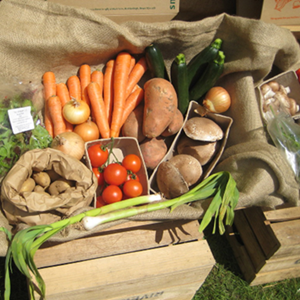
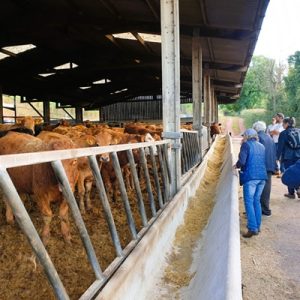
Farming covers veggie plots, allotments, community gardens, community-supported agriculture (CSA), veggie-box schemes, organic and mainstream growing, arable farming, dairy farming, stock farming, moorland farming, mixed farming, soil management and combining farming with renewable energy schemes (such as solar farms, wind turbines and anaerobic digesters).
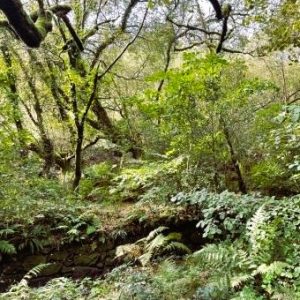
Forestry covers trees in urban areas and public open spaces (POS), hedgerows, ancient woodlands, plantations and large forests, including management for maximum CO2 reduction.
Fisheries covers water quality, management of important habitats and conservation of species. We are working closely with the Westcountry Rivers Trust to monitor the water quality of local rivers and streams. We are in contact with experts to learn what state local habitats, such as seagrass meadows, are in and how they can be better managed. Other priorities include finding out what can be done to minimise the impacts of certain activities on fisheries, as well as how to make fisheries more sustainable.
If you are interested and can contribute please contact us.