
My wife and I were lucky enough to afford a very old stone-built barn that was converted in around 1990. The building is set in the Deer Park of an ancient Devon estate, it was quarried on site and constructed many 100s of years ago. When we moved in 1998, we knew we needed all our skills honed from the improvements done to a circa 1900 terraced house in London. That project took nearly 20 years as we’d done most of the work ourselves, practically gutting the building while living in it.
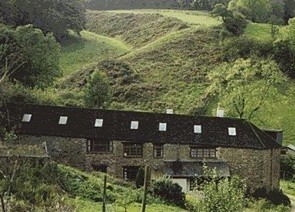
Deer Park Farm was very habitable, having been recently converted by the previous owner. The mortgage survey looked good, especially as the surveyor asked for remedial damp proofing works to be undertaken. The property had radiators throughout, it was heated by a medium-sized multi-fuel Villager fireplace with back-boiler.
We very soon realised the limitations of this, both in terms of sourcing the ‘dry’ wood and the ability of the fireplace to provide our water and space heating needs. Like everyone would do, we asked how do people out in the ‘sticks’ with no mains gas keep warm? The answer was oil or LPG, we chose oil because a majority of those we asked used it, it was cheap at 8.5 p/L. Filling the first 2,500 L cost us £223.13 incl. VAT, we made sure we used much of that over the first winter of 1998/99.
The house was reasonably warm, but we couldn’t look out of the windows, they were constantly misted up and dripping water everywhere. Removing the wet curtains was the answer to that. We put up with misted windows since they were 6-inch square single panes set in 100’s of Georgian bars so didn’t give much of a view anyway.
Next autumn, time to refill the tank, we were quoted 14.50 p/L . The advice was, buy when no one else is buying, so we waited a month for it to drop to 13 p/L and felt smug. Then we got a knock on the door from a nice solar thermal salesperson who told us this was the way to beat soaring energy prices, renewables were all the rage. We had a large roof that could supply ‘much’ of our heating demand and pay back in just 5 years. And by the way, it was made by Daimler Benz in Germany, so the best technology money can buy.
We learnt from our London days never to accept that ‘special price’ just for us, there was no statutory cooling off period in those days. So off we went and did our research, what we worked out is that the system would be great in the summer for hot water, but at £4,500 incl. VAT it would take at least 15 years to pay back even when using the sales numbers to heat two water tanks. In our research, we also came across the ‘green revolution’ and references to Climate Change. Climate Change turns out to be a bit more specific than a general concern about the ‘environment’.
A penny dropped, we are lucky to afford these ‘green’ technologies and actions so why would we not do them. We got our first Solar Thermal system installed in 1999. We had 3,000 trees planted, registered with Good Energy for our 100% green electricity and replaced our many Georgian windowpanes with 132 larger double-glazed glazing units. We were quoted £25,000 to put in ‘modern’ UPVC units, but simply couldn’t bring ourselves to throw away all those frames and openings, they were just 10 years old. It was also too expensive for us. We did the work ourselves with the help of a glazier for £1,500 spent on materials and his labour. We felt smug again!
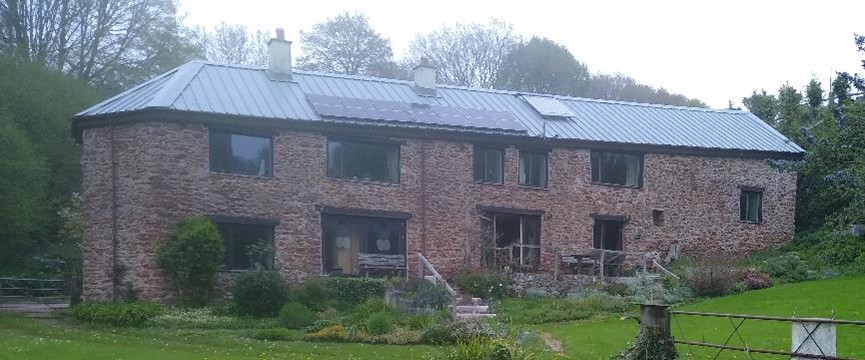
By around 2005 we’d internalised that tackling Climate Change was about reducing our greenhouse gas emissions. It was early days for calculating emissions, but data was around. All this encouraged us to join the new Transition movement. The experience from those first few years is why we’ve turned that approach on its head. If our motivation is to reduce emissions, we need to know what these are first before deciding on what action is best for our circumstances.