A well-insulated building begins below ground level with insulation preventing heat escaping from the building into the ground below. This was our first challenge. The slab on which the house would sit is very heavy and requires dense, structurally strong insulation to hold its weight. The only good solution was Polystyrene insulation. Polystyrene is a plastic derived from hydrocarbons. Ouch! The good news is that it should bear the weight of the slab and perform its insulating function for the expected life of the building.
Although the house, by design, will need very little space heating, we decided to integrate underfloor heating into about 85% of the ground floor slab area with heating in the two bathrooms only upstairs.
The house is built of pre-assembled insulated and airtight panels with more insulation between the exterior of the panels and the final exterior cladding layer. The insulation is wood fibre, which is sustainable and together with the slab, provides a high thermal mass meaning the house will retain temperature, slow to heat and slow to cool. It also locks in carbon.
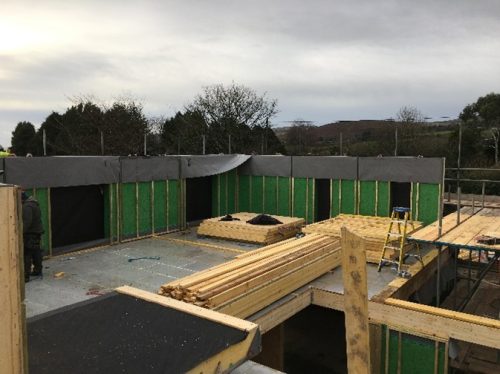
The first internal fit out included the ventilation system and duct work that draws “stale” or moist air out of the kitchen, utility room and bathrooms and supplies fresh air to living rooms and bedrooms. There is an air source heat pump for space heating. The house includes some simple systems to optimise use of our PV generated electricity to heat the water tank and charge an electric car. These were installed early in the fit-out task.
Once these systems were installed the fit out was much the same as any other house aside from the fact that there cannot be any unplanned penetrations (holes) in the airtight membrane of the house. This means the electrical and water services come into the house through ducts incorporated into the slab. There are no air bricks or trickle vents and no stand-alone extractor fans. When decorating we selected a clay paint for its lower emissions than standard paint.
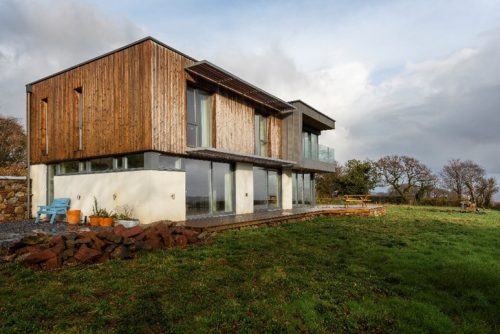
The finished building from the southwest.
We consume around 12 kWh per day of electricity to heat the house during the period from 1 November to between late February and mid-March each year. The heat pump is shut down for the remaining months of the year. This keeps the living areas between 20C and 22C all winter and between 21C and 24C (cooler if we open the windows) all summer and 2 degrees cooler in the bedrooms.
Our solar array generates more electricity than we consume in each year, providing daytime power to the house and heating the water tank for much of the year as well as charging the car when convenient in the summer months.
The house has an almost constant humidity level of 42% which is comfortable but dry. We dry a washing machine load of clothes in the utility room in around 6 hours, irrespective of outdoor conditions, without causing any damp problems in the house. There are no cold or hot spots in the house, no draughts, no humid rooms (shower steam clears in minutes), the inside of the house is remarkably still and quiet and there is little dust because the ventilation system filters incoming air.