This is a question we all ask ourselves, I certainly did. On the face of it, it seems quite reasonable to say: do what you can, every little helps. There are two risks associated with this as a way forward. Our actions may not have the impact we think and we rightly believe we are doing our best, certainly compared to those others who are so much more wasteful.
The other risk is to take this approach to its limit, where we obsess about doing every possible action we hear about. We keep cutting back on most things and accept that means a less enjoyable life. I’m sure we all know people who’ve taken these two approaches. The answer is of course a middle way, but how do we know where this is?
In the early days of Transition, we used to use averages, national and international, as a guide. Taking the average UK household and comparing our electricity consumption to that, same for heating, food, etc. This approach is still widely used, but am I really an average consumer? I don’t believe anyone thinks that, unless maybe if they know they are a high energy consumer but don’t want to face having this confirmed.
One of the first things we did when we understood the connection between our energy use and Climate Change, back in 2005, is to ignore these comparisons. Instead, we used our measured energy consumption, which we’d made to do a comparison, and asked what is our energy being used for? Is any of it unnecessary? In other words, would our lifestyle be diminished if we stopped some of that use.
The messaging at the time was all about electrical items on stand-by, low-energy light bulbs and settings for your heating system. Getting a diesel car was also the talk of the town as was going vegetarian and taking the train instead of flying. Many of these required spending money, but no one ever mentioned carbon emissions or payback on the money/carbon of the new thing/action other than in terms of average numbers.
Using some simple techniques of taking meter readings once a month and using a £5 plug-in monitor quickly identified where we were using our ~400kWh p.m. electricity. We were running our home on ~250 Watts continuously (that’s over 2 MWh p.a. when we’re not doing anything). We cooked with electricity, so our annual consumption of ~4,500 kWh compared reasonably with the UK average of 3,500 kWh. Or so we persuaded ourselves to maintain the reputation of doing our best.
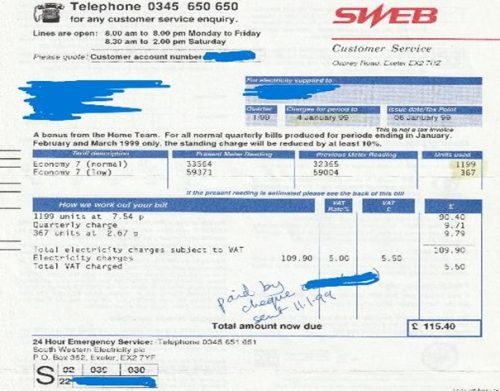
It took about a year to systematically go through our electricity consumption, first turning things off, only heating the water that we needed and replacing those cool looking halogen spotlights that were all the rage a few years back. That and replacing some inefficient appliances, after doing the pay-back calculation, cut our baseload from 250W to 100W and reduced our monthly consumption from 400 kWh to 250 kWh.
It took a few more years to cut the average monthly electricity consumption down to ~150 kWh. This was done when certain appliances broke and were either replaced with a new one or not at all. We also made better use of the oven. We continue to take monthly reading, just to check everything is as we expect it to be. If we spot a significant change, we always try to get to the bottom of it. For example, we’d forgotten to switch off a Compact fluorescent light in a store which is only occasionally used, this was 20W more than our usual baseload, so was easy to spot, but took several days to hunt down.